


In the digital age, our inboxes have become battlegrounds, relentless streams of information, demands, and distractions. The once-revolutionary tool of email has, for many, transformed into a source of daily dread and overwhelming stress. We spend countless hours sifting through messages, deleting spam, flagging important communications, and struggling to keep up with the sheer volume. This isn’t just a minor annoyance; it’s a significant drain on productivity, focus, and mental well-being for individuals and organizations alike.
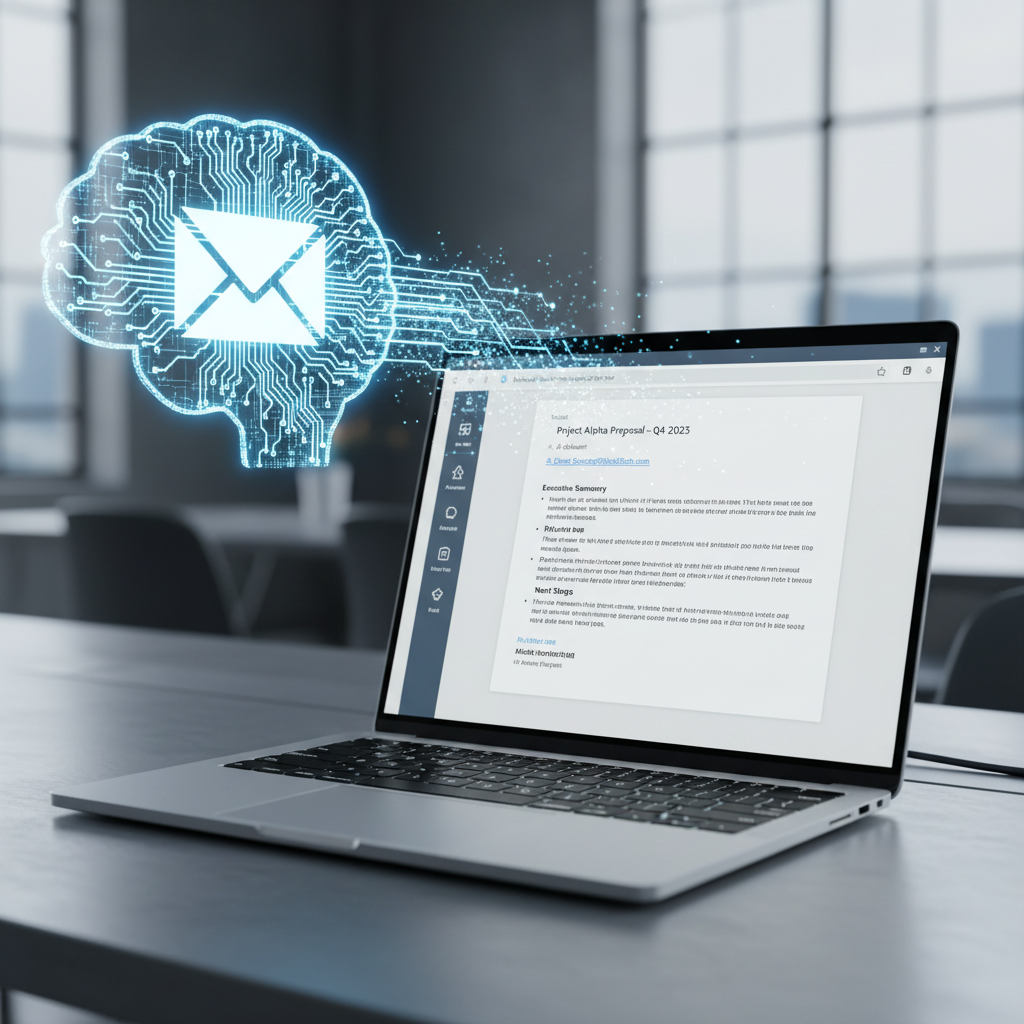
Imagine an inbox that prioritizes itself, summarizes lengthy threads, drafts intelligent responses, and proactively manages your schedule. This isn’t a futuristic dream; it’s the reality offered by artificial intelligence (AI) powered email solutions. These innovative tools are fundamentally reshaping how we interact with our email, moving beyond simple filters to provide genuine clarity, efficiency, and control over the digital deluge.
This comprehensive guide will delve into the transformative power of AI in email management. We will explore why traditional methods are no longer sufficient, uncover the core AI features revolutionizing our inboxes, highlight top AI tools available today, and discuss the immense benefits of embracing these solutions. Furthermore, we will provide practical examples, address frequently asked questions, and offer best practices for integrating AI into your daily workflow. Prepare to discover how AI can turn your chaotic inbox into a streamlined hub of productivity and focus, giving you back precious time and peace of mind.
The Modern Email Predicament: Why Traditional Methods Fall Short
For decades, email has been the cornerstone of professional and personal communication. Its ubiquitous nature, however, has led to an unforeseen consequence: an unprecedented volume of incoming messages that often exceeds our capacity to manage them effectively. The sheer scale of emails received daily, combined with their varied urgency, importance, and content, creates a unique challenge that traditional email management techniques are increasingly ill-equipped to handle.
Consider the average professional’s inbox. It is a melting pot of internal communications, client requests, project updates, marketing newsletters, spam, meeting invitations, and personal correspondences. Each email demands a decision: read, reply, archive, delete, or defer. Multiply this by hundreds, sometimes thousands, of emails per week, and the cognitive load becomes immense. This constant context switching and decision-making throughout the day fragments attention, reduces deep work time, and contributes significantly to mental fatigue.
Traditional methods for managing this torrent typically involve manual sorting, rule-based filtering, and a reliance on human discipline. Users meticulously create folders, set up automated rules to move specific emails, and attempt to maintain an “inbox zero” philosophy. While these approaches offer some degree of organization, they come with significant limitations:
- Time Consumption: Manually sorting and categorizing emails, even with rules, is a continuous, time-intensive process. Rules often need constant updating as communication patterns evolve, becoming a chore in themselves.
- Lack of Nuance: Traditional filters are rigid. They operate on keywords, sender addresses, or subject lines. They struggle with context, sentiment, or the implied urgency of a message. A simple rule might send all emails from “Marketing” to a folder, regardless of whether a specific email contains an urgent request from the Marketing Director.
- Overwhelm and Missed Information: Despite filters, important emails can still get lost in the noise, leading to missed deadlines, overlooked opportunities, or delayed responses. The sheer volume often means scanning rather than reading, increasing the chances of vital information slipping through the cracks.
- Reactive Rather Than Proactive: Most traditional methods are reactive. They help manage emails *after* they arrive. They do not anticipate needs, summarize content, or suggest actions proactively, leaving the heavy lifting of interpretation and response to the user.
- Cognitive Burden: The constant awareness of an overflowing inbox, even when partially managed, creates a persistent background stressor. The mental energy expended on simply *thinking* about email management detracts from more meaningful tasks.
In essence, traditional email management tools provide a shovel for a flood. They help you move some water, but they cannot stem the tide or build a dam. The complexity and volume of modern email demand a more intelligent, adaptive, and proactive solution. This is where AI steps in, offering a fundamental shift from merely organizing email to truly understanding and assisting with it.
Understanding AI in Email Management: Beyond Basic Filters
The application of Artificial Intelligence to email management represents a quantum leap from the rule-based systems of the past. While traditional filters rely on explicit instructions (“if sender is X, move to folder Y”), AI operates on a much more sophisticated plane, leveraging advanced computational techniques to understand, interpret, and act upon email content in ways previously impossible. It moves beyond simple pattern matching to genuine comprehension and predictive capabilities, transforming your inbox from a static repository into a dynamic, intelligent assistant.
At its core, AI in email management utilizes several key technologies:
- Machine Learning (ML): This is the engine of AI. ML algorithms are trained on vast datasets of emails, learning to identify patterns, categorize content, and predict user behavior. The more data they process, and the more feedback they receive, the smarter they become. Unlike rigid rules, ML models continuously adapt and improve their performance over time.
- Natural Language Processing (NLP): NLP is what allows AI to “read” and “understand” the human language within your emails. It can parse sentences, identify key entities (people, places, dates), extract topics, and even detect sentiment. This capability is crucial for summarizing lengthy emails or drafting contextually appropriate responses.
- Predictive Analytics: Based on historical data and real-time context, AI can anticipate your needs. For instance, it might predict which emails are most important to you based on your past interactions, or suggest the best time to send an email for maximum impact.
- Computer Vision (less common but emerging): While primarily text-based, some advanced AI might use computer vision to analyze attachments like invoices or documents, extracting key information.
So, how does this translate into practical email solutions?
- Contextual Categorization: Instead of simply moving all emails from a specific domain, AI can understand the *purpose* of an email. Is it a sales pitch, a support request, a project update, or a personal message? It can then intelligently sort these into priority tiers or relevant bundles, even if they come from unexpected senders.
- Prioritization Based on Urgency and Importance: AI learns what matters most to you. It considers factors like the sender’s history, keywords, due dates mentioned in the body, and your past interactions to flag truly urgent emails, pushing less critical ones to a “later” or “read” section. It’s not just “important,” but “important *to you* right now.”
- Automated Summarization: For long email threads or lengthy individual messages, AI can extract the core points, key decisions, and action items, presenting you with a concise summary without requiring you to read every word. This is a massive time-saver for catching up on discussions.
- Intelligent Response Generation: Leveraging NLP and ML, AI can analyze an incoming email and suggest short, contextually relevant replies. More advanced systems can even draft complete email responses, requiring only minor edits from you, significantly accelerating communication.
- Learning and Personalization: The beauty of AI is its ability to learn from your behavior. When you mark an email as important, dismiss a suggestion, or manually move a message, the AI adapts its model to better serve your unique preferences over time. This continuous learning makes the system increasingly effective and tailored to your specific workflow.
In essence, AI doesn’t just manage your email; it helps you *understand* and *act* on it more effectively. It transforms your inbox from a passive recipient of information into an active, intelligent partner, empowering you to navigate the digital world with unparalleled clarity and efficiency.
Key AI-Powered Features Revolutionizing Your Inbox
The advent of AI has ushered in a new era of email management, introducing features that go far beyond the capabilities of traditional email clients. These intelligent functionalities are designed to drastically reduce cognitive load, save time, and ensure you focus on what truly matters. Here’s a breakdown of the most impactful AI-powered features:
Smart Prioritization and Triage
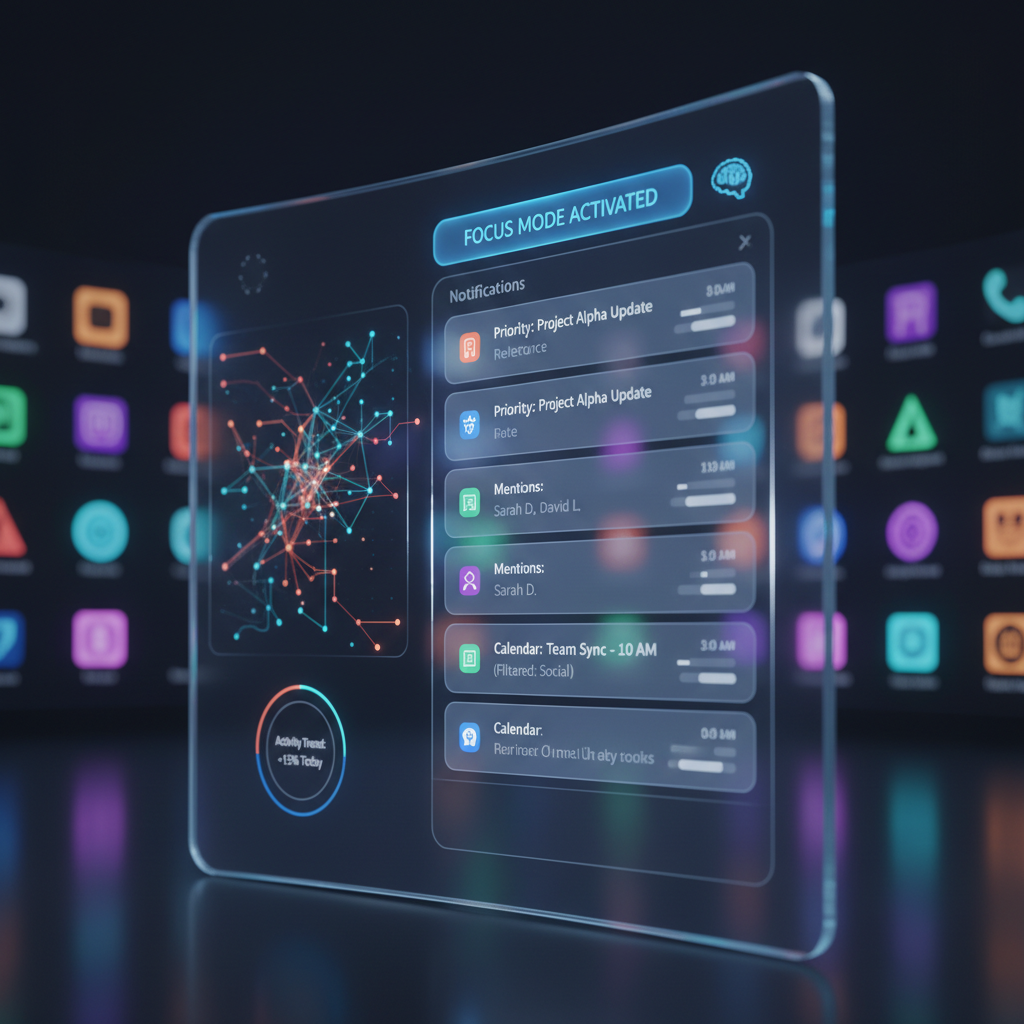
This is arguably the most fundamental and impactful AI feature. Instead of a flat inbox, AI-powered tools dynamically sort and prioritize your emails based on learned importance and urgency. They analyze sender history, content keywords, explicit deadlines, and your past interactions to determine which emails demand immediate attention, which can wait, and which are merely informational. This results in a “focused inbox” or categorized views like “Primary,” “Promotions,” “Social,” and “Updates,” ensuring that critical communications are always at the top.
- Real-world Impact: A project manager receives hundreds of emails daily. AI intelligently flags emails from team leads and clients about project deadlines as “Urgent,” while newsletters or internal announcements are deprioritized, allowing them to focus on high-stakes tasks without sifting through noise.
Automated Summarization
Long email threads or detailed individual emails can consume valuable time. AI summarization uses natural language processing (NLP) to condense the core message, key discussion points, and action items from complex communications into a concise, easy-to-digest format. This allows you to grasp the essence of an email or conversation quickly, without reading every line.
- Real-world Impact: A busy executive returning from vacation can catch up on a week’s worth of client discussions in minutes, thanks to AI-generated summaries of lengthy email chains, identifying decisions made and next steps required.
Intelligent Response Suggestions and Generation
Responding to emails often takes more time than reading them. AI steps in by analyzing the incoming message and generating contextually relevant reply suggestions. These can range from short “Smart Reply” snippets (e.g., “Sounds good!”, “I’ll look into it,” “Thanks!”) to more elaborate, custom-drafted responses that require only minor edits from the user. This feature significantly accelerates communication and reduces the mental effort involved in crafting replies.
- Real-world Impact: A customer support agent can quickly acknowledge common queries with AI-generated draft responses, allowing them to handle a higher volume of inquiries efficiently while maintaining a professional tone.
Advanced Spam and Phishing Detection
While basic email clients have spam filters, AI-powered solutions take this a step further. They use sophisticated machine learning models to detect evolving spam patterns, identify sophisticated phishing attempts, and flag suspicious links or attachments with higher accuracy. This proactive defense protects your inbox from malicious content and reduces the amount of junk mail you have to deal with.
- Real-world Impact: A small business owner is less likely to fall victim to a cleverly disguised phishing email pretending to be from their bank, as AI identifies subtle irregularities that human eyes might miss.
Meeting Scheduling and Calendar Integration
Many email conversations revolve around scheduling meetings. AI can analyze email content to identify intent to schedule, then integrate with your calendar to suggest available times, send invitations, and even handle rescheduling requests. Some AI assistants can even manage the back-and-forth negotiation of meeting times entirely on your behalf.
- Real-world Impact: A sales representative can respond to a meeting request by simply instructing their AI assistant, which then automatically checks their calendar, proposes slots to the client, and books the meeting once confirmed, all without manual intervention.
Task Management and Follow-up Reminders
Emails often contain actionable items. AI can identify these tasks within messages, automatically create reminders, or integrate with your task management system. It can also prompt you to follow up on emails that haven’t received a response after a certain period, ensuring important communications don’t fall through the cracks.
- Real-world Impact: After a client requests specific information via email, AI can automatically create a task for the team member responsible and set a reminder to follow up if the information isn’t sent within 48 hours.
Sentiment Analysis
Some advanced AI tools can perform sentiment analysis on incoming and outgoing emails. This feature helps you gauge the emotional tone of a message (positive, negative, neutral, urgent, frustrated), which can be invaluable for prioritizing customer support issues or understanding the emotional context of a client’s feedback. It can also provide guidance on the tone of your own drafted responses.
- Real-world Impact: A customer service manager can use sentiment analysis to immediately identify emails from highly dissatisfied customers, allowing them to prioritize these cases for rapid, empathetic resolution before issues escalate.
By integrating these powerful AI capabilities, email transitions from a burden to a strategic asset, empowering users to achieve unprecedented levels of clarity and control over their digital communication.
Top AI Tools for Streamlining Your Inbox
The market for AI-powered email solutions is rapidly expanding, with various tools offering unique combinations of features tailored to different user needs. Here, we explore some of the leading platforms that are helping individuals and teams conquer email overload and achieve inbox clarity.
1. Superhuman
Often dubbed the “fastest email experience ever made,” Superhuman integrates a suite of AI features designed for speed and efficiency. Its AI capabilities include smart triage, which helps you decide what to read and respond to quickly, and AI summarization of email threads. It also boasts advanced search, instant “undo send,” and a calendar assistant. Superhuman emphasizes a minimalist interface and keyboard-driven workflow, making it a favorite among power users and those seeking extreme productivity gains.
- Key AI Features: AI-powered triage, email summarization, smart scheduling.
- Ideal For: Professionals who value speed, efficiency, and a highly polished user experience.
2. Boomerang for Gmail/Outlook
Boomerang is an email productivity plugin that offers a powerful array of AI features. Its “Respondable AI” helps you write better emails by analyzing your draft and providing real-time feedback on factors like politeness, subjectivity, and estimated response time. Other AI-enhanced features include “Send Later” (scheduling emails), “Inbox Pause” (stopping new emails for focus), and “Remind Me” (follow-up reminders). Boomerang excels at optimizing email timing and improving communication quality.
- Key AI Features: Respondable AI (draft analysis), AI-powered send-later optimization, intelligent reminders.
- Ideal For: Users who want to optimize their email composition, timing, and follow-up processes.
3. Spark Mail
Spark by Readdle offers a “Smart Inbox” that automatically categorizes emails into “Personal,” “Notifications,” and “Newsletters,” ensuring that important messages from real people always appear at the top. Its recent integration of AI features, including an “AI Summarizer” for long emails and threads, and “AI Email Drafts” for generating responses, further enhances its capabilities. Spark also includes powerful search, quick replies, and team collaboration features.
- Key AI Features: Smart Inbox prioritization, AI Summarizer, AI Email Drafts.
- Ideal For: Individuals and teams looking for intelligent inbox organization and quick communication tools across multiple platforms.
4. Shortwave
Shortwave takes a fresh approach to email management by focusing on bundling similar emails and using AI to summarize them. It organizes your inbox into digestible “bundles” (e.g., “Promotions,” “Notifications”) and provides AI-powered summaries for each bundle or individual email. It also features AI Reply suggestions and a “Done” button to achieve inbox zero easily. Shortwave aims to make email less of a firehose and more of a curated feed.
- Key AI Features: AI bundling, AI summaries, AI Reply suggestions.
- Ideal For: Users who prefer a bundled, feed-like email experience and rely heavily on summarization.
5. Microsoft Outlook (with Copilot and Focused Inbox)
Microsoft has deeply integrated AI into its Outlook client, especially with the rollout of Microsoft 365 Copilot. Outlook’s “Focused Inbox” uses AI to separate your most important emails from less important ones. Copilot takes this much further, offering AI-powered summarization of email threads, drafting email responses based on natural language prompts, and helping you quickly extract key information from messages. It aims to be an AI assistant directly embedded within your workflow across the entire Microsoft 365 suite.
- Key AI Features: Focused Inbox, Copilot (summarization, drafting, information extraction), smart calendar integration.
- Ideal For: Microsoft 365 users deeply embedded in the ecosystem, especially enterprise environments leveraging Copilot.
6. Google Workspace (Gmail Smart Reply, Smart Compose, Gemini Integration)
Google has been an early pioneer in AI for email, with features like “Smart Reply” (suggesting short responses) and “Smart Compose” (auto-completing sentences as you type) being standard in Gmail for years. More recently, Google’s Gemini AI is being integrated across Workspace, offering even more advanced capabilities such as generating full email drafts from simple prompts, summarizing long email threads, and extracting actionable insights directly within Gmail. Gmail’s categorization (Primary, Social, Promotions) is also AI-driven.
- Key AI Features: Smart Reply, Smart Compose, AI categorization, Gemini (advanced drafting, summarization, Q&A).
- Ideal For: Google Workspace users who want robust, continuously evolving AI assistance directly within their familiar Gmail interface.
Choosing the right tool depends on your specific needs, existing ecosystem, and willingness to integrate new workflows. However, one thing is clear: these AI-powered solutions offer a powerful pathway to reclaiming control over your inbox and enhancing your overall productivity.
Benefits of Embracing AI for Email Clarity
Integrating AI into your email management strategy is not just about adopting new technology; it is about fundamentally changing your relationship with your inbox. The benefits extend far beyond mere organization, impacting productivity, mental well-being, and the quality of your professional interactions. Embracing AI solutions can lead to profound improvements in several key areas:
1. Significant Time Savings
This is perhaps the most immediate and tangible benefit. AI automates many of the repetitive, time-consuming tasks associated with email management. By intelligently prioritizing messages, summarizing content, and drafting responses, AI drastically cuts down the minutes, even hours, you spend in your inbox each day. This reclaimed time can then be allocated to more strategic, creative, or high-value tasks, rather than being consumed by the digital deluge.
- Example: Instead of spending 30 minutes sifting through 100 emails to find the 5 critical ones, AI provides a focused inbox view, presenting those 5 important emails upfront, saving you 25 minutes of precious time.
2. Reduced Cognitive Load and Stress
The constant mental effort required to sort, prioritize, and respond to emails contributes significantly to cognitive overload and stress. AI acts as an intelligent co-pilot, making many of these micro-decisions for you. By presenting a clearer, more organized inbox and offering assistance with replies, AI reduces the mental burden, allowing you to approach your email with less anxiety and more clarity. This leads to a calmer, more focused work environment.
- Example: No longer needing to constantly check for new important emails, as AI proactively flags them, allows your brain to relax and dedicate its full capacity to the task at hand.
3. Enhanced Productivity and Focus
When your inbox is streamlined, and distractions are minimized, your ability to engage in deep work and maintain focus improves dramatically. AI ensures you spend less time reactively managing email and more time proactively working on core responsibilities. By reducing interruptions and providing quick summaries, it allows for longer periods of uninterrupted concentration, directly boosting overall productivity.
- Example: A developer can stay in their coding environment for longer periods, only checking email when AI indicates a truly urgent message, rather than being pulled away by every notification.
4. Improved Response Times and Communication Quality
AI’s ability to suggest and draft responses, coupled with its prioritization features, means you can address important communications faster and more effectively. Furthermore, tools like Boomerang’s Respondable AI can even provide feedback on your email drafts, helping you craft clearer, more polite, and more impactful messages. This leads to better internal and external communication, strengthening relationships and accelerating decision-making.
- Example: A sales professional can respond to lead inquiries within minutes with AI-drafted, personalized messages, significantly increasing their chances of conversion.
5. Better Information Retrieval
Advanced AI search capabilities go beyond simple keyword matching, understanding context and intent. This means you can find specific information buried deep within your archives much faster, even if you don’t remember the exact phrasing or sender. AI can also help connect related emails and documents, creating a more cohesive knowledge base within your communication history.
- Example: Searching for “the client’s feedback on project X from last month” will yield relevant emails and attachments, even if the exact words “feedback” or “project X” aren’t explicitly in the subject line.
6. Proactive Task Management and Follow-ups
Many AI email tools are designed to identify actionable items within emails and integrate them with your task list or calendar. They can also remind you to follow up on emails that require a response or action, ensuring nothing falls through the cracks. This transforms your inbox from a passive repository into an active task management hub.
- Example: AI identifies a deadline mentioned in an email, automatically adds it to your calendar, and sets a reminder a few days prior, ensuring you never miss a commitment.
By harnessing these powerful benefits, individuals and organizations can move from a state of email reactive chaos to proactive, clear, and highly efficient communication. AI empowers you to take control of your inbox, rather than being controlled by it.
Implementing AI Solutions: Best Practices and Considerations
Adopting AI for email management can be a game-changer, but successful implementation requires a thoughtful approach. Simply installing a tool without understanding its implications or how to best integrate it into your workflow might lead to frustration rather than clarity. Here are some best practices and key considerations to ensure a smooth and effective transition to AI-powered email management:
1. Start Small, Scale Up
Do not try to overhaul your entire email system overnight. Begin by experimenting with one or two AI features or a specific tool to address your most pressing email pain points (e.g., summarization for long threads, or smart prioritization). Once you experience the benefits and understand how the AI operates, you can gradually introduce more features or explore additional tools. This iterative approach allows you to learn and adapt without overwhelming yourself.
2. Understand Privacy and Security Implications
Entrusting your emails to an AI tool means granting it access to sensitive information. Before adopting any solution, thoroughly research its privacy policy, data handling practices, and security measures. Look for tools that offer end-to-end encryption, transparent data usage policies, and compliance with relevant regulations (like GDPR or HIPAA, if applicable). Always prioritize tools from reputable vendors with strong security track records.
- Key Question: How is my data stored? Is it anonymized? Is it used for training purposes beyond my personal account?
3. Personalization and Training AI
AI learns from your behavior. To maximize its effectiveness, actively engage with its suggestions and provide feedback. If an AI incorrectly prioritizes an email, adjust it. If a drafted response isn’t quite right, edit it. The more you interact and provide corrective input, the better the AI will understand your preferences, communication style, and what constitutes “important” for you. Think of it as training a very smart assistant.
- Tip: Don’t be afraid to occasionally review AI-sorted folders to ensure nothing critical has been misfiled during the initial learning phase.
4. Integration with Existing Workflows
Consider how the AI email solution will integrate with your other tools and existing workflow. Does it work seamlessly with your calendar, CRM, project management software, or other productivity apps? A solution that creates more friction than it solves by requiring constant context switching between disconnected tools will ultimately fail. Look for tools that offer robust integrations or are part of a broader ecosystem you already use (e.g., Microsoft 365 Copilot, Google Workspace Gemini).
5. Regular Review and Adjustment
Your communication patterns, priorities, and workflow are not static. Periodically review how your AI email solution is performing. Are its categorizations still accurate? Are its summaries useful? Are its response suggestions relevant? Be prepared to adjust settings, refine rules (if the AI allows), or even try different tools as your needs evolve. Email management is an ongoing process, and your AI assistant should adapt with you.
6. Define Your Goals
Before implementing any AI tool, clearly define what problems you are trying to solve. Is it reducing email volume? Improving response times? Better prioritization? Having clear objectives will help you choose the right tools and measure their effectiveness, ensuring your investment in AI genuinely brings value.
By approaching AI email solutions with a strategic mindset, you can unlock their full potential and transform your relationship with your inbox from one of constant struggle to one of effortless clarity and productivity.
Addressing the Human Element: AI as an Assistant, Not a Replacement
As AI capabilities in email management continue to advance, a natural question arises: Will AI eventually replace human interaction in email? The unequivocal answer, for the foreseeable future, is no. AI, even at its most sophisticated, serves as a powerful assistant designed to augment human capabilities, not to substitute the nuanced, empathetic, and strategic aspects of human communication.
Understanding this distinction is crucial for effectively integrating AI into your workflow. AI excels at tasks that are repetitive, data-intensive, pattern-based, and objective. It can process vast amounts of information, identify trends, automate responses based on learned patterns, and flag anomalies with incredible speed and accuracy. These are its strengths, making it an invaluable tool for reducing the sheer volume and complexity that currently plague our inboxes.
However, the human element remains paramount in several critical areas:
- Nuance and Empathy: Human communication is rich with subtext, emotion, and cultural nuances that AI struggles to fully grasp. Empathy, building rapport, understanding unspoken concerns, and navigating delicate interpersonal dynamics require genuine human intelligence and emotional quotient (EQ). AI can suggest a polite reply, but it cannot truly *feel* or *convey* empathy.
- Strategic Decision-Making: While AI can provide summaries and insights, strategic decision-making – especially in complex or high-stakes situations – still requires human judgment, intuition, and ethical consideration. AI can present options, but the final choice, with all its implications, rests with a human.
- Creativity and Innovation: AI can generate content based on existing patterns, but true creativity, out-of-the-box thinking, and generating genuinely novel ideas are still uniquely human attributes. Crafting persuasive arguments, developing innovative solutions, or writing truly inspiring messages requires a human mind.
- Complex Problem Solving: Many email exchanges involve complex, multi-faceted problems that require deep critical thinking, understanding of context beyond the email itself, and collaboration with other humans. AI can help organize information related to these problems, but it cannot solve them autonomously in the same way a human can.
- Relationship Building: The core purpose of much email communication, particularly in professional settings, is to build and maintain relationships. These connections thrive on genuine interaction, trust, and shared understanding, which AI cannot replicate.
Therefore, the most effective approach is to view AI as your intelligent partner. It takes on the mundane, the voluminous, and the pattern-based tasks, freeing you to focus on the truly human aspects of your communication:
- Leverage AI for efficiency: Use it to prioritize, summarize, and draft initial responses.
- Apply human oversight: Always review AI-generated content for accuracy, tone, and appropriateness.
- Focus on high-value interactions: Spend your freed-up time engaging deeply with critical communications, nurturing relationships, and making strategic decisions.
- Maintain ethical responsibility: As the human in the loop, you are ultimately responsible for the content and impact of your communications.
By understanding and respecting the strengths and limitations of both human and artificial intelligence, we can create a powerful synergy that leads to unprecedented clarity, efficiency, and effectiveness in our email management, all while preserving the irreplaceable value of human connection.
Comparison of AI Email Features Across Popular Tools
Selecting the right AI email solution often comes down to a comparison of their core features and how well they align with your specific needs. While many tools offer similar functionalities, their implementation, depth, and overall user experience can vary significantly. This table provides a comparative overview of key AI features offered by some of the leading email management tools discussed.
| AI Tool | Smart Prioritization/Triage | Automated Summarization | Intelligent Response/Drafting | Advanced Scheduling/Reminders | Spam/Phishing Detection | Platform Availability |
|---|---|---|---|---|---|---|
| Superhuman | ✓ (AI-powered triage) | ✓ (Thread summaries) | ✓ (Smart replies, rewrite) | ✓ (Read receipts, reminders) | ✓ (Integrated) | Web, iOS, Android, Desktop |
| Boomerang | ✓ (Focus features) | ✗ (No direct summarization) | ✓ (Respondable AI for drafting) | ✓ (Send Later, Remind Me) | ✗ (Relies on client’s) | Gmail/Outlook Plugin |
| Spark Mail | ✓ (Smart Inbox, bundles) | ✓ (AI Summarizer) | ✓ (AI Email Drafts) | ✓ (Snooze, Reminders) | ✓ (Integrated) | iOS, Android, macOS, Windows |
| Shortwave | ✓ (Bundling, Inbox Zero) | ✓ (Bundle/Email summaries) | ✓ (AI Reply) | ✓ (Snooze, Reminders) | ✗ (Relies on Gmail’s) | Web, iOS, Android |
| Microsoft Outlook (w/ Copilot) | ✓ (Focused Inbox, Copilot) | ✓ (Copilot summarization) | ✓ (Copilot drafting, smart replies) | ✓ (Smart calendar, reminders) | ✓ (Advanced threat protection) | Windows, macOS, Web, iOS, Android |
| Google Workspace (w/ Gemini) | ✓ (AI categorization, Gemini) | ✓ (Gemini summarization) | ✓ (Smart Reply, Smart Compose, Gemini drafting) | ✓ (Snooze, Nudges, Gemini scheduling) | ✓ (Advanced phishing/spam) | Web, iOS, Android |
Traditional vs. AI Email Management: A Comparative Outlook
To fully appreciate the transformative potential of AI in email management, it is helpful to directly compare its capabilities and impact against traditional, manual methods. This table highlights key differences across several critical dimensions, illustrating why AI is becoming an indispensable tool for achieving true inbox clarity.
| Dimension | Traditional Email Management (Manual/Rule-Based) | AI-Powered Email Management |
|---|---|---|
| Prioritization | Manual sorting, rigid rules based on sender/subject. Prone to error and oversight. | Dynamic, intelligent prioritization based on learned importance, urgency, and user behavior. Focuses critical emails. |
| Time Investment | High: Significant time spent sorting, reading, deleting, and searching. | Low: AI automates triage, summarization, and drafting, freeing up substantial time. |
| Cognitive Load | High: Constant decision-making, context switching, and mental fatigue from sifting. | Low: Reduces mental burden by organizing, summarizing, and suggesting actions proactively. |
| Information Processing | Linear reading, manual extraction of key points. Easy to miss details. | Automated summarization of lengthy threads, quick extraction of action items and decisions. |
| Response Generation | Entirely manual, time-consuming to craft each reply. | Intelligent suggestions and full draft generation, significantly speeding up reply times. |
| Adaptability | Static: Rules need manual updates as communication patterns change. | Dynamic: Continuously learns from user interactions and evolving communication patterns, improving over time. |
| Proactivity | Reactive: Deals with emails after they arrive. Relies on user memory for follow-ups. | Proactive: Suggests follow-ups, identifies tasks, assists with scheduling before you even ask. |
| Accuracy | Limited by rigid rules; struggles with nuance, often misfiles or misses important context. | High: Understands context, sentiment, and intent; significantly reduces missed important messages. |
Practical Examples: Real-World Use Cases for AI in Email Management
To truly grasp the impact of AI-powered email solutions, it’s helpful to visualize how different professionals can leverage these tools in their daily routines. Here are a few real-world scenarios illustrating the transformative potential of AI for clarity and productivity:
Case Study 1: The Overwhelmed Sales Professional
Scenario: Sarah is a sales representative who manages a large portfolio of clients and prospects. Her inbox is constantly flooded with inquiries, follow-up emails, internal updates, and marketing materials. She often struggles to prioritize incoming leads, respond promptly to urgent client questions, and ensure timely follow-ups, leading to missed opportunities and increased stress.
AI Solution: Sarah implements an AI email tool like Superhuman or Gmail with Gemini.
- Smart Prioritization: The AI automatically flags emails from hot leads, existing clients, and urgent internal communications as “Priority,” pushing marketing newsletters and general announcements to a lower priority bundle.
- Intelligent Response: When a prospect sends an initial inquiry, AI suggests a personalized draft response, incorporating details from her CRM and previous interactions. Sarah can quickly review and send, reducing response time from hours to minutes.
- Follow-up Reminders: If a client email requires a response by end-of-day, AI sets an automatic reminder. If a prospect doesn’t reply to her proposal within 48 hours, AI nudges her to follow up, preventing opportunities from falling through the cracks.
Outcome: Sarah spends less time sifting through emails and more time actively engaging with high-value prospects and clients. Her response times improve dramatically, leading to higher conversion rates and stronger client relationships, all while reducing her daily stress levels.
Case Study 2: The Project Manager Juggling Multiple Teams
Scenario: Mark is a project manager overseeing three concurrent projects with cross-functional teams. His inbox is a deluge of project updates, meeting minutes, stakeholder feedback, and resource requests. He finds it challenging to keep track of key decisions, action items, and who is responsible for what across various lengthy email threads.
AI Solution: Mark adopts an AI-powered client like Spark or Outlook with Copilot.
- Automated Summarization: After a long team discussion via email, AI summarizes the entire thread, extracting key decisions, action items, and assigned owners, saving Mark from reading every single reply.
- Task Integration: AI identifies explicit tasks mentioned in emails (e.g., “John needs to finalize the report by Friday”) and automatically adds them to Mark’s project management tool or task list with relevant deadlines.
- Smart Search: When a stakeholder asks about a specific decision made weeks ago, Mark uses AI’s contextual search to quickly pinpoint the exact email thread and summary where that decision was documented, rather than manually scrolling through hundreds of messages.
Outcome: Mark gains clearer oversight of his projects, ensures no action item is missed, and can quickly provide updates or resolve issues. His ability to manage multiple complex projects with greater clarity and efficiency is significantly enhanced.
Case Study 3: The Small Business Owner Managing Customer Inquiries
Scenario: Emily runs a small e-commerce business. She personally handles all customer service inquiries, which range from order status checks and product questions to complaints and returns. The volume is growing, and she often feels overwhelmed, leading to delayed responses and potential customer dissatisfaction.
AI Solution: Emily uses a system like Gmail with Gemini integrated, along with Boomerang’s features.
- Sentiment Analysis and Prioritization: AI automatically analyzes incoming customer service emails, flagging those with negative sentiment or keywords indicating urgency (e.g., “urgent,” “problem,” “dissatisfied”) for immediate attention.
- AI-Generated Drafts: For common queries (e.g., “What is my order status?”), AI drafts a personalized response using information linked from her e-commerce platform, allowing Emily to send replies in seconds.
- Respondable AI: When drafting a reply to a sensitive customer complaint, Boomerang’s Respondable AI provides real-time feedback on the tone and politeness of her message, helping her craft empathetic and effective resolutions.
Outcome: Emily can manage a larger volume of customer inquiries more efficiently, prioritize critical cases, and respond with consistently professional and empathetic communication. This leads to higher customer satisfaction and frees up her time to focus on business growth.
These examples underscore that AI in email management is not a luxury but a necessity for anyone striving for greater productivity, reduced stress, and clearer communication in today’s demanding digital landscape.
Frequently Asked Questions
Q: What exactly is AI email management, and how is it different from traditional filters?
A: AI email management uses artificial intelligence, specifically machine learning and natural language processing, to understand, categorize, prioritize, and even respond to your emails. Unlike traditional filters that rely on rigid, rule-based keywords or sender addresses, AI learns from your behavior, the content’s context, and sentiment to make intelligent decisions. For example, a traditional filter might move all emails from “newsletter@example.com” to a folder. An AI system, however, might recognize that a specific email from that sender contains an urgent security update, and despite being a newsletter, it will prioritize it, while sending a promotional email from the same sender to a low-priority folder. It’s dynamic, adaptive, and much more nuanced than static rules.
Q: How secure are AI email tools, especially with my sensitive information?
A: Security is a paramount concern with AI email tools, as they process sensitive data. Reputable AI email providers prioritize robust security measures, including end-to-end encryption for data in transit and at rest, secure servers, and strict access controls. Many adhere to industry compliance standards like GDPR, CCPA, and sometimes even HIPAA for specific sectors. When choosing a tool, always research its privacy policy, data handling practices, and security certifications. Look for transparency on how your data is used—ideally, it should be used solely to improve your personal experience and not sold or used for broader AI model training without explicit consent and anonymization. It’s crucial to select tools from trusted vendors with a strong track record in data protection.
Q: Can AI compose entire emails for me, or does it just offer suggestions?
A: The capabilities vary by tool and the level of AI integration. Many tools, like Gmail’s Smart Reply, offer short, contextually relevant suggestions for quick responses. Others, such as Google’s Gemini or Microsoft 365 Copilot, can draft much longer, more comprehensive emails based on simple prompts or the context of an existing thread. For example, you could prompt, “Draft an email to John about the project update, mentioning the delay and proposing a new deadline of next Friday.” The AI would then generate a full draft. However, it’s always recommended to review and edit AI-generated drafts to ensure they perfectly match your tone, accuracy, and specific intent, as AI is an assistant, not a ghostwriter.
Q: Will using AI make my emails sound robotic or impersonal?
A: This is a common concern. While early AI models sometimes produced generic or unnatural-sounding text, modern AI, especially those integrated into leading email platforms, are highly sophisticated. They are trained on vast datasets of human conversation and can often adapt to your writing style over time. Many tools offer options to adjust the tone (e.g., formal, casual, polite). To avoid sounding robotic, it is crucial to always review and personalize AI-generated content. Use AI as a starting point, then infuse your unique voice, specific details, and human touch to make the message genuinely yours. The goal is efficiency, not impersonality.
Q: Is AI email management expensive, or are there free options?
A: The cost of AI email management solutions varies widely. Many popular email clients like Gmail and Outlook offer basic AI features (e.g., Smart Reply, Focused Inbox) for free as part of their standard service. More advanced, dedicated AI email tools or premium subscriptions (like Superhuman, Spark Premium, or Microsoft 365 Copilot) typically come with a monthly or annual fee. These paid versions offer deeper integrations, more extensive features, and often a more refined user experience. There are also freemium models where basic AI features are free, and advanced ones are paid. Evaluate your needs and budget to find the right balance.
Q: Can AI learn my personal preferences and communication style?
A: Absolutely, this is one of the core strengths of AI, particularly machine learning. AI models are designed to learn from your interactions. When you manually move an email to a different category, mark something as important, or edit an AI-drafted response, the AI processes this feedback. Over time, it refines its understanding of your priorities, your specific terminology, your preferred tone, and how you organize information. The more you use and interact with the AI, the more personalized and effective it becomes at assisting you, truly becoming your customized email assistant.
Q: What is the main difference between AI for email and simple spam filters?
A: Simple spam filters typically use basic pattern matching, blacklists of known spam senders, and keyword recognition to identify and block unwanted emails. They are effective but can be rigid and sometimes miss sophisticated spam or mistakenly filter legitimate emails. AI for email, on the other hand, uses much more advanced machine learning algorithms and natural language processing. It can analyze the email’s entire context, sender behavior, subtle linguistic cues, and even the intent behind the message to detect new and evolving spam tactics, advanced phishing attempts, and to filter with far greater accuracy and nuance than a traditional filter. It’s a leap from basic rules to intelligent comprehension.
Q: Will AI eventually replace human interaction in email communication?
A: No, not in its entirety, especially for meaningful, strategic, and empathetic communication. AI is best viewed as a powerful assistant or co-pilot. It excels at automating repetitive tasks, summarizing information, and drafting initial responses, thereby freeing up human time and mental energy. However, building rapport, expressing genuine empathy, making complex strategic decisions, navigating delicate social nuances, and engaging in creative problem-solving still require human intelligence and emotional capacity. AI enhances human interaction by removing friction and noise, allowing humans to focus on the higher-value, more personal aspects of communication.
Q: How do I choose the right AI email tool for my needs?
A: Choosing the right tool involves several steps:
- Identify Your Pain Points: What are your biggest email challenges (e.g., too much spam, slow response times, missed important emails, difficulty summarizing)?
- Evaluate Key Features: Compare tools based on the AI features most relevant to your pain points (summarization, prioritization, drafting, scheduling).
- Consider Your Ecosystem: Does the tool integrate seamlessly with your existing email client (Gmail, Outlook) and other productivity tools you use (calendar, CRM)?
- Assess Security and Privacy: Research the vendor’s data handling, privacy policy, and security measures.
- Check Reviews and Testimonials: See what other users are saying about the tool’s effectiveness and user experience.
- Start with a Trial: Many tools offer free trials or freemium versions. Test them out to see which one feels most intuitive and delivers the desired results.
Prioritize functionality that directly addresses your specific needs while ensuring compatibility and strong security.
Q: What are the potential downsides or challenges of using AI for email management?
A: While AI offers significant benefits, there are potential challenges:
- Over-reliance: Becoming too dependent on AI might diminish critical reading and writing skills over time.
- Privacy Concerns: Granting AI access to your inbox requires trust in the vendor’s data security.
- Learning Curve: Some advanced tools might require an initial investment of time to set up and train the AI effectively.
- Cost: Premium AI features often come with a subscription fee.
- Hallucinations/Errors: AI, while advanced, can sometimes misinterpret context, summarize incorrectly, or draft inappropriate responses, requiring human oversight.
- Vendor Lock-in: Deep integration with a specific AI tool might make it harder to switch providers later.
Understanding these potential issues allows for a more informed and cautious implementation.
Key Takeaways: Your Path to Email Clarity with AI
The journey to mastering your inbox in the age of digital overload no longer relies solely on willpower or rigid manual systems. Artificial Intelligence offers a profound shift, transforming email from a source of dread into a powerful, streamlined communication hub. Here are the core takeaways to guide your path to email clarity:
- Traditional Methods Are Insufficient: The sheer volume and complexity of modern email overwhelm manual sorting and basic filters, leading to stress, missed information, and reduced productivity.
- AI Offers Intelligent Solutions: Beyond simple rules, AI uses machine learning and natural language processing to understand context, prioritize, summarize, and even draft responses, providing a dynamic and adaptive approach to email management.
- Core AI Features Are Transformative: Key functionalities like smart prioritization, automated summarization, intelligent response generation, and advanced spam detection are revolutionizing how we interact with our inboxes.
- Top Tools Are Available Now: Platforms like Superhuman, Boomerang, Spark, Shortwave, Microsoft Outlook (with Copilot), and Google Workspace (with Gemini) offer robust AI capabilities tailored to various user needs.
- Benefits Are Multi-faceted: Embracing AI leads to significant time savings, reduced cognitive load, enhanced productivity, improved communication quality, and proactive task management.
- Implementation Requires Strategy: Start small, prioritize security, actively train the AI, ensure integration with existing workflows, and regularly review performance for optimal results.
- AI is an Assistant, Not a Replacement: AI augments human capabilities by handling the mundane and repetitive, freeing you to focus on the nuanced, empathetic, and strategic aspects of communication where human judgment is irreplaceable.
- Reclaim Your Focus: By leveraging AI, you can move from reactively battling email to proactively controlling your digital communication, reclaiming precious time and achieving lasting clarity in your inbox.
Conclusion
The relentless tide of emails has long been a source of frustration, draining our time, energy, and focus. However, the emergence of AI-powered solutions marks a pivotal moment, offering a beacon of hope for anyone feeling overwhelmed by their inbox. We’ve explored how AI fundamentally reshapes email management, moving beyond static filters to intelligent systems that understand, prioritize, and even assist in crafting communications with remarkable precision and efficiency.
From the smart prioritization that ensures you never miss a critical message, to automated summaries that condense lengthy threads into actionable insights, and intelligent drafting that accelerates your responses, AI tools are actively working to bring order to chaos. They are not merely gadgets; they are sophisticated digital assistants, constantly learning and adapting to your unique communication patterns, freeing you from the mundane and empowering you to focus on what truly matters.
Embracing AI in your email management is more than just adopting a new technology; it is an investment in your productivity, your mental well-being, and the clarity of your communication. By choosing the right tools, understanding their capabilities, and implementing them thoughtfully, you can transform your inbox from a burden into a powerful, streamlined asset. The future of email is clear, intelligent, and focused, and with AI by your side, that future starts today. Reclaim your inbox, reclaim your time, and experience the ultimate fix for email overload.



















































































Leave a Reply