
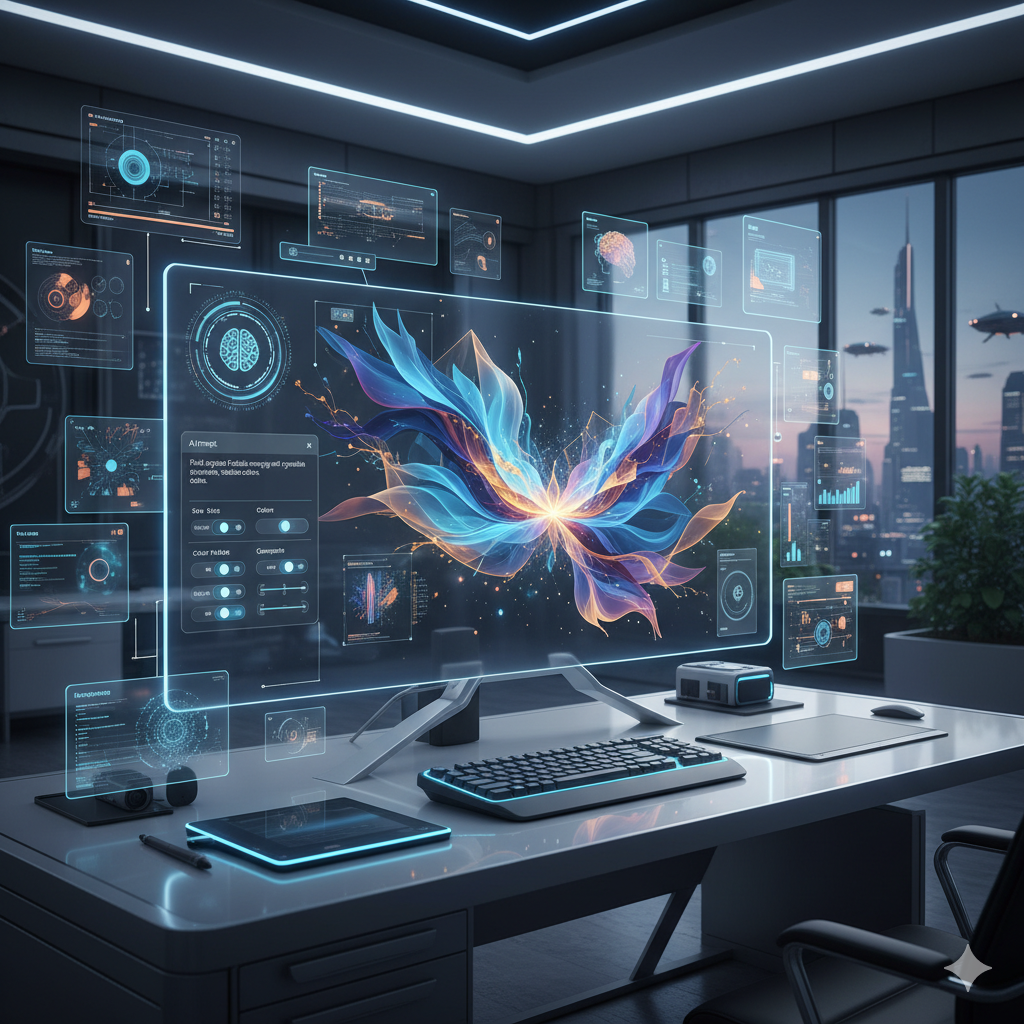
In an era defined by rapid technological advancement, the boundaries of creativity are constantly being redefined. Few innovations have sparked as much excitement and debate in the art world as Artificial Intelligence. What was once the exclusive domain of science fiction, the ability to generate stunning, original artwork from simple text prompts, is now a tangible reality accessible to anyone with an internet connection. This revolutionary shift is largely powered by a burgeoning ecosystem of free AI tools designed to unlock unprecedented creative potential for digital designers, artists, marketers, and hobbyists alike.
This comprehensive guide delves deep into the transformative power of these free AI image generation tools. We will explore how these platforms are not just automating tasks but are fundamentally changing the creative process, offering new avenues for expression and problem-solving. From understanding the underlying principles to mastering the art of prompt engineering, integrating AI into your workflow, and navigating the ethical landscape, we will provide a detailed roadmap to harnessing this incredible technology. Prepare to discover how you can turn abstract concepts into breathtaking visual art, absolutely free, and elevate your digital design and creativity to new heights.
The Dawn of AI Art: A New Creative Paradigm
The journey of AI in image generation has been nothing short of astonishing. What began with rudimentary algorithms producing abstract patterns has rapidly evolved into sophisticated models capable of generating photorealistic images, intricate illustrations, and unique artistic styles with remarkable fidelity. This evolution owes much to breakthroughs in deep learning, particularly Generative Adversarial Networks (GANs) and more recently, Diffusion Models.
Generative Adversarial Networks (GANs), first introduced in 2014, fundamentally changed the game. They consist of two neural networks, a generator and a discriminator, locked in a continuous competition. The generator creates images, while the discriminator tries to determine if they are real or fake. Through this adversarial training, the generator learns to produce increasingly convincing images. While powerful, GANs often struggled with diversity and control over specific elements in the output.
The more recent advent of Diffusion Models has pushed the boundaries even further. These models work by taking an image, gradually adding noise to it until it becomes pure static, and then learning to reverse this process, reconstructing the original image from the noise. When guided by text prompts, they can generate entirely new images that align perfectly with the described concepts. This methodology allows for greater control, higher fidelity, and more coherent outputs, making them the backbone of many popular AI art tools today, including Stable Diffusion and DALL-E 3.
The immediate impact of these advancements is the democratization of art creation. Traditionally, artistic skills like drawing, painting, or sculpting required years of dedicated practice and expensive tools. Now, with a few carefully chosen words, anyone can conjure complex visual narratives, intricate patterns, or stunning landscapes. This doesn’t diminish the value of human artists; instead, it shifts their role. Artists can now become “curators of concepts,” guiding AI to materialize their visions, experimenting with styles and ideas at an unprecedented pace. Designers can rapidly prototype ideas, generate endless variations, and overcome creative blocks with a speed and efficiency previously unimaginable. The barrier to entry for visual content creation has dramatically lowered, opening up a world of possibilities for individuals and small businesses who might not have had the resources for professional design services.
Understanding Free AI Image Generation Tools
The term “free AI tools” often comes with nuances. While many powerful platforms offer a completely free tier, others operate on a freemium model, providing a limited number of free generations or basic features, with premium subscriptions unlocking higher limits, faster processing, advanced controls, and commercial licenses. Understanding these distinctions is crucial for maximizing your creative output without incurring costs.
Common features you’ll find across most free AI image generators include:
- Text-to-Image Generation: The most fundamental feature, allowing users to describe an image using text prompts, which the AI then visualizes. This is the core functionality that has captured the public imagination.
- Image-to-Image Generation: The ability to transform an existing image based on a text prompt or another image. This can be used for stylization, altering elements, or generating variations of a source image. For instance, you could upload a sketch and ask the AI to render it in a photorealistic style.
-
Inpainting and Outpainting:
- Inpainting: Modifying specific areas within an existing image by masking them and providing a new text prompt. This is incredibly useful for correcting errors, adding new elements, or changing features of a subject without re-generating the entire image. Imagine removing a distracting background element or changing the color of an object.
- Outpainting: Extending the canvas beyond the original image boundaries, generating new content that seamlessly blends with the existing picture. This is perfect for expanding landscapes, adding context, or creating wider panoramic views from a smaller source image.
- Style Transfer: Applying the artistic style of one image to the content of another. While not always a primary text-to-image feature, some tools integrate elements of this, allowing users to specify artistic styles like “impressionistic,” “cubist,” or “pixel art.”
- Upscaling: Enhancing the resolution of generated images. Free tools often produce images at lower resolutions to conserve computational resources, making an upscaler an invaluable feature for print or high-detail digital use. Many platforms offer this either as a built-in function or suggest integrating with external free upscaling tools.
- Negative Prompts: A powerful feature that allows users to specify what they do not want to see in the generated image (e.g., “ugly, deformed, low quality”). This significantly helps in refining output and avoiding common AI artifacts.
However, it’s also important to acknowledge the limitations of free tools compared to their paid counterparts. These often include:
- Resolution and Detail: Free outputs might be limited to smaller resolutions, requiring upscaling for professional use. Higher detail and larger sizes are typically premium features.
- Daily Generation Limits: Most free tiers impose daily or monthly credit limits, which can be exhausted quickly during intensive creative sessions.
- Processing Speed: Free users often experience slower generation times due to lower priority access to server resources.
- Advanced Customization: Features like fine-tuned control over seed values, custom model uploads, or specific algorithmic parameters might be reserved for paid subscribers.
- Commercial Rights: While many free tools allow commercial use, some might have restrictions or require attribution, or their paid tiers offer clearer, more robust commercial licenses. Always check the terms of service for each specific tool.
Despite these limitations, the free tiers of many AI tools offer an incredible amount of utility and are more than sufficient for learning, experimentation, personal projects, and even many professional applications. They serve as an excellent entry point into the world of AI art without any financial commitment.
Top Free AI Image Generation Tools Revolutionizing Digital Design
The landscape of free AI image generation tools is dynamic and constantly evolving, with new platforms and features emerging regularly. Here, we highlight some of the leading contenders that offer substantial free access and powerful capabilities for digital design and creativity.
Stable Diffusion (Online Demos & Open-Source)
Stable Diffusion stands as a titan in the AI art community. What makes it particularly transformative is its open-source nature. This means its core models are publicly available, allowing developers and enthusiasts to run it locally, fine-tune it, and build upon it. This has led to an explosion of custom models, interfaces, and innovations. For those without the powerful hardware required to run it locally, numerous online demos and platforms offer free access to Stable Diffusion models.
- Strengths: Unmatched flexibility, vast array of community-contributed models (e.g., specific art styles, character generators), strong control over parameters, excellent for photorealism and artistic styles, continuous updates.
- Limitations (online demos): May have queues, rate limits, or require signing up. Commercial usage rights depend on the specific platform hosting the demo and the model used.
- Ideal for: Advanced users, artists wanting deep control, developers, anyone seeking a specific aesthetic through custom models, rapid prototyping, and iterative design.
Leonardo.AI (Free Tier)
Leonardo.AI has quickly gained popularity, especially among concept artists, game developers, and illustrators. It provides a user-friendly interface combined with access to a wide range of fine-tuned models, including many based on Stable Diffusion, alongside its own proprietary models. Its free tier offers a generous amount of daily credits, making it an excellent choice for consistent use.
- Strengths: Intuitive interface, excellent for generating game assets, character designs, concept art, and detailed illustrations. Features like image-to-image, prompt magic, and AI canvas (inpainting/outpainting) are readily available. Strong community features for sharing and discovering prompts.
- Limitations (free tier): Credit limits apply daily, slower generation speeds for free users compared to paid, commercial usage is permitted but check specific terms.
- Ideal for: Game designers, illustrators, graphic designers seeking high-quality, consistent outputs and specific artistic styles.
Bing Image Creator (Powered by DALL-E 3)
Integrated seamlessly into Microsoft’s Bing search engine and Edge browser, Bing Image Creator offers free image generation powered by OpenAI’s cutting-edge DALL-E 3 model. DALL-E 3 is renowned for its exceptional understanding of nuanced prompts and its ability to generate highly coherent and contextually accurate images, often handling text within images better than other models.
- Strengths: Excellent prompt understanding, high-quality and consistent outputs, ability to render text within images, user-friendly interface, deep integration with Microsoft services. Free “boosts” are given daily for fast generation.
- Limitations: Limited control over advanced parameters (e.g., seed, style modifiers) compared to Stable Diffusion-based tools. Daily boost limits. Content filters are relatively strict.
- Ideal for: Casual users, marketers needing quick, high-quality visuals, social media managers, and anyone prioritizing ease of use and strong prompt adherence.
DreamStudio (Stability AI – Free Credits)
Developed by Stability AI, the creators of Stable Diffusion, DreamStudio offers a direct and often immediate way to access the latest iterations of Stable Diffusion models. While it operates on a credit system, new users typically receive a substantial number of free credits to start, allowing for extensive experimentation.
- Strengths: Access to the newest Stable Diffusion models directly from the source, robust control over generation parameters (steps, guidance scale, negative prompts), excellent for detailed and customized outputs. Good for both photorealism and artistic styles.
- Limitations (free credits): Once free credits are exhausted, further generation requires payment. Interface might be slightly less intuitive for absolute beginners than others.
- Ideal for: Users who want direct access to cutting-edge Stable Diffusion models, artists who require fine-tuned control over their outputs, and those willing to purchase credits for extended use.
Canva’s Magic Media (Free Tier)
For designers already familiar with Canva, its integrated Magic Media tool is a game-changer. It brings AI image generation directly into a widely used graphic design platform. While its capabilities might not be as deep as specialized AI art generators, its integration makes it incredibly convenient for users who primarily work within Canva.
- Strengths: Seamless integration into Canva’s design ecosystem, extremely user-friendly, great for generating quick design elements, backgrounds, or placeholders directly within a project. Offers both image and video generation.
- Limitations (free tier): Limited number of free generations per day/month. Less control over advanced AI parameters. Quality might not match dedicated AI art tools for complex prompts.
- Ideal for: Graphic designers, content creators, small business owners who use Canva for their daily design needs and want to quickly add AI-generated visuals to their projects.
Mastering the Prompt: The Language of AI Creativity
Generating stunning AI art is less about artistic skill and more about “prompt engineering” – the art and science of crafting effective text inputs that guide the AI to produce desired results. Think of the AI as an incredibly skilled but literal artist; it needs clear, descriptive, and well-structured instructions to bring your vision to life.
The core of prompt engineering lies in understanding how to communicate your concept effectively. Here are fundamental elements to master:
- Subject and Core Concept: Start with the main subject and action. Be specific. Instead of “dog,” try “a golden retriever playing in a park.”
- Style and Artistic Influence: This is where you define the aesthetic. Do you want it to look like a painting, a photograph, a cartoon, or a 3D render? You can specify artists (e.g., “in the style of Van Gogh”), art movements (e.g., “impressionistic,” “cyberpunk”), rendering styles (e.g., “photorealistic,” “vector art,” “oil painting”), or even camera lenses (e.g., “shot on an 85mm lens,” “anamorphic lens flare”).
- Details and Attributes: Add descriptive adjectives and nouns. What color is the subject? What texture? What emotion? “A majestic golden retriever, fluffy fur, joyful expression, chasing a vibrant red ball.”
- Environment and Background: Where is the scene taking place? Describe the setting. “In a sun-drenched autumn park, with fallen leaves and distant oak trees.”
- Lighting and Atmosphere: Lighting dramatically affects mood. Consider “golden hour,” “dramatic chiaroscuro,” “soft studio lighting,” “neon glow,” “foggy morning.” Atmosphere can be “serene,” “eerie,” “energetic.”
- Composition and Perspective: How is the image framed? “Close-up,” “wide shot,” “dutch angle,” “macro photography,” “cinematic view.”
- Quality Modifiers: Words that instruct the AI to produce a high-quality image. Common examples include “8k,” “ultra detailed,” “masterpiece,” “award-winning photograph,” “highly intricate,” “concept art quality.”
- Negative Prompts: This is arguably as important as the positive prompt. Use this to tell the AI what you don’t want. Common negative prompts include “ugly, deformed, disfigured, low quality, bad anatomy, missing limbs, extra fingers, poorly drawn, blurry, out of focus, watermark, text.” This helps clean up common AI artifacts and inconsistencies.
Iterative Refinement is Key: Rarely will your first prompt yield a perfect result. Think of prompt engineering as a conversation. Generate an image, analyze what worked and what didn’t, and then refine your prompt based on the output. Add more detail, change modifiers, or introduce negative prompts. For instance, if your “golden retriever” looks like a random brown dog, add “golden fur,” “specific breed golden retriever.” If it has too many limbs, add “bad anatomy, extra limbs” to your negative prompt.
Many online communities and prompt marketplaces have emerged to help users find inspiration and learn from others’ successful prompts. Platforms like Lexica.art or Civitai allow users to browse images and see the exact prompts and parameters used to create them. Studying these can significantly accelerate your learning curve.
Integrating AI-Generated Art into Your Workflow
The true power of free AI image generation tools lies in their ability to seamlessly integrate into various digital design and creative workflows, enhancing efficiency and opening up new possibilities. They are not merely standalone art generators but versatile assistants capable of augmenting human creativity across numerous domains.
1. Graphic Design and Branding
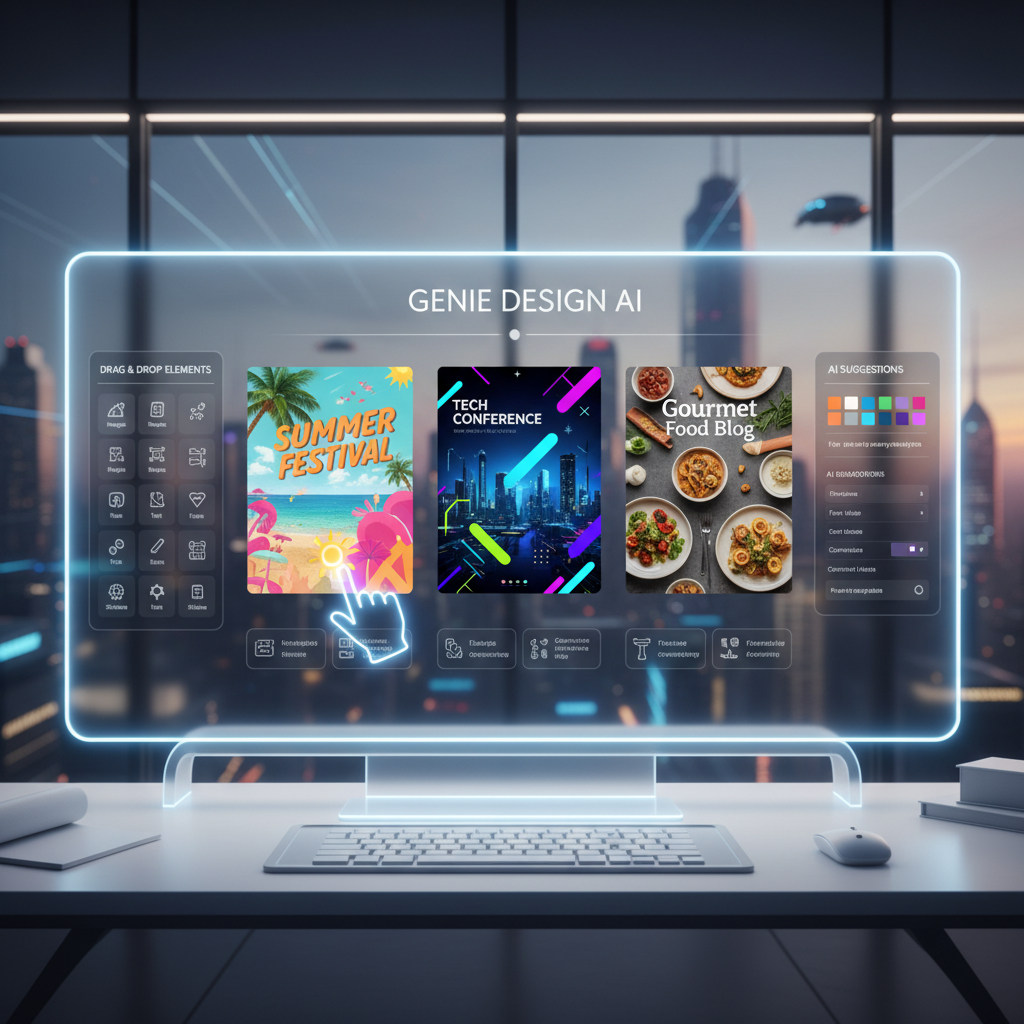
- Concept Mockups: Rapidly generate multiple visual concepts for logos, posters, brochures, or website layouts. A client asks for “futuristic tech company logo design with a minimalist aesthetic”? AI can provide dozens of starting points in minutes.
- Backgrounds and Textures: Need a unique background for a social media post, a website banner, or a presentation slide? AI can create bespoke textures, abstract patterns, or scenic backdrops tailored to your brand’s aesthetic.
- Icons and Illustrations: Generate custom icons, mascots, or small illustrations that perfectly fit your brand’s visual language, saving time and money on stock assets.
- Ad Creative: Create diverse visual assets for advertising campaigns, testing different styles, themes, and emotional appeals to see what resonates best with your target audience.
2. Illustration and Concept Art
- Storyboarding and Visual Development: Quickly generate character designs, environment concepts, or prop ideas for films, games, or comics. Iterate on character appearances, clothing, and expressions without hours of sketching.
- Overcoming Creative Blocks: When inspiration wanes, input a few keywords and let the AI provide fresh perspectives, unexpected combinations, or starting points that can reignite your imagination.
- Style Exploration: Experiment with hundreds of artistic styles, from classical to contemporary, without needing to master each technique manually. This is invaluable for finding the perfect look and feel for a project.
- Base Layers and References: Generate detailed references for complex elements like architecture, flora, or machinery. Artists can use AI-generated images as a base to paint over, refine, and add their unique artistic touch.
3. Web Design and Development
- Hero Images and Banners: Generate unique, high-quality hero images for websites or landing pages that perfectly match the site’s theme and content, avoiding generic stock photos.
- Placeholder Content: During the development phase, use AI to create realistic image placeholders that give a better sense of the final design than simple grey boxes.
- UI/UX Elements: Experiment with abstract patterns, textures, or even subtle visual cues for user interface elements.
4. Marketing and Social Media
- Engaging Social Media Posts: Create eye-catching visuals for platforms like Instagram, Facebook, and Twitter that stand out in crowded feeds. Generate images for specific campaigns, events, or promotions.
- Blog Post Headers: Design unique and relevant header images for blog articles, making them more appealing and shareable.
- Product Visualizations: While advanced product rendering often requires specialized tools, AI can generate concepts or stylized representations of products, especially for early-stage marketing materials.
5. Personal Projects and Hobbyists
- Personalized Art: Generate custom wallpapers, profile pictures, or gifts.
- Creative Writing Aids: Writers can generate visual representations of their characters, settings, and scenes, helping them visualize their stories more vividly.
- Learning and Experimentation: The free tools are perfect for simply exploring the capabilities of AI art, learning prompt engineering, and honing your creative vision without any pressure.
The key is to view AI as a powerful collaborative partner, not a replacement. The most impactful results often come from a hybrid approach, where AI generates the initial concepts or elements, and human designers then refine, compose, and add their unique artistic judgment and polish using traditional design software like Adobe Photoshop, GIMP, or Affinity Designer. This fusion of AI efficiency and human artistry creates a synergy that truly transforms concepts into art.
Ethical Considerations and Responsible AI Use
As AI art tools become increasingly powerful and accessible, it is imperative to address the ethical implications and encourage responsible use. This new frontier presents both tremendous opportunities and significant challenges that creators, platforms, and the public must navigate.
1. Copyright and Ownership
One of the most debated topics is the copyright status of AI-generated art. Currently, in many jurisdictions (including the US), copyright protection generally requires human authorship. This raises questions: Who owns the AI-generated image? The user who wrote the prompt? The developer of the AI model? Neither? Some platforms claim ownership of images generated on their systems, while others grant commercial rights to the prompt creator. It is crucial for users, especially those intending commercial use, to carefully review the terms of service for each AI tool they use. The legal landscape is still evolving, and clarity on this issue will likely emerge through future court cases and legislation.
2. Bias in Training Data
AI models are trained on vast datasets of existing images, often scraped from the internet. If these datasets contain biases (e.g., underrepresentation of certain demographics, overrepresentation of stereotypes), the AI will learn and perpetuate these biases in its outputs. This can lead to images that reinforce harmful stereotypes, lack diversity, or misrepresent certain groups. Responsible use involves:
- Being aware of potential biases in the tools you use.
- Actively trying to counteract bias in your prompts by specifying diverse subjects and styles.
- Critically evaluating AI outputs for fairness and representation.
3. Misinformation and Deepfakes
The ability of AI to generate highly realistic images poses a risk of creating convincing misinformation, propaganda, or “deepfakes” (synthetic media that can portray people saying or doing things they never did). While powerful, free AI tools currently have limitations that often make deepfakes detectable upon close inspection, the technology is advancing rapidly. Responsible creators should commit to:
- Transparency: Clearly labeling AI-generated content when appropriate.
- Not using AI to spread false information or create malicious content.
- Promoting media literacy to help differentiate real from AI-generated content.
4. Environmental Impact
Training and running large AI models consume significant computational resources and energy, contributing to carbon emissions. While individual image generations on free tiers have a relatively small footprint, the cumulative impact of widespread use is a growing concern. Users can contribute by:
- Being efficient with generations, refining prompts rather than generating endless variations.
- Supporting platforms that prioritize energy efficiency in their infrastructure.
5. The Future of Creative Professions
Many artists and designers worry about job displacement as AI tools become more sophisticated. While AI can automate certain tasks, it also creates new roles and opportunities. The emphasis shifts from manual execution to concept generation, prompt engineering, curation, and the unique human touch that AI cannot replicate (yet). The key is adaptation and embracing AI as a co-creative tool rather than a competitor. Designers who learn to effectively wield AI will be at a significant advantage.
Ultimately, responsible AI use is a shared responsibility. As creators, we have a role in shaping the ethical landscape of this technology, ensuring it is used to uplift, inspire, and create positive value, rather than to deceive or harm. Awareness, critical thinking, and proactive ethical engagement are paramount.
Tips and Tricks for Optimizing Your AI Art Workflow
To truly transform your concepts into art with free AI tools, it’s not enough to simply type a prompt. Optimizing your workflow involves a combination of strategic thinking, continuous learning, and smart integration with other tools.
- Embrace Iteration and Experimentation: The first image is rarely the best. Generate multiple variations, tweak your prompt incrementally, and observe how small changes impact the output. Think of it as sculpting – you start with a rough block and slowly refine it. Don’t be afraid to try wildly different prompts just to see what the AI can do; unexpected results can often spark new ideas.
-
Leverage Community Resources: The AI art community is vibrant and incredibly helpful.
- Prompt Databases: Websites like Lexica.art, PromptBase (some free), and Civitai allow you to browse thousands of AI-generated images along with the exact prompts and parameters used to create them. This is an invaluable learning tool.
- Online Forums and Discord Servers: Join communities dedicated to specific AI tools (e.g., Stable Diffusion, Leonardo.AI). You can ask questions, share your work, get feedback, and discover new techniques.
- Tutorials: YouTube and various blogs are rich with tutorials on advanced prompt engineering, specific tool features, and post-processing techniques.
-
Combine AI with Traditional Tools: AI is excellent for concept generation and creating initial assets, but human refinement is often necessary.
- Post-Processing: Use image editing software like Adobe Photoshop, GIMP, Krita, or Photopea (free online) to adjust colors, lighting, composition, add details, fix imperfections, or combine multiple AI-generated elements.
- Inpainting/Outpainting Refinements: Use these AI features to fix small areas or extend canvases, then bring them into an editor for final touch-ups.
- Blending Elements: Generate individual elements (e.g., a character, a background, a prop) and then composite them together in a traditional editor.
- Utilize Negative Prompts Effectively: As discussed earlier, negative prompts are incredibly powerful. Keep a running list of common negative prompts you use to avoid typical AI artifacts (e.g., “ugly, deformed, bad anatomy, extra limbs, low resolution, blurry, text, watermark”). Tailor negative prompts to specific issues you encounter with your generations.
-
Understand Parameters: Most tools offer various parameters beyond just the text prompt:
- Seed: A numerical value that determines the initial noise pattern. Keeping the same seed can help generate consistent variations.
- Guidance Scale (CFG Scale): Controls how strongly the AI adheres to your prompt. Higher values mean more adherence but can sometimes lead to less creativity or over-saturation.
- Steps: The number of iterative steps the AI takes to refine the image. More steps generally mean better quality but longer generation times.
- Aspect Ratio: Crucial for determining the orientation and shape of your image (e.g., 1:1 for squares, 16:9 for landscapes, 9:16 for portraits).
- Stay Updated: The field of AI art is moving at an incredible pace. New models, features, and techniques are released constantly. Follow AI news sources, subscribe to newsletters from Stability AI, OpenAI, and other key players, and regularly check in with the communities.
- Organize Your Prompts: Keep a text document or use a dedicated prompt management tool to store your successful prompts and the images they generated. This saves time and helps you replicate good results or iterate on them efficiently.
By integrating these tips and tricks into your daily practice, you will not only generate better AI art but also develop a more efficient, enjoyable, and creatively rewarding workflow.
Comparison Tables
Table 1: Feature Comparison of Popular Free AI Art Tools
| Tool | Core Technology | Strengths (Free Tier) | Limitations (Free Tier) | Ideal For |
|---|---|---|---|---|
| Stable Diffusion (Online Demos/Open-Source) | Diffusion Models (various custom checkpoints) | High flexibility, vast custom models, deep control over parameters, good for specific styles, photorealism. | Requires powerful hardware for local use; online demos may have queues/limits; learning curve can be steep. | Advanced artists, developers, specific artistic styles, deep customization, iterative design. |
| Leonardo.AI | Stable Diffusion derivatives, proprietary models | User-friendly, excellent for game assets/concept art, dedicated models, community features, inpainting/outpainting. | Daily credit limits, slower generation speed for free users. | Game designers, illustrators, graphic designers, artists needing specific aesthetic models. |
| Bing Image Creator | DALL-E 3 | Exceptional prompt understanding, coherent and contextually accurate images, good text rendering, integrated with Microsoft. | Limited advanced parameter control, strict content filters, daily “boost” limits. | Casual users, marketers, social media managers, general quick visual creation, strong prompt adherence. |
| DreamStudio | Stable Diffusion (latest models) | Direct access to cutting-edge Stable Diffusion, robust control over generation parameters, high quality. | Relies on a credit system; initial free credits can be exhausted quickly, requiring payment for more. | Users wanting latest Stable Diffusion models, fine-tuned control, testing new features. |
| Canva’s Magic Media | Proprietary (likely based on various models) | Seamless integration with Canva’s design ecosystem, extremely user-friendly, quick asset generation within projects. | Limited daily generations, less control over AI specifics, quality might not match dedicated tools for complex prompts. | Graphic designers, content creators, small businesses already using Canva for general design needs. |
Table 2: Prompt Engineering Elements and Their Impact
| Element Type | Description | Example | Impact on Output |
|---|---|---|---|
| Subject/Concept | The main focus of the image, what you want to depict. | “A knight riding a dragon” | Determines the core objects and actions in the scene. Needs to be clear and specific. |
| Style/Artistic Influence | The aesthetic and visual treatment of the image. | “Oil painting, by Rembrandt,” “Cyberpunk aesthetic,” “Watercolor sketch” | Shapes the overall look, texture, color palette, and artistic interpretation of the subject. |
| Details/Attributes | Specific characteristics of the subject or objects. | “Glimmering armor, red scales, smoke billowing from nostrils” | Adds richness, specificity, and fidelity to the elements, making them more unique and descriptive. |
| Environment/Background | The setting or scene where the subject is located. | “Flying over a medieval castle at sunset,” “Misty mountain range” | Provides context, depth, and atmosphere to the image, influencing the overall mood. |
| Lighting/Mood | How light interacts with the scene and the emotional tone. | “Dramatic chiaroscuro,” “Soft volumetric lighting,” “Ethereal glow” | Significantly alters the emotional impact, realism, and visual interest of the image. |
| Composition/Perspective | How the image is framed and the viewpoint. | “Wide shot,” “Close-up portrait,” “From a low angle,” “Cinematic” | Influences the storytelling, focus, and visual dynamism of the generated image. |
| Quality Modifiers | Keywords to instruct the AI to generate high-quality outputs. | “8k,” “Ultra detailed,” “Masterpiece,” “Photorealistic” | Enhances resolution, intricacy, sharpness, and overall perceived quality of the image. |
| Negative Prompts | Instructions on what to explicitly avoid in the image. | “Ugly, deformed, bad anatomy, extra limbs, watermark, low quality, blurry” | Crucial for refining outputs, eliminating common AI artifacts, and improving overall aesthetic appeal. |
Practical Examples and Real-World Use Cases
To truly grasp the transformative potential of free AI image generation tools, let’s explore some real-world scenarios where they are making a significant impact. These examples highlight how diverse individuals and professionals can leverage AI to enhance their creative output and efficiency.
Case Study 1: The Indie Game Developer
Scenario: Maya is a solo indie game developer creating a fantasy RPG. She has a strong vision for her world and characters but lacks the budget and time for extensive concept art or 3D asset creation from scratch.
AI Solution: Maya turns to Leonardo.AI’s free tier. She uses text prompts to generate dozens of variations for her main character’s armor, weapons, and facial features. For environmental art, she describes “ancient elven forests with bioluminescent flora” and quickly gets stunning concept art for different biomes. She then uses the image-to-image feature to take her simple sketches of enemy creatures and ask the AI to render them in a more detailed, painted style. The AI’s inpainting tools allow her to add specific magical runes to weapons or alter the color scheme of a generated outfit with ease. This rapid prototyping allows her to visualize her game world in incredible detail, refine her ideas quickly, and even use some AI-generated elements as placeholder art during early development, saving immense time and resources.
Case Study 2: The Social Media Marketing Manager
Scenario: David manages social media for a small e-commerce brand selling artisanal coffee. He constantly needs fresh, engaging visuals for Instagram, Facebook ads, and blog posts, but stock photo libraries feel generic, and hiring a photographer is too expensive for daily content.
AI Solution: David utilizes Bing Image Creator (DALL-E 3) for its excellent prompt understanding and high-quality outputs. For an ad campaign promoting a new “Ethiopian Yirgacheffe,” he prompts: “photorealistic flat lay of an artisanal coffee cup, steam rising, next to roasted coffee beans on a rustic wooden table, soft morning light, minimalist design.” He generates several options, picks the best ones, and even uses AI to create unique abstract backgrounds with coffee-related motifs for his Instagram stories. For a blog post about coffee traditions worldwide, he asks for “a traditional Japanese tea ceremony, but with coffee, serene atmosphere,” getting unique visuals that would be impossible to find in stock libraries. The fast generation and coherent results allow him to maintain a high volume of unique, branded content without a large budget.
Case Study 3: The Struggling Illustrator/Artist
Scenario: Sarah is a freelance illustrator experiencing a severe creative block. She needs fresh ideas for her portfolio and struggles with generating complex background elements for her character illustrations.
AI Solution: Sarah experiments with Stable Diffusion online demos. She inputs prompts like “a magical forest, bioluminescent mushrooms, ancient trees, misty atmosphere, concept art” to generate various background ideas. When she finds a suitable background, she uses image-to-image to create variations or uses inpainting to add specific elements like a hidden pathway or a glowing orb. To overcome her block, she tries abstract prompts like “dreamlike landscape, melting clocks, surrealism” just to get her creative juices flowing. The AI provides endless inspiration, allowing her to focus her manual efforts on her strength – character design – while the AI handles the complex environmental details. She then imports the AI-generated backgrounds into Photoshop and paints her characters into the scenes, refining the overall composition.
Case Study 4: The Small Business Owner
Scenario: Elena owns a handmade jewelry shop online. She needs unique banner images for her website, promotional graphics for seasonal sales, and custom visuals for her product listings, but she has no design experience and a tight budget.
AI Solution: Elena integrates Canva’s Magic Media directly into her workflow. For her website banner, she describes “a minimalist display of handcrafted silver earrings on a velvet cushion, soft spotlight, elegant backdrop, jewelry photography style.” She generates several options directly within Canva, then adds text overlays and her logo using Canva’s editing tools. For a seasonal sale, she generates images like “winter wonderland scene, delicate snowflakes, sparkling jewelry, festive atmosphere” to create eye-catching promotional graphics. The ease of use and direct integration allow her to produce professional-looking marketing materials without ever leaving her familiar design platform, significantly enhancing her brand’s visual appeal.
These examples demonstrate that free AI image generation tools are not just novelties; they are powerful, practical assets that democratize digital design and creativity, empowering individuals and small teams to achieve professional-level visuals efficiently and affordably.
Frequently Asked Questions
Q: Are free AI art tools truly free, or are there hidden costs?
A: Most free AI art tools operate on a freemium model. This means they offer a completely free tier with a certain number of daily or monthly image generations, access to basic models, or limited features. While you can create a significant amount of art without spending a penny, premium subscriptions typically unlock higher generation limits, faster processing, advanced features (like higher resolution, specific fine-tuned models, or priority access), and sometimes more robust commercial usage rights. The “hidden cost,” if any, might be your time if you run out of credits and have to wait for them to replenish, or if you encounter slower processing speeds. Always check the specific tool’s terms of service for credit limits and usage policies.
Q: Can I use AI-generated art commercially, even with free tools?
A: The commercial use policy varies significantly between different AI tools. Some platforms, like Bing Image Creator (DALL-E 3), generally allow commercial use of images generated with their free tier, provided you adhere to their content policies. Others, like Leonardo.AI, also typically grant commercial rights to the user for images generated on their free tier. However, for open-source models like Stable Diffusion, the usage rights often depend on the specific license of the model used and the platform you are generating it on. It is absolutely crucial to read and understand the Terms of Service and licensing agreements of each individual tool you use, especially if you intend to profit from the generated art. When in doubt, assume restricted commercial use or opt for paid tiers that offer clear commercial licenses.
Q: How do AI image generators work at a basic level?
A: At a basic level, AI image generators, particularly the popular Diffusion Models, work by a process of “denoising.” They are trained on vast datasets of images and their corresponding text descriptions. During training, the AI learns to take an image, add increasing amounts of random noise to it until it’s just static, and then reverse the process to reconstruct the original image. When you provide a text prompt, the AI starts with a canvas of pure noise and, guided by your prompt, iteratively removes noise while shaping the image to match the description it learned from its training data. It’s like sculpting an image out of random static, with your prompt acting as the blueprint.
Q: What is prompt engineering, and why is it important?
A: Prompt engineering is the skill of crafting effective text inputs (prompts) to guide an AI model to generate desired images. It’s crucial because AI models are literal; they interpret your words precisely. A vague prompt like “a house” will yield a generic image, while a detailed prompt like “a whimsical cottage, thatched roof, blooming roses around the door, misty morning, impressionistic painting style, highly detailed” will produce a specific, high-quality result. Mastering prompt engineering allows you to accurately communicate your creative vision to the AI, moving beyond random generations to intentional, artistic outcomes, and unlock the full potential of these tools.
Q: What are negative prompts, and why are they important?
A: Negative prompts are a set of keywords or phrases that tell the AI what you explicitly do not want to see in your generated image. They are the opposite of regular prompts. For example, if you generate a human figure and it consistently has deformed hands or extra limbs, you would add “deformed, bad anatomy, extra limbs, ugly” to your negative prompt. This guides the AI away from undesirable elements. Negative prompts are incredibly important for refining outputs, removing common AI artifacts, improving image quality, and ensuring that the final image is clean and aesthetically pleasing. They significantly reduce the amount of post-processing needed.
Q: How can I improve the quality of my AI-generated images?
A: To improve image quality:
- Be Specific with Prompts: Include details about subject, style, lighting, composition, and mood.
- Use Quality Modifiers: Add terms like “8k,” “ultra detailed,” “masterpiece,” “photorealistic.”
- Employ Negative Prompts: Actively list what you want to avoid (e.g., “blurry, low quality, deformed”).
- Iterate and Refine: Make small changes to your prompt and generate multiple images to find the best variations.
- Adjust Parameters: Experiment with guidance scale (CFG), steps, and seed values if the tool allows.
- Upscale: Use built-in upscalers or external tools to increase resolution after generation.
- Post-Process: Fine-tune colors, contrast, and details in image editing software.
Q: Is AI art “real art”?
A: This is a philosophical debate with no universally agreed-upon answer. From one perspective, if art is about conveying emotion, telling a story, or evoking an aesthetic response, then AI-generated images can certainly fulfill these criteria. The human input (prompt engineering, curation, post-processing) can be seen as an artistic act. From another perspective, some argue that art requires conscious intent, human skill, and a soul, which AI lacks. Many view AI art as a new medium or tool, similar to how photography was initially debated against painting. Ultimately, the definition of “real art” is subjective, but AI-generated images are undeniably a new and powerful form of visual expression.
Q: What are the common challenges with free AI tools?
A: Common challenges include:
- Credit Limitations: Running out of daily/monthly free generations.
- Slower Processing: Free users often experience longer wait times.
- Inconsistent Results: AI can sometimes struggle with specific details, especially hands or complex compositions.
- Content Filters: Strict filters can prevent certain creative expressions.
- Lack of Advanced Control: Limited access to parameters like custom models or fine-tuning.
- Ethical Dilemmas: Navigating copyright, bias, and responsible use.
- Steep Learning Curve: Mastering prompt engineering and tool specifics takes time.
Q: How do I choose the best free AI tool for my needs?
A: Consider the following:
- Your Primary Goal: Do you need concept art for games (Leonardo.AI), quick marketing visuals (Bing Image Creator, Canva), or deep customization (Stable Diffusion demos)?
- Ease of Use: Are you a beginner (Canva, Bing) or comfortable with more complex interfaces (DreamStudio, Stable Diffusion)?
- Generation Limits: How many images do you need to generate daily/monthly?
- Quality/Style Preference: Does the tool excel in the specific aesthetic you’re looking for (e.g., photorealism, specific art styles)?
- Integration: Do you need it to integrate with other design software you use (e.g., Canva)?
- Commercial Use: Always check the commercial licensing terms if you plan to use it for professional projects.
The best approach is to experiment with a few different tools to see which one aligns best with your workflow and creative vision.
Q: What’s the future of AI in digital art and design?
A: The future is incredibly promising and dynamic. We can expect:
- More Sophisticated Models: AI will become even better at understanding nuanced prompts, generating perfect hands, and creating coherent scenes.
- Greater Control: More intuitive interfaces and advanced parameters will give artists even finer control over every aspect of image generation.
- Hybrid Workflows: Seamless integration between AI tools and traditional design software will become standard, creating powerful human-AI co-creative pipelines.
- Personalized AI: Users will be able to train their own AI models on their unique artistic styles, creating AI assistants that genuinely reflect their personal aesthetic.
- New Creative Avenues: AI will enable entirely new forms of art and design that we can’t even imagine today, pushing the boundaries of what’s possible.
- Ethical Frameworks: Legal and ethical guidelines around AI art, copyright, and responsible use will continue to evolve and become clearer.
The synergy between human creativity and AI capabilities is set to redefine the entire creative landscape.
Key Takeaways
- AI Democratizes Art: Free AI tools are breaking down barriers, allowing anyone to generate high-quality visual art and digital designs regardless of traditional artistic skill.
- Prompt Engineering is Core: Mastering the art of crafting precise and descriptive text prompts is fundamental to achieving desired AI-generated outcomes.
- Powerful Free Tools Exist: Platforms like Stable Diffusion (via demos), Leonardo.AI, Bing Image Creator (DALL-E 3), DreamStudio, and Canva’s Magic Media offer robust free tiers for extensive creative exploration.
- Integration Enhances Workflow: AI-generated art can be seamlessly integrated into various professional workflows, including graphic design, illustration, web design, and marketing, acting as a powerful creative assistant.
- Ethical Use is Paramount: Users must be aware of and responsibly navigate issues related to copyright, bias, misinformation, and the environmental impact of AI generation.
- Iteration and Learning are Key: Continuous experimentation, prompt refinement, leveraging community resources, and combining AI with traditional tools are crucial for optimizing results.
- The Future is Collaborative: AI is transforming into a co-creative partner, enhancing human artistry rather than replacing it, fostering new forms of expression and innovation.
Conclusion
The journey from abstract concept to tangible art has never been more accessible or exciting than with the advent of free AI image generation tools. These revolutionary platforms are not merely technological novelties; they are powerful engines of creativity, empowering individuals, artists, designers, and entrepreneurs to visualize their ideas with unprecedented speed and efficiency, all without the traditional cost barriers.
From the nuanced control offered by open-source Stable Diffusion models to the user-friendly interfaces of Leonardo.AI, Bing Image Creator, and Canva’s Magic Media, there is a tool perfectly suited for every creative need. By understanding the principles of prompt engineering, embracing an iterative workflow, and integrating AI into existing design processes, creators can unlock entirely new dimensions of artistic expression.
As we navigate this new creative paradigm, it is imperative to do so with a strong sense of ethical responsibility. Addressing concerns around copyright, bias, and responsible content creation will ensure that AI remains a force for good, fostering innovation and inspiring future generations of digital artists.
The future of digital design and creativity is undoubtedly intertwined with AI. These free tools serve as an invaluable gateway, inviting everyone to experiment, learn, and contribute to this vibrant new era of art. So, take the leap, start experimenting with these incredible resources today, and witness how your wildest concepts can be transformed into stunning, evocative art, charting a new course for your creative journey. The canvas is limitless, and the brushes are now powered by intelligence.
















Comments (1)
The Iterative Prompt Workflow: Refining AI Art from Concept to Masterpiece - techswaraj.comsays:
November 16, 2025 at 10:25 am[…] iterative prompt workflow is a systematic, cyclical process of refinement crucial for transforming concepts into high-quality AI […]