


In an age where information is abundant yet time is a luxury, the quest for the perfect vacation often begins with hours of tedious research, countless open tabs, and the inevitable feeling of overwhelm. From sifting through flight deals to comparing hotel reviews, the journey to booking a trip can sometimes feel like a destination in itself. But what if there was a way to bypass this labyrinth, to unlock a travel planning experience that is not only efficient but also intuitively tailored to your deepest desires and unspoken preferences? Enter the era of Artificial Intelligence (AI) in travel planning, a transformative force poised to redefine how we dream, discover, and embark on our adventures.
Under the expansive umbrella of ‘AI Travel Planners: Simplifying Your Next Vacation Discovery,’ this comprehensive blog post delves deep into the profound impact of AI on the travel industry. We will explore how AI is moving beyond simple recommendation engines, evolving into sophisticated digital concierges capable of crafting hyper-personalized itineraries, predicting travel trends, and even managing unforeseen disruptions in real-time. This isn’t just about finding the cheapest flight; it’s about uncovering experiences that resonate with your soul, delivered with unparalleled convenience and intelligence. Join us as we journey into a future where your next perfect vacation is just an AI-powered conversation away.
The Evolution of Travel Planning: From Manual to Algorithmic
For decades, the bedrock of travel planning relied heavily on human expertise and laborious manual processes. The traditional travel agent, armed with encyclopedic knowledge of destinations, intricate booking systems, and a Rolodex of contacts, was the quintessential architect of journeys. They offered a personal touch, understanding individual needs and crafting bespoke trips. However, this came with limitations: accessibility often required office visits or phone calls during business hours, and their knowledge, while vast, was inherently finite and subject to human biases. The process could be time-consuming, and the scope of options presented might be limited to their preferred suppliers.
The late 20th and early 21st centuries ushered in the era of Online Travel Agencies (OTAs) like Expedia, Booking.com, and Kayak. These platforms democratized access to travel information, empowering travelers to search, compare, and book flights, hotels, and car rentals with unprecedented ease. The sheer volume of choices available at one’s fingertips was revolutionary. Yet, this newfound freedom brought its own set of challenges. The paradox of choice often led to information overload, with travelers drowning in an ocean of identical-looking options. While OTAs offered filters for price, ratings, and basic amenities, they largely lacked the nuanced personalization that could truly differentiate one vacation from another. The burden of synthesizing information and making optimal decisions still rested squarely on the traveler’s shoulders, often leading to decision fatigue and the nagging doubt of whether a better deal or experience was just a click away.
This is precisely where AI steps in as the next logical, and arguably most significant, paradigm shift in travel planning. Unlike OTAs that primarily aggregate data and facilitate transactions, AI travel planners are designed to understand, learn, and predict. They move beyond static filters to dynamic, adaptive systems that analyze vast datasets—from your past travel history and expressed preferences to broader trends, real-time pricing fluctuations, and even geopolitical events. The goal is no longer just to present options, but to proactively curate and optimize an entire travel experience that feels tailor-made, anticipating needs before they are even articulated. This algorithmic approach promises to resolve the pain points of both traditional agents and early online platforms, offering the best of both worlds: highly personalized service delivered with unparalleled efficiency and breadth of choice.
How AI is Reshaping Vacation Discovery: Personalization at Its Core
The true magic of AI in travel planning lies in its unparalleled ability to personalize the vacation discovery process. Gone are the days of generic recommendations that fit a broad demographic. AI tools now delve deep into individual traveler profiles, creating a rich, multi-faceted understanding that powers truly intelligent suggestions. This personalization manifests in several key areas:
Hyper-Personalized Recommendations
AI algorithms analyze a multitude of data points to generate recommendations that feel uncannily accurate. This includes your past travel bookings, search history, viewed destinations, preferred travel styles (e.g., luxury, budget, adventure, relaxation), dietary restrictions, interests (e.g., historical sites, culinary experiences, outdoor activities), and even your social media activity (if granted access and privacy settings allow). For example, if you consistently book boutique hotels with spa services and have searched for ‘meditation retreats,’ an AI planner won’t just suggest a beach resort; it might recommend a serene eco-lodge in Bali with daily yoga sessions and organic dining options, perfectly aligning with your demonstrated preferences. It understands the nuances that make a trip ‘yours,’ distinguishing between a casual suggestion and a deeply resonant discovery.
Predictive Analytics for Optimal Timing and Pricing
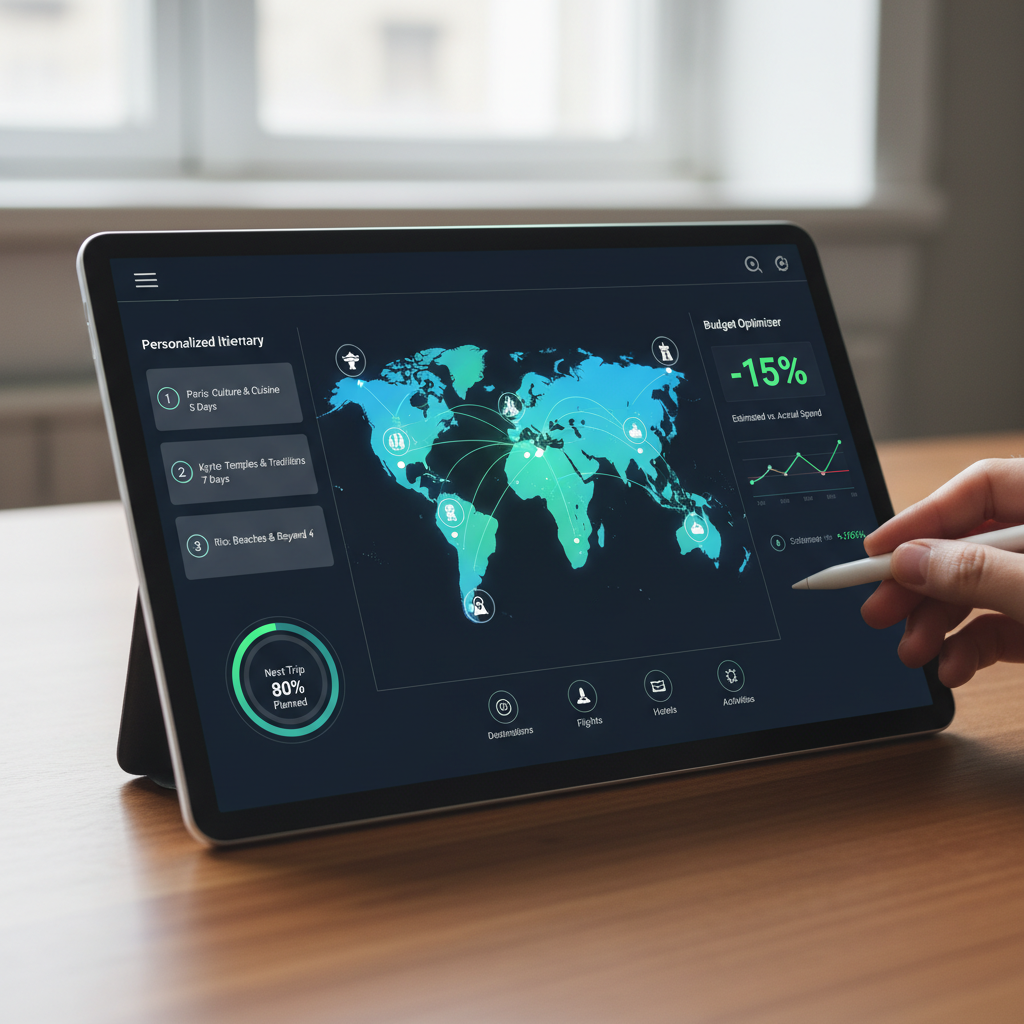
Beyond personal taste, AI excels at processing vast amounts of temporal data to offer strategic advice. Predictive analytics leverage historical booking data, seasonal demand patterns, airline pricing algorithms, and even macro-economic indicators to forecast future travel conditions. An AI planner can advise you on the optimal time to book a flight to Paris to secure the best price, identifying peak seasons, low seasons, and shoulder seasons for your chosen destination. It can alert you when prices for a desired hotel are likely to drop or rise, giving you a strategic advantage. Furthermore, it can predict which destinations might be less crowded during specific periods, or which new attractions are gaining popularity, allowing for a more informed and potentially more enjoyable travel experience. This foresight minimizes costs and maximizes comfort, ensuring you get the most value from your travel investment.
Dynamic Itinerary Generation and Adaptation
One of the most groundbreaking advancements is AI’s capacity for dynamic itinerary generation. Instead of a rigid, pre-set schedule, AI can construct a flexible itinerary that adapts in real-time. Imagine you are planning a multi-city European tour. An AI planner can not only suggest the most efficient routes and modes of transport between cities but also arrange your daily activities based on opening hours, estimated travel times, your energy levels, and even local events occurring during your visit. If a flight is delayed or a museum unexpectedly closes, the AI can instantaneously re-optimize your itinerary, suggesting alternative activities or adjusting subsequent bookings. This capability is invaluable for mitigating travel stress, especially during complex or fast-paced trips. It transforms a static plan into a living, breathing guide that responds to the unpredictable nature of travel, ensuring smooth transitions and uninterrupted enjoyment.
Beyond Recommendations: AI’s Role in Logistics and Experience Enhancement
While personalization in discovery is crucial, AI’s utility extends far beyond the initial planning stages. It plays an increasingly vital role in streamlining logistics, enhancing the actual travel experience, and even providing critical support when things go awry.
Seamless Booking Processes and Automation
AI-powered platforms can automate much of the laborious booking process. Once an itinerary is finalized, the AI can manage all reservations—flights, accommodations, car rentals, tour tickets, restaurant bookings—often through direct integrations with travel providers. This eliminates the need for manual data entry across multiple websites and reduces the chance of errors. Some advanced systems can even handle visa application guidance or communicate specific requests (e.g., room preferences, dietary needs) directly to hotels and airlines. The goal is to create a frictionless journey from decision to confirmation, allowing travelers to focus on the excitement of their upcoming trip rather than administrative burdens.
Real-time Assistance through Chatbots and Virtual Concierges
During the trip itself, AI manifests as an always-on virtual companion. AI-powered chatbots and virtual concierges, accessible via messaging apps or dedicated travel apps, can provide instant answers to a myriad of questions. Need to know the best way to get from the airport to your hotel? What time does the local market close? Where can you find an authentic local restaurant? These AI assistants can provide real-time information, often enhanced with location-based services. They can confirm booking details, check flight statuses, provide weather updates, and even offer language translation support in unfamiliar territories. This constant, accessible support significantly enhances traveler confidence and reduces anxiety, knowing help is always at hand.
Language Translation and Cultural Insights
Breaking down language barriers is another significant contribution of AI. Advanced AI translation tools, often integrated into travel apps, can facilitate communication in foreign countries, enabling travelers to order food, ask for directions, or interact with locals more easily. Beyond simple translation, some AI systems offer valuable cultural insights, providing context on local customs, etiquette, and social norms. This not only prevents potential faux pas but also enriches the travel experience by fostering deeper engagement with the local culture. Understanding local nuances, from tipping customs to appropriate dress codes for religious sites, can transform a tourist visit into a more respectful and immersive cultural exchange.
Crisis Management and Disruption Handling
Perhaps one of AI’s most critical applications is in mitigating the impact of travel disruptions. Weather events, political unrest, airline strikes, or sudden changes in local regulations can derail even the most meticulously planned trip. AI systems, constantly monitoring global news and travel advisories, can detect potential disruptions in real-time. Upon identifying an issue, they can proactively alert travelers, suggest alternative routes, rebook flights or accommodations, and even provide guidance on insurance claims or emergency services. This proactive crisis management capability offers an invaluable layer of security and peace of mind, transforming what could be a nightmare scenario into a manageable inconvenience, ensuring travelers are never left stranded or without options.
The Core Technologies Powering AI Travel Planners
Behind the seamless experience of an AI travel planner lies a complex interplay of sophisticated technologies. These aren’t just buzzwords; they are the fundamental building blocks that enable intelligence, learning, and automation in the travel domain. Here are the core technologies at play:
- Machine Learning (ML) for Pattern Recognition and Prediction:
Machine Learning is the bedrock of AI travel planning. It involves training algorithms on vast datasets to identify patterns, make predictions, and learn from experience without being explicitly programmed for every scenario. In travel, ML models analyze historical booking data, user behavior, pricing trends, and seasonal demand to forecast future outcomes. For instance, supervised learning algorithms can be trained on past flight prices and booking times to predict the optimal moment to purchase a ticket. Unsupervised learning might cluster travelers into segments based on their preferences, allowing for personalized recommendations even for new users with limited data. ML algorithms constantly refine their understanding, improving their accuracy with every new interaction and every piece of data they process, making recommendations increasingly precise over time. This continuous learning is what gives AI its adaptive and intelligent edge.
- Natural Language Processing (NLP) for Understanding User Intent:
Natural Language Processing is what allows AI travel planners to understand and interact with human language. Whether you’re typing a query into a search bar or speaking to a virtual assistant, NLP algorithms interpret your intent, extract key information (like destination, dates, budget, interests), and respond appropriately. This technology enables conversational interfaces, like chatbots, that can answer complex questions, clarify ambiguities, and guide users through the planning process naturally. For example, if you say, “I want a relaxing beach vacation in Southeast Asia for two weeks in November, under 2000 dollars, with good vegetarian food options,” NLP breaks down this complex request into actionable parameters, filtering out irrelevant information and focusing on crucial details to deliver relevant suggestions. It bridges the gap between human expression and machine comprehension, making AI tools intuitive and user-friendly.
- Computer Vision (CV) for Visual Inspiration and Context:
While less overtly visible, Computer Vision plays an increasingly important role, especially in the discovery phase. CV algorithms can analyze images and videos uploaded by users or sourced from social media and travel blogs. If you upload a picture of a stunning mountain landscape and say, “I want to go here,” CV can identify the geographical features, potentially pinpointing the location or suggesting similar destinations. It can also categorize images based on content (e.g., beaches, cities, historical sites, food), helping to refine preferences. For instance, if a user consistently saves images of bustling markets and vibrant street art, CV can infer a preference for urban cultural exploration, even if not explicitly stated. This visual processing capability taps into the powerful role of imagery in inspiring travel, making the planning process more engaging and visually driven.
- Recommendation Engines for Curated Suggestions:
Recommendation engines are perhaps the most direct application of AI in travel planning. These systems use a variety of techniques to suggest items (destinations, hotels, activities, restaurants) that a user is likely to enjoy. Collaborative filtering, a common technique, recommends items based on the preferences of similar users. For example, “people who liked this hotel also liked these tours.” Content-based filtering recommends items similar to those a user has liked in the past. Hybrid approaches combine both for more robust recommendations. These engines don’t just present popular choices; they learn from your implicit and explicit feedback, adapting and refining their suggestions over time. They are designed to expand your horizons while staying true to your core preferences, uncovering hidden gems you might not have found through traditional search methods.
Addressing Concerns: Privacy, Bias, and the Human Touch
As AI permeates more aspects of our lives, it’s natural and necessary to address the concerns that arise, particularly in sensitive areas like personal travel planning. The widespread adoption of AI in travel brings forth questions about data privacy, algorithmic bias, and the enduring value of human expertise.
Data Privacy and Security
AI travel planners operate by collecting and processing vast amounts of personal data, including travel history, preferences, financial information, and sometimes even location data. This raises legitimate concerns about data privacy and security. Users must be assured that their sensitive information is protected from breaches and misuse. Reputable AI travel platforms adhere to stringent data protection regulations (like GDPR and CCPA), employ robust encryption protocols, and clearly communicate their data usage policies. Travelers should prioritize platforms that offer transparency about what data is collected, how it is used, and who it is shared with. The ability for users to control their data, review consent settings, and understand anonymization practices is paramount. The industry is constantly evolving to implement advanced cybersecurity measures and ethical data handling frameworks, recognizing that trust is the cornerstone of user adoption.
Algorithmic Bias in Recommendations
AI algorithms are only as unbiased as the data they are trained on. If the historical travel data fed into an AI system predominantly reflects the preferences of a specific demographic or region, the recommendations generated might inadvertently perpetuate these biases. For instance, an AI might disproportionately recommend certain types of destinations or activities, overlooking options that cater to less represented groups or emerging travel trends. This can lead to a narrow range of suggestions, potentially limiting a traveler’s discovery of diverse cultures or unique experiences. Addressing algorithmic bias requires diverse and inclusive training datasets, continuous monitoring of recommendation outcomes, and active efforts to ensure fairness and representation. Developers are working to implement mechanisms that actively diversify recommendations, challenging inherent biases and promoting a broader spectrum of travel possibilities for everyone.
The Irreplaceable Value of Human Travel Advisors
Despite AI’s growing sophistication, the role of human travel advisors is far from obsolete. For highly complex trips, niche interests, or situations requiring nuanced judgment, human expertise remains invaluable. Travel agents excel at understanding unspoken needs, providing emotional support during emergencies, navigating intricate visa requirements for multi-country trips, or curating truly unique, off-the-beaten-path experiences that AI might not yet fully grasp. They offer a level of empathy, creativity, and problem-solving that current AI systems cannot replicate. Think of planning an elaborate destination wedding, a specialized medical tourism journey, or an expedition to an extremely remote region; these scenarios often benefit from the personalized, adaptive, and human-centric approach of a seasoned advisor. AI is therefore seen less as a replacement and more as a powerful tool that augments the capabilities of human agents, allowing them to focus on higher-value, more complex aspects of trip planning while AI handles the repetitive and data-intensive tasks.
The Future Landscape: Hyper-Personalization and Immersive Planning
The current advancements in AI travel planning are merely the tip of the iceberg. The future promises an even more integrated, intuitive, and immersive planning experience, blurring the lines between dreaming and doing, and offering unprecedented levels of personalization and engagement.
Integration with Virtual Reality (VR) and Augmented Reality (AR)
Imagine virtually stepping into your potential hotel room, walking through the streets of your chosen city, or experiencing a panoramic view from a hiking trail before you even book your trip. VR and AR technologies are poised to revolutionize the trip preview process. AI can generate highly realistic virtual tours of destinations, accommodations, and attractions, allowing travelers to “try before they buy.” AR applications can overlay useful information onto your real-world view, such as restaurant ratings appearing above storefronts or historical facts popping up as you gaze at an ancient ruin. This immersive planning helps travelers make more informed decisions, reducing uncertainty and enhancing excitement by providing a tangible sense of what awaits them.
Voice-Activated Planning and Conversational AI
The proliferation of smart speakers and voice assistants (like Alexa, Google Assistant) indicates a clear future for voice-activated travel planning. Imagine simply saying, “Plan a family trip to Italy for next summer with a focus on historical sites and kid-friendly activities,” and having an AI assistant verbally present options, adjust itineraries based on your feedback, and confirm bookings—all through natural conversation. Conversational AI will become so sophisticated that planning a trip will feel like talking to an incredibly knowledgeable and efficient personal assistant, capable of understanding nuanced requests, anticipating needs, and adapting plans in real-time, all without ever touching a screen.
Wearable Technology Integration
Wearable devices, such as smartwatches and fitness trackers, offer another layer of integration for future AI travel planning. These devices can provide real-time, context-aware assistance during a trip. For example, your smartwatch could provide discreet notifications about gate changes, remind you of your next scheduled activity, or even suggest nearby points of interest based on your current location and energy levels (detected through biometric data). Post-trip, data from wearables could feed back into the AI system, helping it understand your activity levels, preferences for pace, and comfort zones, leading to even more personalized recommendations for future trips.
Ethical AI and Responsible Tourism
As AI becomes more powerful, the emphasis on ethical AI development will grow. Future AI travel planners will not only focus on convenience and personalization but also on promoting responsible tourism. This includes suggesting eco-friendly transportation options, recommending accommodations with strong sustainability practices, highlighting local businesses that support fair wages, and educating travelers on respectful cultural engagement. AI can help travelers minimize their environmental footprint, contribute positively to local economies, and ensure their adventures are sustainable and beneficial for both people and the planet. This shift will position AI as a force for good, guiding travelers toward more conscious and impactful journeys.
AI for Sustainable Travel: Paving the Way for Responsible Adventures
Beyond convenience and personalization, one of the most promising applications of AI in travel planning lies in its potential to foster greater sustainability. As global awareness of climate change and environmental impact grows, travelers are increasingly seeking ways to explore the world responsibly. AI can be a powerful ally in this endeavor, guiding decisions that benefit both the planet and local communities.
Optimizing Routes for Lower Carbon Footprint
AI algorithms can analyze vast datasets on transportation emissions, factoring in vehicle types, fuel consumption, and route efficiency. When planning a multi-leg journey, an AI travel planner can suggest the most eco-friendly combination of flights, trains, buses, and even electric car rentals, prioritizing options that minimize carbon emissions without significantly compromising convenience or cost. For instance, it might recommend a direct flight over a connecting one if the latter involves a much longer distance or less efficient aircraft. For land travel, it could prioritize train travel over driving or flying for medium distances, automatically calculating the CO2 savings and presenting them to the traveler. This optimization goes beyond simple shortest-distance calculations, incorporating a complex understanding of environmental impact.
Recommending Eco-Friendly Accommodations and Activities
AI can identify and recommend accommodations that adhere to recognized sustainability standards, such as LEED certification for green buildings, eco-lodges that minimize waste, or hotels that invest in renewable energy. It can filter options based on criteria like water conservation efforts, local sourcing of food, waste reduction programs, and community engagement initiatives. Similarly, for activities, AI can highlight responsible tour operators that prioritize wildlife conservation, support local economies through fair wages, or offer culturally immersive experiences that are respectful and non-exploitative. This enables travelers to make choices aligned with their values, ensuring their vacation contributes positively to the places they visit, rather than detracting from them. It might suggest a farm-to-table culinary experience over a large chain restaurant, or a guided nature walk with a local conservationist over a mass-tourism attraction.
Promoting Local Economies and Authentic Experiences
AI can play a pivotal role in directing tourist spending towards local economies. By analyzing data on local businesses, artisans, and community-based tourism initiatives, AI travel planners can recommend authentic, locally-owned restaurants, shops, and tour providers. This helps ensure that the economic benefits of tourism are distributed more equitably within the destination, rather than being concentrated in large international chains. Furthermore, by identifying unique local experiences often overlooked by mass tourism, AI can help travelers discover the true essence of a place, fostering deeper cultural connections and enriching their journey. For example, instead of a generic souvenir shop, AI could recommend a workshop where local artisans craft traditional goods, providing both an authentic experience and direct support to the community.
Measuring and Reporting Environmental Impact
Looking ahead, AI could provide travelers with a personalized “sustainability report” for their trip. Before booking, the AI might estimate the carbon footprint of various itinerary options. After the trip, it could summarize the environmental impact of their travel choices, from transportation emissions to waste generated at accommodations. This data could empower travelers to understand their impact and make more informed decisions for future trips. Some platforms might even integrate options for carbon offsetting directly into the booking process, making it easier for travelers to mitigate their environmental footprint. By making sustainability tangible and actionable, AI can transform responsible tourism from a niche concern into a mainstream consideration for every traveler.
Comparison Tables
Table 1: Traditional Travel Agent vs. Online Travel Agency (OTA) vs. AI Travel Planner
| Feature | Traditional Travel Agent | Online Travel Agency (OTA) | AI Travel Planner |
|---|---|---|---|
| Personalization | High (human understanding, bespoke trips) | Low to Medium (basic filters, popular options) | Very High (data-driven, hyper-personalized, predictive) |
| Efficiency/Speed | Medium (manual research, appointments) | High (instant search, self-service booking) | Very High (automated, real-time adjustments, instant suggestions) |
| Cost Savings Potential | Medium (negotiated rates, package deals) | High (comparison tools, flash sales) | Very High (predictive pricing, optimal booking times, dynamic deals) |
| Scope of Options | Limited to agent’s network/knowledge | Vast (aggregates many providers) | Expansive (aggregates, discovers niche, unique options based on user) |
| Real-time Support | High (direct human contact, emergency assistance) | Low to Medium (customer service lines, FAQs) | Very High (24/7 chatbots, proactive disruption handling) |
| Complexity Handling | Very High (expert guidance for intricate trips) | Medium (requires user to manage complex itineraries) | High (automates complex logistics, re-optimizes dynamically) |
| Discovery of New Experiences | Medium (agent suggestions) | Low (user-driven search, popular attractions) | Very High (uncovers hidden gems, personalized inspirations) |
| Data Privacy Concerns | Low (personal relationship, trust) | Medium (data sharing with partners) | High (extensive data collection, requires robust security) |
Table 2: Key AI Technologies and Their Applications in Travel Planning
| AI Technology | Core Function | Application in Travel Planning | Example Scenario |
|---|---|---|---|
| Machine Learning (ML) | Pattern recognition, prediction, optimization | Predictive pricing, personalized recommendations, fraud detection | Recommending the best day to book a flight to save 15percent based on historical data. |
| Natural Language Processing (NLP) | Understanding human language, sentiment analysis | Chatbots, voice assistants, review analysis, search query interpretation | A traveler asks, “Find me a quiet, pet-friendly hotel near the Louvre with good breakfast.” |
| Computer Vision (CV) | Image and video analysis, object recognition | Visual search, destination identification from photos, analyzing travel content for inspiration | A user uploads a picture of a waterfall and AI suggests similar destinations or activities. |
| Recommendation Engines | Suggesting relevant items based on user preferences | Personalized hotel, activity, restaurant suggestions, cross-selling travel products | Suggesting a cooking class in Rome because the user previously booked a food tour in Florence. |
| Reinforcement Learning (RL) | Learning through trial and error, optimizing sequences of actions | Dynamic itinerary optimization, adapting to real-time events, route planning | Re-routing an entire multi-city trip instantly after a flight cancellation, minimizing disruption. |
| Generative AI | Creating new content (text, images, ideas) | Drafting custom travel guides, generating personalized itinerary narratives, suggesting unique activity concepts | Creating a bespoke story-driven itinerary description based on the traveler’s interests. |
Practical Examples: Real-World Use Cases and Scenarios
To truly appreciate the power of AI in travel planning, let’s explore a few real-world scenarios that highlight its practical benefits for diverse traveler types.
Case Study 1: The Couple Seeking a Romantic, Budget-Consious Getaway
The Challenge: Sarah and Mark want to celebrate their anniversary with a romantic trip, perhaps to Italy, but they have a strict budget of 2,500 USD for flights and accommodation, and they prefer charming, intimate boutique hotels over large resorts. They are flexible on dates within a two-month window but want to avoid peak crowds. They also have a shared interest in local cuisine and art.
AI’s Solution: Sarah and Mark input their preferences into an AI travel planner. The AI immediately analyzes their past travel history (showing a preference for European city breaks and art museums) and their budget. It then scans millions of data points, including flight prices, hotel availability, seasonal crowd levels, and local events. Instead of suggesting Venice or Rome during peak tourist season, the AI identifies a window in early May for a trip to Bologna, renowned for its culinary scene and medieval architecture, offering a more intimate and authentic Italian experience. It finds a highly-rated boutique hotel within their budget and suggests a flight combination with optimal layovers, predicting a price drop if booked by a specific date. The AI then populates a daily itinerary with recommendations for traditional trattorias, local cooking classes, hidden art galleries, and perhaps a day trip to Parma for Parmesan cheese and prosciutto tasting, all while staying within their budget and aligning perfectly with their interests. If they decide against Bologna, the AI can instantly recalibrate and suggest similar alternatives like Seville, Spain, or Lyon, France, with updated recommendations.
Case Study 2: The Solo Backpacker Navigating an Unpredictable Multi-Country Journey
The Challenge: Alex is a spontaneous solo backpacker planning a three-month journey across Southeast Asia. He has a loose idea of countries (Thailand, Vietnam, Cambodia) but wants maximum flexibility, budget-friendly options, and opportunities for adventure activities and cultural immersion. He dislikes rigid schedules and often makes decisions on the fly, which can lead to logistical headaches.
AI’s Solution: Alex uses an AI travel assistant that operates on a more fluid model. He inputs his general route, budget parameters, and interests (hiking, street food, historical temples). The AI doesn’t create a fixed itinerary, but rather a flexible framework. As Alex travels, he uses the AI’s app. When he’s ready to move from Chiang Mai to Luang Prabang, he simply asks, “What’s the best way to get to Luang Prabang tomorrow, budget-friendly?” The AI instantly offers options: a direct flight, a combination of bus and slow boat, or even suggestions for shared mini-vans, complete with real-time pricing and booking links. It also suggests highly-rated, budget-friendly hostels and local street food markets in Luang Prabang. If he gets delayed by a bus, the AI proactively suggests alternative activities near his current location and checks for new transport options. It also alerts him to local festivals or unique experiences happening nearby, allowing him to spontaneously adjust his plans without the usual research overhead. The AI even provides quick cultural tips and basic phrases for each new region, enhancing his immersion without the need for constant guidebook consultation.
Case Study 3: The Family Trip with Specific Accessibility Needs
The Challenge: The Miller family (two adults, two young children, and a grandparent with limited mobility requiring wheelchair accessibility) wants a week-long beach vacation. They need family-friendly accommodations with accessible rooms, activities suitable for all ages and mobility levels, and easy transportation options to avoid stress.
AI’s Solution: The Millers input their family composition, ages, specific accessibility requirements (wheelchair access for rooms, bathrooms, public areas, transportation), and desire for a beach vacation into an AI planner. The AI filters out thousands of unsuitable options, focusing on destinations and resorts known for their accessibility infrastructure. It then recommends a resort in Florida with dedicated accessible suites, a ramp-accessible pool, and beach wheelchairs available for rent. The AI suggests a rental car company offering accessible vehicles and pre-books it. The daily itinerary includes activities like visits to accessible aquariums, flat walking trails suitable for strollers and wheelchairs, and specific beach areas known for calm waters and accessible facilities. The AI even pinpoints accessible restaurants with kids’ menus. During the trip, if the family encounters an issue, like an inaccessible entrance at a restaurant, they can query the AI, which will instantly suggest nearby accessible alternatives, complete with directions and booking options. This comprehensive and proactive approach ensures a stress-free and enjoyable vacation for the entire family, where accessibility is seamlessly integrated rather than being a constant hurdle.
These examples illustrate how AI is transforming travel planning from a burdensome task into an exciting and empowering experience, adapting to individual needs and ensuring that every traveler, regardless of their specific situation, can discover and enjoy their perfect vacation.
Frequently Asked Questions
Q: What exactly is an AI travel planner?
A: An AI travel planner is a sophisticated digital tool that uses Artificial Intelligence, including machine learning, natural language processing, and predictive analytics, to help individuals plan their trips. Unlike traditional search engines or basic online travel agencies, an AI planner can understand your preferences, analyze vast amounts of data, predict trends, and dynamically create highly personalized itineraries, often managing bookings and offering real-time assistance. Its core function is to make travel planning more efficient, personalized, and stress-free by automating research, optimizing choices, and adapting to changing circumstances.
Q: How does AI personalize travel recommendations?
A: AI personalizes recommendations by analyzing a comprehensive range of data points. This includes your past travel history, explicit preferences (e.g., budget, travel style, interests), search patterns, demographic information, and even implicit cues from your interactions with the platform. It uses machine learning algorithms to identify patterns and predict what you might like, suggesting destinations, accommodations, activities, and dining experiences that consistently align with your unique profile. This goes far beyond basic filters, offering suggestions that feel intuitively tailored to your tastes.
Q: Is AI replacing human travel agents?
A: No, AI is not replacing human travel agents; rather, it is augmenting their capabilities and transforming their role. AI excels at handling repetitive tasks, data analysis, and basic customer service, freeing up human agents to focus on more complex, high-value services. For intricate luxury trips, specialized group tours, crisis management requiring emotional intelligence, or highly unique custom experiences, the nuanced understanding, empathy, and creative problem-solving skills of a human agent remain invaluable. AI serves as a powerful tool for agents, allowing them to deliver even more personalized and efficient service, while also empowering individual travelers who prefer a self-service approach.
Q: How secure is my data with AI travel planners?
A: Reputable AI travel planners prioritize data security and privacy. They employ advanced encryption technologies, comply with global data protection regulations (like GDPR), and implement stringent cybersecurity measures to safeguard your personal and financial information. Transparency about data collection and usage is crucial; always choose platforms that clearly outline their privacy policies and give you control over your data. While no system is entirely impervious, leading AI travel companies invest heavily in making their platforms as secure as possible to maintain user trust.
Q: Can AI help with last-minute changes or emergencies during a trip?
A: Absolutely. This is one of AI’s most powerful applications. AI-powered travel assistants can monitor real-time travel conditions, global news, and weather patterns. If a flight is delayed, a hotel closes, or an unforeseen event occurs, the AI can proactively alert you, assess the impact on your itinerary, and instantly suggest alternative flights, accommodations, or activities. Some advanced systems can even initiate re-bookings or provide guidance on emergency services, transforming potential travel nightmares into manageable inconveniences by offering immediate, data-driven solutions and support.
Q: What are the main benefits of using AI for travel planning?
A: The main benefits include unprecedented personalization, significant time savings from automated research, potential cost savings through predictive pricing and optimal booking advice, enhanced convenience with seamless booking processes, and real-time support during your trip. AI reduces decision fatigue, uncovers unique experiences you might otherwise miss, and provides peace of mind through proactive disruption management, making the entire travel journey more enjoyable and less stressful.
Q: Are there any drawbacks to relying on AI for travel?
A: While AI offers immense advantages, potential drawbacks exist. These include concerns about data privacy due to extensive data collection, the risk of algorithmic bias leading to less diverse recommendations if not properly managed, and the occasional lack of human empathy or nuanced understanding for highly specific or emotionally charged situations. Over-reliance on AI might also diminish the serendipitous discoveries that sometimes arise from independent exploration. Users should be aware of these limitations and choose AI tools responsibly.
Q: How can I start using AI for my next vacation?
A: Many existing travel platforms already incorporate AI to varying degrees (e.g., personalized recommendations on Expedia, Google Flights price predictions). To start, look for dedicated AI-powered travel planner apps or websites that explicitly market their AI capabilities. Begin by inputting your general preferences, past travel experiences, and desired dates/destinations. Experiment with conversational AI tools by asking natural language questions about your trip ideas. Start with a simpler trip to get acquainted, and gradually explore more complex planning as you gain comfort with the technology. Always review the AI’s suggestions and use your judgment, especially for critical decisions.
Q: What’s the difference between an Online Travel Agency (OTA) and an AI travel planner?
A: An Online Travel Agency (OTA) like Booking.com or Kayak primarily acts as an aggregator and booking platform. It allows users to search, compare, and book flights, hotels, and other services from various providers. While OTAs offer filters and some basic recommendations, they largely require the user to drive the decision-making process. An AI travel planner, on the other hand, goes much further. It actively understands user preferences, learns from data, predicts trends, dynamically generates personalized itineraries, and can even manage logistics and provide real-time assistance. An AI planner is designed to be a proactive, intelligent assistant rather than just a search and booking portal.
Q: Will AI make travel more expensive?
A: Generally, AI is expected to make travel more efficient and potentially more affordable for the average traveler. By leveraging predictive analytics, AI can identify optimal booking times and alert users to price drops, helping them secure better deals. It can also suggest cost-effective alternatives for transportation and accommodation that align with a budget. While premium AI services or highly bespoke, AI-powered luxury experiences might come at a higher price point, the core promise of AI in travel planning is to optimize value, making personalized and convenient travel accessible to a broader audience without necessarily increasing overall costs.
Key Takeaways
- Unprecedented Personalization: AI analyzes vast data to create truly bespoke travel experiences, moving beyond generic recommendations to hyper-tailored itineraries that resonate with individual preferences.
- Enhanced Efficiency and Convenience: AI automates tedious research, streamlines booking processes, and provides instant access to information, saving travelers significant time and reducing planning stress.
- Proactive Logistics and Real-time Support: From dynamic itinerary generation to crisis management, AI offers real-time adjustments and support, ensuring smoother journeys and mitigating disruptions.
- Empowered by Core Technologies: Machine Learning, Natural Language Processing, Computer Vision, and Recommendation Engines are the foundational AI technologies enabling intelligent travel planning.
- Addressing Ethical Considerations: While offering immense benefits, AI in travel must address concerns regarding data privacy, algorithmic bias, and ensure responsible data handling.
- Complementing Human Expertise: AI is a powerful tool that augments, rather than replaces, human travel agents, allowing them to focus on complex, nuanced, and high-value client interactions.
- Future of Immersive and Sustainable Planning: Future AI will integrate VR/AR, voice activation, and wearable tech for even richer planning, and will increasingly guide travelers towards sustainable and responsible tourism choices.
- Democratizing Intelligent Travel: AI makes sophisticated, personalized travel planning accessible to a broader audience, fostering more informed, enjoyable, and sustainable adventures for everyone.
Conclusion
The journey into the future of travel planning, guided by the immense potential of Artificial Intelligence, is not just about making bookings easier; it is about fundamentally transforming the entire vacation discovery process. We stand at the precipice of an era where travel is not merely about reaching a destination, but about embarking on a journey meticulously crafted to align with your deepest desires, anticipating your needs, and adapting to your ever-evolving whims. AI travel planners are poised to liberate us from the burdens of endless research and decision fatigue, unlocking a world of hyper-personalized experiences that were once the exclusive domain of luxury bespoke services.
From the precise alchemy of personalized recommendations and the strategic foresight of predictive analytics to the seamless orchestration of logistics and the invaluable safety net of real-time disruption management, AI is proving to be the ultimate travel companion. It empowers us to explore with greater confidence, discover with richer understanding, and journey with a lighter footprint. While the imperative to address concerns like data privacy and algorithmic bias remains paramount, the trajectory of innovation points towards an increasingly ethical and inclusive application of these technologies, fostering responsible tourism and celebrating the diversity of our planet.
Embracing AI in your travel planning isn’t just adopting a new tool; it’s stepping into a new paradigm of exploration. It’s about reclaiming the joy of discovery and focusing on the wonder of the journey itself, rather than the arduous process of planning it. The future of intelligent vacation discovery is here, promising a world where every trip is not just a destination, but a perfectly orchestrated symphony of experiences. So, as you contemplate your next adventure, consider letting AI be your guide, and unlock a smarter, more personal, and profoundly more rewarding way to see the world.













































































Leave a Reply