


AI Travel Planners: Simplifying Your Next Vacation Discovery
In an age where personalized experiences are paramount, the travel industry is undergoing a profound transformation, thanks to the advent of artificial intelligence. Gone are the days of sifting through countless travel blogs, comparing hotel prices across dozens of tabs, or spending hours on the phone with travel agents trying to coordinate a complicated family trip. Today, AI travel assistants are emerging as indispensable tools, promising to simplify vacation discovery and tailor journeys to an unprecedented degree.
Whether you dream of a spontaneous solo backpacking adventure through Southeast Asia, seeking authentic local encounters and hidden gems, or envision a perfectly orchestrated family getaway to a theme park resort with activities for every age, AI is poised to elevate your travel planning. These intelligent systems are not just about booking flights and hotels; they are about understanding your unique preferences, anticipating your needs, and curating experiences that resonate deeply with your travel style. This comprehensive guide will explore how AI travel assistants are revolutionizing the way we discover, plan, and enjoy our vacations, distinguishing between the specific needs of solo wanderers and the multifaceted requirements of family fun.
The Evolution of Travel Planning: From Manual to AI-Powered
For centuries, travel planning was a labor-intensive endeavor, relying on word-of-mouth, physical maps, guidebooks, and human travel agents. The digital age brought a revolution with online travel agencies (OTAs) and review sites, empowering travelers with more information and booking options. However, even with these advancements, the sheer volume of information could be overwhelming, leading to choice paralysis and the significant time investment required to plan a truly personalized trip.
Enter Artificial Intelligence. AI travel assistants represent the next frontier, moving beyond simple information aggregation to truly intelligent recommendation engines. They leverage sophisticated algorithms, machine learning, and natural language processing to understand complex human queries, learn from user behavior, and predict preferences. This shift marks a paradigm change:
- From Information Overload to Curated Insights: Instead of presenting every available option, AI filters and prioritizes, offering choices most relevant to the traveler.
- From Static Plans to Dynamic Itineraries: AI can adapt plans in real-time, considering factors like weather changes, flight delays, or sudden shifts in personal interest.
- From Generic Suggestions to Hyper-Personalization: AI digs deep into user data, past trips, stated preferences, and even implied interests to craft truly unique experiences.
- From Time-Consuming Research to Instant Discovery: What once took hours can now be accomplished in minutes, freeing up valuable time for travelers.
This evolution is particularly impactful because it addresses fundamental pain points for both individual explorers seeking freedom and families striving for harmony and enjoyment on their trips. The promise of AI is not just convenience, but the ability to unlock travel possibilities previously unimaginable, making every journey more fulfilling and less stressful.
Understanding AI Travel Assistants: Core Capabilities
At their heart, AI travel assistants are sophisticated software platforms designed to mimic and surpass the capabilities of human travel agents, enhanced by the power of data and computational speed. Their core capabilities allow them to handle a vast array of tasks, making them versatile tools for diverse travel needs.
1. Personalized Recommendations and Itinerary Generation
- Learning Preferences: AI algorithms analyze past travel history, saved destinations, browsing behavior, and explicit preferences (e.g., budget, travel style, interests like history, adventure, food).
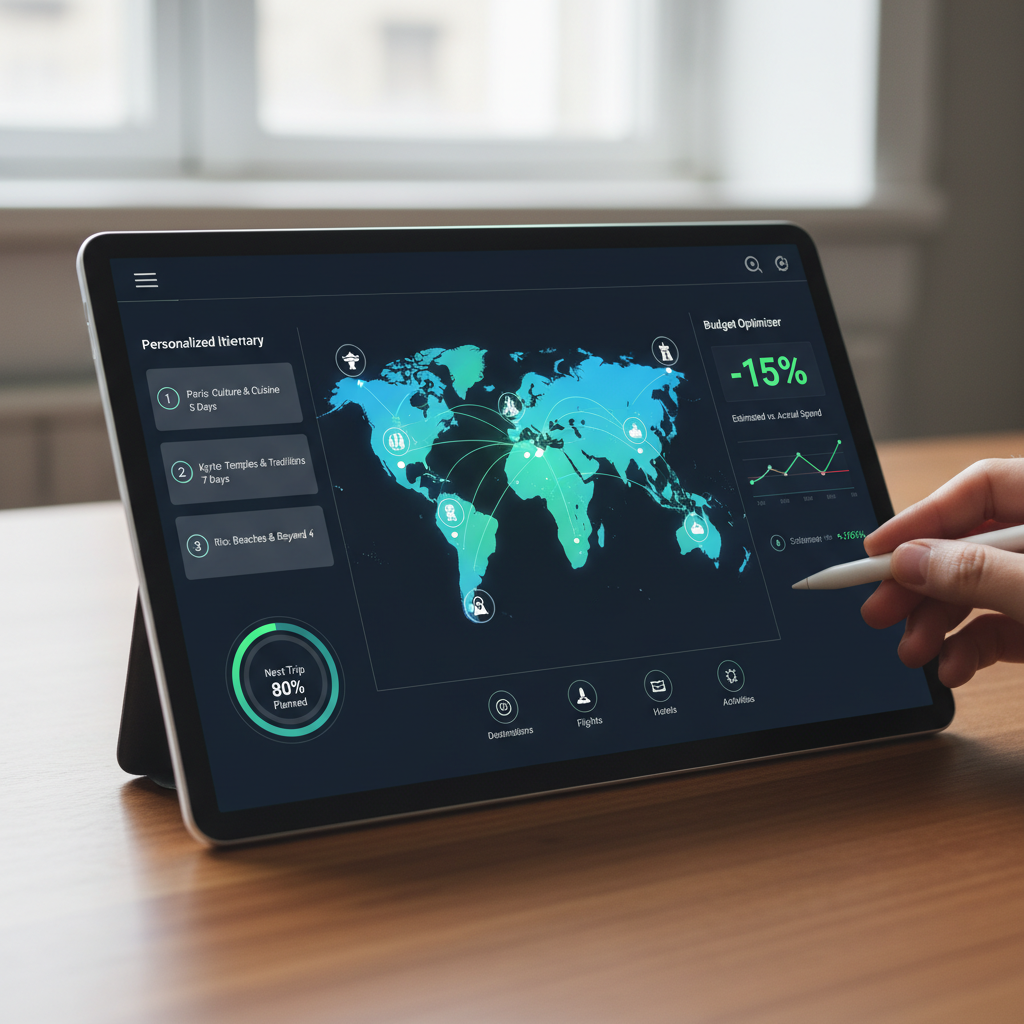
- Dynamic Itinerary Building: Based on these preferences, AI can construct detailed day-by-day itineraries, complete with suggested activities, dining options, and transportation logistics. This includes optimizing routes, considering opening hours, and minimizing travel time between attractions.
- Activity and Experience Matching: Beyond major landmarks, AI can suggest unique experiences, local workshops, niche museums, or even specific hiking trails that align with individual interests.
2. Real-time Adjustments and Predictive Analytics
- Weather Updates: If a sudden downpour is predicted, AI can suggest indoor alternatives or reschedule outdoor activities.
- Flight/Accommodation Changes: In case of delays or cancellations, the AI can proactively search for alternative flights, rebook hotels, or suggest new arrangements.
- Traffic and Transit Information: AI can provide real-time updates on local transportation, suggesting the quickest routes or alerting users to potential delays.
- Event Detection: It can identify local festivals, concerts, or special events happening during the travel dates and integrate them into the itinerary.
3. Budget Optimization and Cost Savings
- Price Tracking: AI continuously monitors flight and hotel prices, alerting users to optimal booking times or potential deals.
- Budget-Conscious Recommendations: If a traveler specifies a budget, the AI will prioritize activities, dining, and accommodation options that fit within those parameters, often suggesting more affordable alternatives without sacrificing quality.
- Package Deal Identification: AI can identify comprehensive travel packages that offer better value than booking individual components.
4. Seamless Booking Integration
- Centralized Booking: Many AI assistants integrate directly with various booking platforms for flights, hotels, car rentals, and activities, allowing users to book everything from one interface.
- Preference Pre-filling: Saved preferences (e.g., window seat, dietary restrictions) can be automatically applied during the booking process, streamlining the experience.
5. Multilingual Support and Local Insights
- Language Translation: AI can assist with on-the-go translation for menus, signs, or even basic conversations.
- Cultural Etiquette: Some advanced AI assistants can offer tips on local customs and etiquette, helping travelers navigate unfamiliar environments respectfully.
- Hidden Gems: By analyzing vast amounts of data, AI can uncover less-known, authentic local spots that traditional guidebooks might miss.
These capabilities, powered by continuous learning and vast data analysis, make AI travel assistants incredibly powerful tools, capable of transforming the abstract idea of a trip into a concrete, personalized, and stress-free reality.
Tailored for the Solo Wanderer: The Freedom of AI-Assisted Exploration
Solo travel offers unparalleled freedom, introspection, and the thrill of personal discovery. However, it also comes with unique challenges: safety concerns, potential loneliness, and the pressure of making all decisions alone. AI travel assistants are particularly well-suited to empower solo wanderers, enhancing their freedom while mitigating potential downsides.
Enhanced Safety and Security
- Real-time Safety Alerts: AI can provide warnings about unsafe neighborhoods, political unrest, or natural disasters based on geolocated data and news feeds.
- Emergency Contacts and Local Support: Easy access to embassy information, local emergency numbers, and even recommendations for reputable local guides or services.
- Route Optimization for Safety: When exploring, AI can suggest well-lit, populated routes, especially at night, or advise against certain areas.
Curated Authentic Experiences and Local Immersion
- Off-the-Beaten-Path Discovery: AI, having access to vast user reviews and local blogs, can identify unique cafes, art galleries, hiking trails, or cultural events that are popular with locals but often overlooked by mass tourism.
- Interest-Based Activities: A solo traveler interested in street art in Berlin might receive recommendations for specific neighborhoods, walking tours, or even local artists’ studios. A food enthusiast in Rome could be guided to hidden trattorias or authentic cooking classes.
- Language Exchange and Meetup Suggestions: For those seeking connection, AI can highlight social events, language exchange meetups, or solo-traveler-friendly tours designed to foster interactions.
Flexibility and Spontaneity
- Dynamic Itinerary Adjustments: Solo travelers often crave spontaneity. AI allows for on-the-fly changes, instantly rerouting, finding new accommodation, or suggesting alternative activities if an initial plan falls through or a new interest arises.
- Last-Minute Deals: AI constantly scans for last-minute discounts on flights, hotels, or experiences, perfect for the spontaneous decision-maker.
- Optimized Solo Dining: Finding comfortable and welcoming places to dine alone can be a concern. AI can recommend restaurants known for their solo-diner-friendly ambiance or counter seating.
Case Study: Emily’s Solo Adventure in Japan
Emily, a solo traveler with a passion for Japanese history and unique culinary experiences, planned a two-week trip. Her AI assistant, after learning her preferences, crafted an initial itinerary blending major cities like Tokyo and Kyoto with lesser-known historical sites. When a typhoon unexpectedly hit during her stay in Kyoto, the AI instantly re-routed her to a safer region, finding a quaint ryokan with traditional hot springs and suggesting indoor activities like a sake tasting workshop and a kimono wearing experience, all while ensuring her original train tickets were rebooked without extra charge. It also recommended a local ramen shop renowned for its authentic broth, a place she would never have found otherwise. Emily experienced a seamless transition, turning a potential disaster into an unexpected cultural gem.
For the solo wanderer, AI is more than a planner; it’s a constant, intelligent companion that ensures safety, fosters discovery, and celebrates the freedom of independent travel.
Empowering Family Fun: AI for Seamless Group Adventures
Traveling with family, especially with children of varying ages, presents a unique set of challenges. Juggling multiple preferences, managing diverse energy levels, sticking to budgets, and ensuring everyone’s safety and enjoyment can turn a dream vacation into a logistical nightmare. AI travel assistants are proving to be game-changers for family travel, transforming chaos into curated fun.
Managing Diverse Preferences and Age-Appropriate Activities
- Multi-Profile Management: Advanced AI can create profiles for each family member, noting their ages, interests (e.g., theme parks for young kids, museums for teens, relaxation for parents), and dietary restrictions.
- Balanced Itineraries: The AI intelligently crafts itineraries that blend activities appealing to everyone, ensuring a mix of high-energy fun, cultural exploration, and downtime. For instance, a morning at a children’s museum might be followed by an afternoon relaxation for parents at a nearby park while the kids play, or a teen-friendly activity.
- Age-Specific Recommendations: AI filters activities, attractions, and even restaurants based on the age range of the children, suggesting playgrounds, interactive exhibits, or kid-friendly dining options.
Streamlined Logistics and Stress Reduction
- Accommodation with Amenities: AI can find hotels or vacation rentals that offer specific family-friendly amenities like connecting rooms, kids’ clubs, swimming pools, cribs, or kitchens for meal prep.
- Efficient Transportation Planning: Recommendations for public transport accessibility for strollers, car seat availability in rental cars, or even pre-booking accessible taxis for larger groups.
- Meal Planning and Dietary Needs: AI can suggest restaurants that accommodate allergies, offer kids’ menus, or provide family-style dining options, pre-empting the stress of finding suitable eateries.
- Packing Lists: Some AI assistants can generate dynamic packing lists based on destination, weather, and family members’ ages (e.g., extra diapers, specific medications, comfort items).
Budgeting and Value for Families
- Group Deals and Discounts: AI can identify family packages, group discounts for attractions, or deals on multi-day passes.
- Cost Tracking: It helps families stick to a budget by tracking expenses and suggesting more affordable alternatives for activities or meals.
- Value-Added Services: Beyond just cost, AI considers value, suggesting free activities or parks that offer great entertainment without breaking the bank.
Case Study: The Rodriguez Family’s European Adventure
The Rodriguez family – parents with two children, aged 5 and 13 – dreamed of a multi-city European trip. Their AI travel assistant took their inputs: the 5-year-old’s love for playgrounds and animals, the 13-year-old’s interest in history and video games, and the parents’ desire for good food and some relaxation. The AI crafted an itinerary that included a morning at a park with a petting zoo in London, followed by an afternoon at the British Museum for the older child and parents. In Paris, it recommended a family-friendly hotel near Luxembourg Gardens and suggested a scavenger hunt around the Louvre to engage the teen, while finding a carousel and puppet show for the younger child. When the 5-year-old fell ill in Rome, the AI quickly located the nearest English-speaking pharmacy and a highly-rated family doctor, providing peace of mind and allowing the parents to focus on their child’s well-being. The AI even rebooked their Colosseum tour for a later date, seamlessly adjusting the rest of the schedule.
For families, AI transforms the complex symphony of planning into a harmonious and joyful experience, ensuring every member feels heard and every moment is cherished.
The Technology Behind the Magic: How AI Personalizes Your Journey
The remarkable ability of AI travel assistants to personalize recommendations and manage complex logistics isn’t magic; it’s the result of sophisticated technological integration and cutting-edge algorithms. Understanding these underlying technologies provides insight into how AI delivers such tailored experiences.
1. Machine Learning (ML) for Preference Analysis
- Behavioral Data Analysis: ML algorithms continuously learn from vast datasets, including millions of user interactions, booking patterns, reviews, and travel articles. When you interact with an AI assistant, it analyzes your clicks, searches, saved items, and explicit feedback.
- Predictive Modeling: Based on this data, ML models predict your preferences. For example, if you consistently search for boutique hotels and vegetarian restaurants, the AI learns to prioritize these options. It can even infer interests from indirect cues, like a preference for destinations with historical sites if you often read history blogs.
- Collaborative Filtering: This technique suggests items (destinations, activities) based on the preferences of similar users. “People who liked X also liked Y” is a classic example, allowing the AI to introduce you to new possibilities you might not have considered.
2. Natural Language Processing (NLP) for Conversational Interfaces
- Understanding Human Language: NLP enables AI assistants to understand and interpret human language, whether typed or spoken. This means you can ask complex, conversational questions like, “Find me a family-friendly resort in Hawaii with a kids’ club and an adults-only pool, for less than $400 a night, in July.”
- Sentiment Analysis: NLP can also gauge the sentiment behind reviews or user feedback, allowing the AI to understand not just what was said, but how it was felt, leading to more nuanced recommendations.
- Contextual Awareness: As you interact, NLP helps the AI maintain context. It remembers previous questions and preferences, so follow-up questions build on the existing conversation rather than starting fresh each time.
3. Big Data Analytics for Trend Identification and Resource Management
- Aggregating Information: AI systems process enormous amounts of data from countless sources: flight availability databases, hotel inventories, weather forecasts, traffic updates, local event calendars, restaurant reviews, and more.
- Pattern Recognition: Big data analytics identifies trends in travel, such as popular destinations, peak travel times, emerging experiences, or even real-time availability of resources (e.g., last-minute open slots for a popular tour).
- Dynamic Pricing and Availability: By continuously analyzing global data, AI can offer the most up-to-date pricing and availability for flights, hotels, and activities, often identifying optimal booking windows.
4. Integration with APIs (Application Programming Interfaces)
- Seamless Connections: AI travel assistants don’t operate in a vacuum. They connect to hundreds, if not thousands, of external services through APIs. These include flight booking engines (e.g., Skyscanner, Google Flights), hotel chains, car rental companies, local tour operators, weather services, mapping applications (e.g., Google Maps), and payment gateways.
- Real-time Data Exchange: APIs allow the AI to pull real-time data for prices, availability, reviews, and even make bookings directly within its interface, providing a truly unified experience.
By synergistically combining these technologies, AI travel assistants move beyond being mere search engines to become proactive, intelligent companions that learn, adapt, and personalize every aspect of your journey.
Current Innovations and Future Prospects in AI Travel
The field of AI is advancing at an exponential rate, and its application in travel is no exception. What we see today is just the beginning; the future promises even more integrated, intuitive, and immersive travel experiences.
1. Hyper-Personalization Beyond Basic Preferences
- Health and Wellness Focus: AI could soon consider your health profile, recommending destinations with specific air quality, hotels with gyms or wellness programs, and restaurants aligning with dietary restrictions or allergies in extreme detail (e.g., gluten-free, vegan, low-FODMAP).
- Accessibility Tailoring: For travelers with disabilities, AI will be able to identify fully accessible routes, accommodations with specific features (e.g., roll-in showers, visual fire alarms), and attractions with specialized support, making travel truly inclusive.
- Personality-Based Matching: Beyond interests, AI might analyze your personality traits (e.g., introverted, extroverted, thrill-seeker) to recommend destinations and activities that best match your inherent disposition.
2. Voice-Activated Assistants with Deeper Integration
- Seamless Interaction: Imagine simply speaking your travel desires to your smart speaker or phone: “Plan a two-week adventure trip for me and my partner to South America, focusing on hiking and local culture, for around $3000 total.” The AI would then present a comprehensive plan, allowing verbal adjustments.
- In-Destination Support: While traveling, voice AI could become your real-time guide, offering directions, translating conversations, booking last-minute reservations, or providing cultural insights on demand.
3. Virtual Reality (VR) and Augmented Reality (AR) for Immersive Pre-Trip Exploration
- Virtual Previews: Before booking, travelers could “walk through” a hotel room in VR, explore a museum’s exhibits, or even virtually hike a trail to gauge its difficulty. This reduces uncertainty and helps make informed decisions.
- AR During Travel: Augmented reality apps could overlay real-time information onto your camera’s view – historical facts about a building, restaurant reviews appearing over establishments, or interactive guides to local flora and fauna.
4. Proactive Problem-Solving and Intelligent Concierge Services
- Anticipatory Assistance: AI will move beyond reacting to problems to actively anticipating them. For example, if a flight is routinely delayed, the AI might suggest an earlier flight, or if a popular attraction is predicted to be overcrowded, it might recommend an alternative time or less-known gem.
- End-to-End Concierge: Future AI could manage your entire trip, from initial ideation to post-trip feedback, handling all bookings, cancellations, changes, and even processing refunds, truly serving as a personal travel manager.
5. Sustainable Travel Recommendations
- Eco-Conscious Choices: AI will increasingly integrate sustainability metrics, recommending lower-carbon footprint transportation, eco-friendly accommodations, and responsible tourism activities that support local communities and protect the environment.
- Impact Assessment: Travelers could see the environmental impact of their travel choices and receive suggestions for offsetting their carbon footprint.
These innovations promise a future where travel planning is not just easy, but profoundly enriching, intelligent, and tailored to the individual’s deepest desires and needs.
Choosing Your AI Travel Companion: Key Considerations
As the market for AI travel assistants expands, choosing the right platform becomes crucial. Not all AI tools are created equal, and the best choice often depends on your specific travel style and priorities. Here are key considerations:
1. Privacy and Data Security
- Data Handling Policies: Understand how the AI assistant collects, stores, and uses your personal data. Are your travel preferences, payment information, and location data securely encrypted?
- Third-Party Sharing: Check if your data is shared with third parties and for what purpose. Opt for platforms with transparent privacy policies and robust data protection measures.
2. Accuracy and Reliability of Recommendations
- Source Credibility: Does the AI draw its information from reputable and diverse sources? How often is its data updated?
- User Reviews and Track Record: Look for platforms with positive user reviews regarding the accuracy of their recommendations and itineraries.
- Real-time Updates: Ensure the AI can provide accurate, real-time information for prices, availability, and local conditions.
3. User Interface and Ease of Use
- Intuitive Design: Is the platform easy to navigate? Can you input your preferences and receive results without a steep learning curve?
- Mobile Accessibility: A good AI travel assistant should have a responsive design or a dedicated mobile app for on-the-go planning and in-destination use.
- Chatbot Quality: If it uses a conversational interface, how natural and effective is the chatbot? Can it understand nuanced questions?
4. Cost: Free vs. Premium Features
- Freemium Models: Many AI assistants offer basic planning for free, with premium features (e.g., advanced customization, real-time concierge support, ad-free experience) available via subscription. Evaluate if the paid features offer sufficient value for your needs.
- Hidden Fees: Be wary of any platform that might have hidden fees or inflate prices for bookings made through its interface.
5. Integration Capabilities and Booking Options
- Comprehensive Booking: Can the AI assist with booking flights, hotels, car rentals, and activities directly, or does it redirect you to external sites? A seamless, integrated booking experience is often preferred.
- Connectivity with Other Apps: Does it integrate with your calendar, mapping apps, or loyalty programs?
6. Scope of Personalization
- Depth of Customization: How deeply can you customize your trip? Can you specify minute details like preferred pillow type, quiet rooms, or very specific dietary requirements?
- Traveler Type Specialization: Does the AI specialize in certain types of travel (e.g., luxury, budget, adventure, family)? Some might be better suited for solo trips, while others excel in group dynamics.
By carefully evaluating these factors, you can select an AI travel assistant that truly enhances your journey, making travel planning an enjoyable part of the adventure itself.
Comparison Tables
Table 1: Key Differentiators: Solo Wanderer AI vs. Family Fun AI Travel Assistants
| Feature Category | Solo Wanderer AI Assistant | Family Fun AI Assistant |
|---|---|---|
| Itinerary Focus | Spontaneous exploration, unique cultural experiences, local immersion, flexible scheduling, safety-conscious routes. | Structured plans, kid-friendly attractions, age-appropriate entertainment, pre-booked slots, minimal transition times between activities. |
| Accommodation Suggestions | Hostels, boutique hotels, unique stays (e.g., eco-lodges, guesthouses), single occupancy options, budget-friendly choices, social hubs. | Family suites, resorts with kids’ clubs, vacation rentals (apartments, villas), amenities like pools, kitchens, laundry facilities, multi-bedroom configurations. |
| Activities & Experiences | Adventure sports, cultural workshops, nightlife recommendations, off-the-beaten-path exploration, solo-friendly tours, opportunities for meeting locals. | Theme parks, interactive museums, playgrounds, educational tours, animal encounters, water parks, scavenger hunts, safety-focused activities, entertainment for all ages. |
| Dining Recommendations | Street food vendors, local eateries, solo dining-friendly restaurants, culinary classes, specific food tours, authentic regional cuisine. | Family restaurants with diverse menus, dietary accommodations (allergies, picky eaters), child-friendly atmosphere, high chairs, buffet options, picnic spot suggestions. |
| Safety & Logistics | Solo traveler safety tips, real-time emergency contacts, local transport advice (safe areas/times), personal security features, digital emergency beacon options. | Child safety features (e.g., childproofing info), first aid kit suggestions, stroller-friendly routes, accessible transport for families, group tracking features, medical facility locations. |
| Budget Management | Micro-budgeting for individual expenses, finding free activities, cost-saving tips for singles, tracking personal spending, alerts for cheap flights/accommodation. | Group budget tracking, package deals, discounts for families, identification of free kid activities, avoiding hidden costs, overall family spending analysis. |
| Social Interaction Facilitation | Suggestions for meetups, group tours for singles, language exchange opportunities, local events to connect with others, recommendations for social hostels. | Connecting with other families, shared experiences (e.g., resort playgroups), large group activity bookings, options for family bonding experiences. |
Table 2: Traditional Travel Planning vs. AI-Powered Travel Planning
| Aspect | Traditional Travel Planning (Manual/Human Agent) | AI-Powered Travel Planning |
|---|---|---|
| Research Time | Extensive manual research across multiple websites, guidebooks, and personal recommendations; can take days to weeks. | Minimized; AI aggregates and synthesizes information instantly from vast data sources; plans generated in minutes. |
| Personalization Level | Limited; depends on travel agent’s knowledge, personal research effort, and time investment; can be generic. | Highly personalized; AI learns individual preferences, past trips, specific needs, and adapts continuously. |
| Itinerary Flexibility | Fixed once booked; difficult and often costly to change plans (flights, hotels, activities) during travel. | Dynamic; real-time adjustments for weather, delays, changing preferences, or unforeseen circumstances, often with alternative suggestions. |
| Cost Optimization | Manual comparison shopping across various platforms; potential for missing better deals or dynamic pricing changes. | Automated search for best prices, deals, and budget adherence; identifies optimal booking times and package savings. |
| Discovery of New Options | Relies on known destinations, popular recommendations, or limited sources; may overlook niche or emerging experiences. | Uncovers hidden gems, unique local experiences, and tailored suggestions based on deep data analysis and predictive modeling. |
| Problem Solving During Travel | Manual resolution of issues (flight delays, missed connections), often stressful, time-consuming, and reliant on personal effort. | Proactive alerts, automatic re-booking, alternative suggestions for disruptions (flights, weather, closures), 24/7 virtual support. |
| Booking Process | Multiple platforms, manual data entry for different components (flights, hotels, cars, activities); can be disjointed. | Streamlined, often integrated booking within the assistant’s interface; preferences pre-filled for convenience. |
| Language Support | Limited to personal language skills, travel agent’s languages, or reliance on online translation tools. | Multilingual interfaces, real-time translation for local interactions, cultural etiquette advice, and local phrasebooks. |
| Emotional Load | High stress due to planning complexity, fear of missing out, and pressure to make optimal choices. | Significantly reduced stress; AI handles complexity, offers peace of mind through proactive assistance and optimized planning. |
Practical Examples: Real-World Use Cases and Scenarios
To illustrate the power of AI travel assistants, let’s explore a few more real-world scenarios, highlighting how these tools adapt to different traveler profiles and situations.
Scenario 1: The Spontaneous Solo Backpacker in Southeast Asia
Traveler: Alex, a 26-year-old software engineer from Berlin, decided on a whim to spend three weeks backpacking through Thailand, Laos, and Cambodia. He’s on a moderate budget, loves local food markets, ancient temples, and meeting new people, but values safety and wants to avoid overly touristy traps.
AI Assistant in Action:
- Initial Plan: Alex types, “Three weeks, Southeast Asia, budget backpacking, focus on temples and food, good for solo travelers.” The AI immediately suggests a route: Bangkok > Chiang Mai > Luang Prabang > Siem Reap, with estimated costs for each leg.
- Accommodation: It recommends highly-rated hostels with social common areas, guest houses near local markets, and even a unique homestay experience in a rural Laotian village, all within his budget.
- Activities: For Bangkok, it suggests a street food tour, a visit to Wat Pho during non-peak hours, and a Muay Thai boxing class. In Luang Prabang, it highlights early morning alms giving, a bamboo weaving workshop, and a specific waterfall known for fewer crowds. For Siem Reap, it plans a sunrise Angkor Wat visit, followed by lesser-known temple ruins, and a cooking class.
- Dynamic Adjustments: Alex decides he wants to extend his stay in Chiang Mai by two days. The AI instantly finds new hostel availability, adjusts his flight to Luang Prabang, and suggests a local elephant sanctuary visit for his extended time, ensuring all bookings are modified seamlessly.
- Safety & Social: The AI provides real-time alerts on local scams to watch out for, recommends safe night market areas, and even suggests local language phrases useful for bartering. It also identifies a solo traveler meetup group in Luang Prabang.
Scenario 2: The Multi-Generational Family Getaway to Coastal Italy
Traveler: The Rossi family, a group of eight, including grandparents (late 60s, limited mobility), parents (40s, foodies), and two children (10 and 15, interested in beaches and history). They want a week-long trip to the Amalfi Coast with a mix of relaxation, culture, and good food, staying within a comfortable budget.
AI Assistant in Action:
- Complex Profile Management: The AI creates profiles for each family member, noting mobility needs for grandparents, dietary preferences for parents, and specific interests for children.
- Accommodation Selection: It recommends a large, accessible villa in Praiano with an elevator or ground-floor bedrooms, a pool, and a well-equipped kitchen, ensuring sufficient space and amenities for everyone. It also checks for proximity to bus stops for easier movement.
- Balanced Itinerary:
- Day 1 (Arrival): Smooth transfer from Naples airport directly to the villa. AI suggests ordering a pre-cooked meal from a local caterer for ease.
- Day 2 (Positano Exploration): A morning boat trip along the coast (relaxing for all, scenic for children). An accessible lunch spot. Afternoon: grandparents relax at the villa, parents explore Positano’s charming streets, children enjoy the beach.
- Day 3 (Pompeii & Food): Morning guided tour of Pompeii (tailored to highlight engaging historical facts for the teens, with rest stops for grandparents). Afternoon: AI suggests a pizza-making class for the whole family, accommodating dietary restrictions.
- Day 4 (Capri): Hydrofoil trip to Capri. Accessible paths for grandparents, chairlift to Monte Solaro for panoramic views, and time for the kids to swim in the Blue Grotto (if accessible).
- Day 5 (Ravello & Relaxation): Visit to Villa Rufolo and Villa Cimbrone gardens (accessible parts). Afternoon: everyone enjoys the villa pool, or parents visit a local vineyard while the grandparents read and children play board games.
- Logistics & Support: The AI pre-books all transfers, accessible tours, and recommends restaurants known for accommodating large groups and special dietary needs. It also provides real-time weather updates, suggesting indoor alternatives if needed. When the 10-year-old unexpectedly gets seasick on a boat trip, the AI immediately directs the family to the nearest pharmacy and provides local advice for remedies.
Scenario 3: The Adventure-Seeking Couple in Patagonia
Traveler: Sarah and Mark, a couple in their early 30s, seeking a two-week adventurous hiking trip in Patagonia. They prioritize breathtaking landscapes, challenging treks, and unique wildlife encounters, but also appreciate comfortable lodging after strenuous days. They are keen on sustainable travel.
AI Assistant in Action:
- Route Optimization: The AI plans a logical route between El Chaltén and Torres del Paine, factoring in bus schedules, border crossings, and trail access points.
- Trail Recommendations: It suggests multi-day treks like Laguna de los Tres and Fitz Roy for their challenge, and shorter, scenic hikes like Mirador Las Torres, providing detailed trail maps, elevation profiles, and expected duration.
- Eco-Friendly Lodging: It recommends eco-lodges and sustainable estancias (ranches) in key locations, ensuring comfortable stays while aligning with their values.
- Wildlife Spotting: The AI pinpoints optimal times and locations for spotting guanacos, condors, and pumas, and suggests reputable local guides who prioritize animal welfare.
- Gear Checklist: It generates a personalized packing list, considering the extreme Patagonian weather, advising on layers, waterproof gear, and essential hiking equipment.
- Real-time Weather Alerts: Patagonia’s weather is notoriously fickle. The AI provides hourly updates and suggests alternative, safer routes or indoor activities (like visiting a glaciarium museum) if conditions become too extreme for high-altitude treks.
- Emergency Protocol: It shares essential safety information, including emergency contact numbers for park rangers and local rescue services, and highlights areas with limited cell service.
These examples underscore how AI travel assistants move beyond generic recommendations, offering highly customized, dynamic, and supportive experiences for every type of traveler, making dream trips a tangible reality.
Frequently Asked Questions
Q: How do AI travel assistants personalize recommendations so accurately?
A: AI travel assistants achieve high accuracy through a combination of sophisticated technologies. They employ Machine Learning (ML) algorithms to analyze vast datasets, including your past travel history, explicit preferences (e.g., budget, travel style, interests), browsing behavior, and even the preferences of similar users. Natural Language Processing (NLP) helps them understand your conversational queries and glean subtle cues. By continuously learning from your interactions and preferences, these systems build a detailed profile, allowing them to recommend destinations, activities, and accommodations that genuinely align with your unique desires, often predicting needs you haven’t even explicitly stated.
Q: Are AI travel assistants free to use?
A: Many AI travel assistants operate on a freemium model. This means they offer a range of basic planning tools and features for free, allowing users to experience the core benefits. However, more advanced capabilities, such as real-time concierge services, deeper customization, ad-free experiences, or exclusive deals, may be offered as part of a premium subscription. The cost often varies based on the provider and the level of service desired.
Q: Can AI assistants book flights and hotels directly?
A: Yes, many AI travel assistants offer direct booking integration. They typically partner with various online travel agencies (OTAs), airlines, hotel chains, and activity providers through Application Programming Interfaces (APIs). This allows users to search, compare, and book flights, hotels, car rentals, and activities all within the AI’s interface, streamlining the entire planning and booking process. Some will redirect you to the partner site to complete the final transaction, while others allow for direct in-app booking.
Q: What about privacy and data security when using AI for travel?
A: Privacy and data security are critical concerns. Reputable AI travel assistants employ robust encryption protocols and adhere to data protection regulations (like GDPR) to safeguard your personal information, travel preferences, and payment details. It is crucial to review the privacy policy of any AI assistant you use to understand how your data is collected, stored, used, and if it’s shared with third parties. Opt for platforms with clear, transparent policies and strong security measures.
Q: Can AI handle complex travel itineraries, such as multi-city or multi-country trips?
A: Absolutely. AI travel assistants are exceptionally good at managing complex itineraries. Their algorithms can optimize routes, suggest efficient transportation between multiple destinations, account for time zone changes, and even factor in visa requirements or cultural considerations for multi-country trips. They can dynamically adjust intricate plans in real-time, making them ideal for complex, multi-faceted journeys that would be overwhelming to plan manually.
Q: How reliable are AI recommendations compared to human travel agents?
A: AI recommendations are highly reliable, often surpassing human capabilities in terms of data breadth and real-time accuracy. While human agents offer personal touch and anecdotal experience, AI can process millions of data points (reviews, prices, availability, forecasts) instantly, identifying optimal choices and potential issues that a human might miss. However, the ‘human touch’ of a travel agent can still be valuable for unique, highly specialized, or exceptionally high-budget trips where nuanced personal service is prioritized.
Q: Do I still need a human travel agent if I use an AI assistant?
A: For most leisure travelers, an AI assistant can effectively replace the need for a human travel agent, handling everything from discovery to booking and in-trip support. However, for highly specialized trips (e.g., complex business itineraries, exotic expeditions, luxury customized experiences with unique requirements), or for travelers who simply prefer direct human interaction and bespoke white-glove service, a human travel agent’s expertise and personal network can still offer added value that AI might not yet fully replicate.
Q: What are the main benefits for solo travelers using AI?
A: For solo travelers, AI offers enhanced safety features (real-time alerts, emergency contacts), facilitates discovery of unique, off-the-beaten-path experiences, and supports spontaneity with dynamic itinerary adjustments. It can help connect solo travelers with local events or other travelers, optimize budgets for single occupancy, and provide a sense of security and companionship in unfamiliar territories, all while preserving the freedom that solo travel offers.
Q: What are the main benefits for families using AI?
A: For families, AI significantly reduces planning stress by managing diverse preferences across multiple age groups, crafting balanced and age-appropriate itineraries, and optimizing logistics (accommodation with amenities, suitable transport). It also helps families stay within budget by finding deals and package options, accommodates dietary needs, and provides real-time support for unexpected events, ensuring a smoother and more enjoyable trip for everyone.
Q: What’s the difference between a general search engine and an AI travel assistant?
A: A general search engine (like Google) is designed to retrieve information based on keywords, presenting you with numerous links and resources that you then have to sift through. An AI travel assistant, on the other to hand, goes beyond mere search. It understands your intent, processes complex queries, synthesizes information from diverse sources, learns your preferences, and proactively generates personalized recommendations, dynamic itineraries, and often directly facilitates bookings. It acts as a proactive planner and intelligent companion, not just an information retriever.
Key Takeaways
- Personalization is Paramount: AI travel assistants excel at tailoring travel experiences, moving beyond generic recommendations to truly understand and cater to individual preferences for both solo wanderers and families.
- Enhanced Efficiency: These tools dramatically reduce the time and effort traditionally spent on travel research and planning, allowing for instant itinerary generation and dynamic adjustments.
- Solo Travel Empowerment: For independent explorers, AI offers invaluable support in terms of safety, discovering authentic experiences, and enabling spontaneous decisions, acting as a reliable digital companion.
- Family Travel Harmony: AI simplifies the complexities of family trips by managing diverse interests, streamlining logistics, and optimizing budgets, ensuring a stress-free and enjoyable experience for all ages.
- Real-time Adaptability: AI travel assistants are capable of making on-the-fly adjustments to itineraries based on real-time data like weather, flight changes, or personal preference shifts.
- Sophisticated Technology: The magic is powered by Machine Learning, Natural Language Processing, Big Data analytics, and seamless API integrations, working together to create intelligent and responsive platforms.
- Future is Bright: Upcoming innovations promise even deeper personalization, immersive VR/AR experiences, advanced voice control, and proactive problem-solving, further revolutionizing how we travel.
- Careful Selection is Key: When choosing an AI assistant, consider factors like privacy, accuracy, user-friendliness, cost, and integration capabilities to find the best fit for your travel needs.
Conclusion
The journey from manual travel planning to AI-powered vacation discovery marks a momentous leap forward, fundamentally reshaping how we approach our adventures. Whether you’re a solo wanderer yearning for boundless freedom and authentic encounters, or a family seeking harmonious fun and seamless logistics, AI travel assistants offer a level of personalization, efficiency, and real-time support that was once unimaginable. These intelligent companions are not merely booking agents; they are proactive planners, tireless researchers, and adaptive guides, meticulously crafting experiences that resonate with the heart of every traveler.
By leveraging the immense power of machine learning, natural language processing, and vast data analytics, AI promises to unlock new possibilities, making dream vacations accessible, stress-free, and profoundly enriching. As these technologies continue to evolve, with innovations like hyper-personalization, immersive VR previews, and predictive problem-solving on the horizon, the future of travel promises to be more intuitive, intelligent, and tailored than ever before. Embrace the power of AI, and let it simplify your next vacation discovery, turning every journey into an unforgettable story, perfectly written just for you, or for your entire cherished crew.


















































































Leave a Reply