


Planning a vacation can often feel like a vacation in itself – a monumental task involving endless research, comparing prices, building itineraries, and coordinating logistics. From deciphering airline fare structures to finding the perfect accommodation that balances comfort and budget, and then curating experiences that cater to everyone’s interests, the process is notoriously time-consuming and frequently overwhelming. Many travelers spend countless hours sifting through reviews, cross-referencing information across dozens of browser tabs, only to feel uncertain about their final choices.
This complex dance of discovery and decision-making has historically been a significant barrier to spontaneous adventures and perfectly tailored getaways. But what if there was a way to bypass the arduous planning phase, a tool that could understand your unique desires, anticipate your needs, and craft an impeccable itinerary almost instantly? Enter the world of Artificial Intelligence (AI) travel planners – a groundbreaking innovation that is rapidly changing how we dream, plan, and experience our journeys. These sophisticated digital assistants are not merely booking engines; they are intelligent companions designed to transform your entire vacation experience, making it smoother, more personalized, and infinitely more enjoyable.
In this comprehensive guide, we will delve deep into how AI travel planners are revolutionizing vacation discovery. We’ll explore their remarkable capabilities, from hyper-personalization and real-time adaptability to intelligent budgeting and serving as an invaluable travel companion. We will examine practical examples, compare them with traditional planning methods, and address common questions and concerns, ultimately showcasing how AI is not just simplifying travel planning but fundamentally enhancing the very fabric of our travel adventures. Get ready to discover a future where your dream vacation is just a few clicks or conversational prompts away.
The Evolution of Travel Planning: From Manual to AI-Powered
Travel planning has undergone several transformations over the decades. What began with physical maps, guidebooks, and visits to brick-and-mortar travel agencies slowly evolved with the advent of the internet. The late 20th and early 21st centuries saw the rise of online travel agencies (OTAs) like Expedia, Booking.com, and Kayak, which aggregated flights, hotels, and car rentals, providing travelers with unprecedented convenience. However, even with these advancements, a significant manual effort remained.
The Tedious Nature of Traditional Planning
Despite the digital tools available, travelers still found themselves:
- Sifting through mountains of information: Endless blogs, review sites, and comparison platforms required extensive reading and cross-referencing.
- Managing complex logistics: Coordinating flights, accommodations, local transport, and activities for multiple people, often across different time zones, was a logistical nightmare.
- Battling decision fatigue: The sheer volume of choices, from hotels to restaurants to attractions, could lead to paralysis by analysis, making the planning itself feel like work.
- Dealing with rigid itineraries: Once an itinerary was set, any unexpected change – a flight delay, bad weather, or a sudden change of heart – could throw the entire plan into disarray, requiring hours of manual re-planning.
- Struggling with budget optimization: Finding the best deals and sticking to a budget often meant sacrificing desired experiences or spending excessive time comparing every single option.
The Dawn of AI in Travel Planning
Artificial Intelligence represents the next monumental leap in this evolution. Unlike previous tools that merely aggregated data, AI travel planners are designed to understand, reason, and generate solutions. They move beyond simple search filters to offer predictive analytics, dynamic optimization, and truly personalized recommendations. By leveraging vast datasets, machine learning algorithms, and natural language processing, AI tools can simulate the expertise of a seasoned travel agent combined with the instantaneous processing power of a supercomputer, all while learning from your unique preferences.
This shift isn’t just about efficiency; it’s about fundamentally changing the traveler’s relationship with the planning process, turning it from a chore into an exciting, collaborative experience.
Personalization at Its Core: AI’s Understanding of Your Preferences
One of the most profound impacts of AI on travel planning is its ability to offer truly hyper-personalized experiences. Traditional planning often relies on broad categories or past popular choices. AI, however, delves much deeper, creating itineraries and suggestions that feel uniquely tailored to you. This personalization isn’t magic; it’s the result of sophisticated algorithms processing a wealth of data.
How AI Learns Your Travel DNA
AI travel planners gather and analyze data from multiple sources to build a comprehensive profile of your travel preferences:
- Direct Input: You tell the AI what you like – your budget, travel dates, desired destination, number of travelers, interests (e.g., history, food, adventure, relaxation), preferred accommodation style (boutique, luxury, budget, hostel), and activity level.
- Past Travel History: If you grant access or use the same platform, AI can analyze your previous bookings, destinations, preferred airlines, hotel chains, and even the types of activities you’ve engaged in.
- Implicit Behavior: Your browsing history within the platform, searches you perform, items you “like” or save, and even the duration you spend looking at certain options provide clues to your preferences.
- External Data Integration: Some advanced AI planners might integrate with social media profiles (with user permission), calendars, or even analyze general trends from a broader user base to infer patterns and suggest popular or emerging destinations that align with your profile.
- Feedback Loops: After a trip, AI often prompts for feedback. Did you enjoy the restaurant? Was the hotel satisfactory? These responses refine future recommendations.
Beyond Demographics: Psychographic Analysis
Modern AI goes beyond simple demographics like age and location. It attempts to understand your psychographics – your personality, values, attitudes, interests, and lifestyles. For example:
- A “foodie” isn’t just someone who likes food. Are they interested in Michelin-starred dining, authentic street food, cooking classes, or farm-to-table experiences? AI can discern these nuances.
- An “adventure seeker” might prefer extreme sports, gentle hiking, cultural treks, or wildlife safaris. AI tailors suggestions to the specific type and intensity of adventure.
- A “relaxing” vacation could mean a bustling city spa, a quiet beach resort, or a serene mountain retreat. AI understands the subtle differences in what “relaxation” means to different individuals.
By understanding these deeper layers of preference, AI can craft itineraries that genuinely resonate, suggesting hidden gems, local experiences, and perfectly timed activities that you might never have discovered on your own. This results in trips that feel less like a generic package and more like a bespoke journey designed just for you.
Real-time Adaptability and Dynamic Itinerary Generation
One of the most stressful aspects of traditional travel is the unpredictability of unexpected events. A sudden weather change, a flight delay, a local event closing an attraction, or even just a spontaneous desire to change plans can derail a meticulously planned itinerary. Here, AI travel planners truly shine with their real-time adaptability and dynamic itinerary generation capabilities.
Responding to the Unforeseen
Imagine this common scenario: You’ve planned a day exploring museums in Paris, but wake up to an unexpected transit strike, making it difficult to reach your intended destinations. With a traditional plan, you’d spend precious vacation hours scrambling for alternatives, likely feeling frustrated. An AI travel planner, however, can swiftly pivot:
- Immediate Problem Detection: AI systems can monitor real-time data feeds, including weather forecasts, traffic updates, public transport advisories, news about local events, and flight status changes.
- Instant Re-optimization: Upon detecting an issue, the AI immediately analyzes its impact on your current itinerary. For the Paris example, it might identify alternative, accessible attractions within walking distance or suggest a different neighborhood where public transport is still operating.
- Proactive Suggestions: Instead of waiting for you to realize there’s a problem, the AI might send a notification: “Due to a transit strike, consider visiting the nearby Musée Rodin and exploring the Latin Quarter instead of your original plan for the Louvre, which is currently difficult to access. I’ve adjusted your restaurant reservation accordingly.”
- Flexibility for Spontaneity: Beyond problems, AI also accommodates spontaneous desires. If you suddenly decide to spend an extra hour at a particular market or stumble upon an interesting local festival, you can inform the AI, and it will re-jig the subsequent schedule to fit your new interest, perhaps shifting a later activity or suggesting a quick alternative.
Dynamic Pricing and Availability Adjustments
Beyond logistics, AI also keeps an eye on the fluid world of travel pricing and availability. This is particularly useful for longer trips or when plans are made far in advance:
- Price Drop Alerts: If the price of an activity you’ve saved or a flight you’re considering drops significantly, the AI can notify you.
- Availability Changes: For popular tours or limited-capacity events, AI can alert you if tickets are selling out, prompting you to book before it’s too late.
- Alternative Options: If your preferred hotel suddenly becomes unavailable or experiences a significant price hike, the AI can instantly present comparable alternatives that fit your budget and preferences.
This dynamic capability transforms travel planning from a rigid, fixed endeavor into a fluid, adaptive journey, ensuring that your trip remains smooth and enjoyable, even when the unexpected occurs. It provides a level of peace of mind that was previously unattainable, allowing travelers to truly relax and immerse themselves in the experience.
Budgeting Brilliance: Maximizing Value with AI Insights
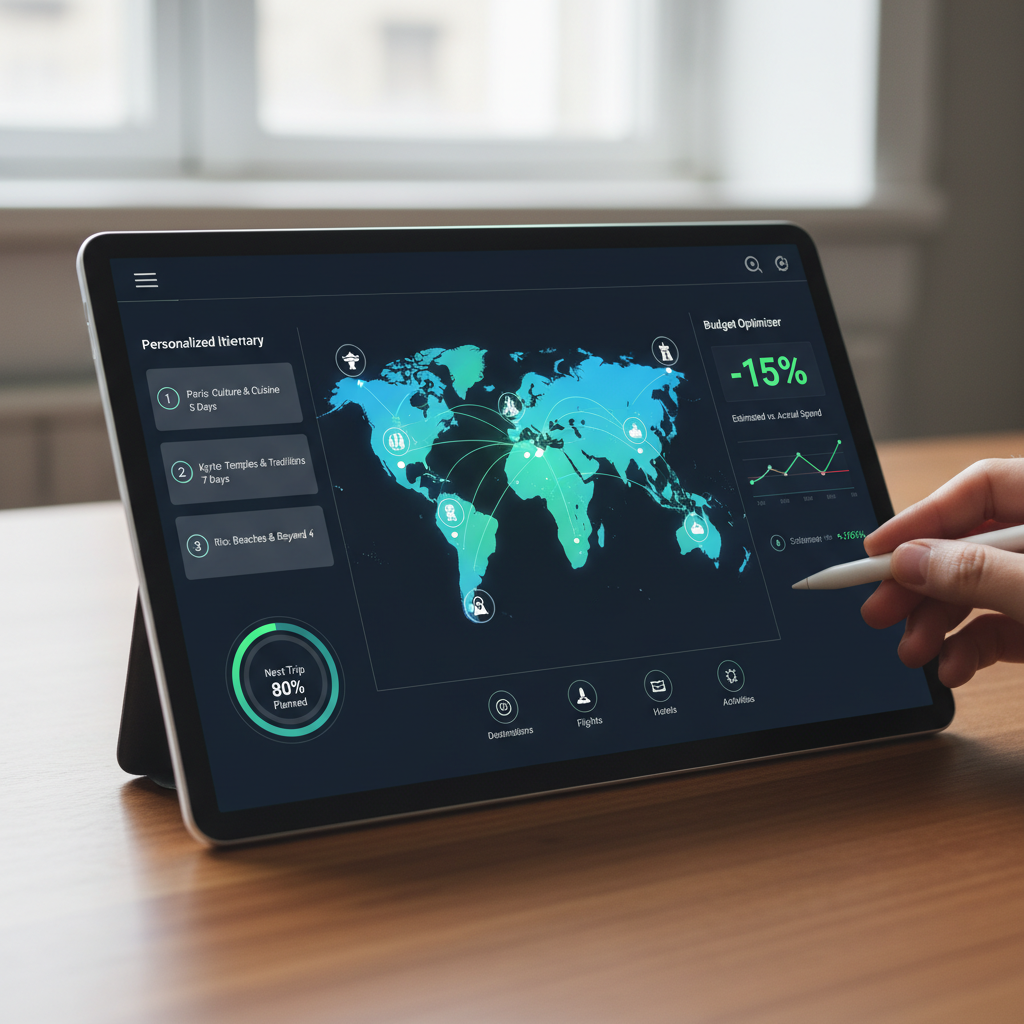
For many travelers, managing the budget is a cornerstone of trip planning, often dictating the duration, destination, and type of experiences. AI travel planners bring a new level of sophistication to financial planning, moving beyond simple cost tracking to offering brilliant insights that maximize value and help you stick to your desired spend.
Smart Budget Allocation and Tracking
Traditional budgeting often involves spreadsheets and manual calculations. AI streamlines this process by:
- Setting Realistic Budgets: Based on your destination, travel style, and desired experiences, AI can provide estimated costs for various categories (flights, accommodation, food, activities, transport, shopping) even before you start planning. This helps set realistic expectations.
- Real-time Expense Tracking: As you book components of your trip (flights, hotels), the AI automatically updates your overall budget. Many platforms allow you to input daily expenses during your trip, providing an up-to-the-minute overview of your spending.
- Categorized Spending Breakdown: AI can categorize your expenses, showing you exactly where your money is going. This might reveal, for example, that you’re spending more on dining than anticipated, allowing you to adjust future meals.
Optimizing for Cost-Effectiveness and Value
Where AI truly shines is in its ability to actively help you save money without necessarily compromising on the quality of your experience:
- Intelligent Route Optimization: For multi-destination trips, AI can analyze various travel routes, comparing costs of flights, trains, and buses, and suggesting the most budget-friendly yet time-efficient options. It might suggest flying into a slightly less popular airport to save on airfare, then finding a cost-effective connection.
- Deal Aggregation and Prediction: AI constantly monitors thousands of flight, hotel, and activity providers for deals, discounts, and promotions. It can predict price fluctuations, advising you on the best time to book flights or accommodations to get the lowest prices. For instance, it might suggest, “Flights to Rome are predicted to be cheapest if booked within the next 7 days.”
- Alternative Suggestions: If a desired activity or accommodation exceeds your budget, AI can instantly suggest high-quality alternatives that offer similar experiences at a lower cost. This could be recommending a charming guesthouse instead of a luxury hotel, or a free walking tour instead of a paid historical tour.
- Dynamic Package Building: AI can intelligently bundle flights, hotels, and activities to create package deals that are often cheaper than booking each component separately, always ensuring the package aligns with your preferences.
- Currency Exchange Insights: For international travel, some AI planners can provide real-time currency exchange rates and offer advice on the best ways to handle money abroad (e.g., using local ATMs, specific credit cards with no foreign transaction fees).
By empowering travelers with these financial insights and tools, AI removes much of the stress associated with travel budgeting, allowing for more informed decisions and a greater sense of control over spending, ultimately leading to a more satisfying and economically sound vacation.
Beyond Bookings: AI as Your Intelligent Travel Companion
The utility of AI travel planners extends far beyond the initial booking phase. They evolve into comprehensive, intelligent companions that assist you before, during, and even after your journey, ensuring a seamless and enriched travel experience.
Pre-Trip Assistance: Setting the Stage for Success
Before you even leave home, AI can provide invaluable assistance that often goes overlooked:
- Visa and Entry Requirements: Automatically checks visa requirements for your nationality to your destination(s), providing links to application forms or relevant embassy websites. It can also advise on necessary vaccinations or health declarations.
- Packing Lists: Generates tailored packing lists based on your destination’s climate, planned activities, trip duration, and even local cultural norms (e.g., suggesting modest clothing for certain religious sites).
- Local Customs and Etiquette: Offers insights into local customs, tipping practices, common phrases in the local language, and cultural sensitivities to help you navigate and respect your host destination.
- Currency and Connectivity: Provides information on local currency, average costs, and advice on buying local SIM cards or understanding international roaming options.
- Pre-departure Checklists: Reminds you about tasks like informing your bank about travel, setting up mail holds, or downloading offline maps.
During Your Trip: Real-time Support and Enhancement
While you’re on the ground, your AI travel companion becomes an indispensable guide:
- Real-time Navigation: Integrates with mapping services to provide walking, public transport, or driving directions, often with real-time traffic updates. It can even suggest the best routes to avoid crowds.
- Dynamic Local Recommendations: Based on your current location, time of day, and expressed preferences, the AI can suggest nearby restaurants, cafes, attractions, or events. If it’s raining, it might suggest indoor activities. If it’s lunchtime, it recommends eateries.
- Language Translation: Many AI tools incorporate translation features, allowing you to communicate more easily with locals, read menus, or understand signs.
- Emergency Assistance: Provides quick access to local emergency numbers, embassy contact information, and medical facility details.
- Review and Information Access: Quickly pulls up reviews, operating hours, and contact details for any point of interest in your itinerary or nearby.
- Booking Modifications: Need to change a restaurant reservation or find an alternative activity due to unforeseen circumstances? The AI can assist in making these adjustments directly.
Post-Trip Reflection: Preserving Memories and Improving Future Journeys
Even after you return home, AI can continue to add value:
- Memory Curation: Some AI tools can help organize your photos and videos, suggest creating a digital travelogue, or even highlight key moments from your trip.
- Feedback Collection: Gathers feedback on your experiences, which not only helps refine its recommendations for you in the future but also contributes to improving the overall AI model for other users.
- Loyalty Program Integration: Helps track points and benefits from airlines, hotels, and credit cards used during your trip, potentially suggesting optimal redemption strategies for future travel.
By offering this end-to-end support, AI travel planners transform from mere booking tools into personal concierges, ensuring that every stage of your travel experience is enriched, efficient, and enjoyable.
Navigating the Landscape: Top AI Travel Planner Features and Platforms
The AI travel planner landscape is diverse, with various platforms offering different strengths and functionalities. While specific brand names might change or evolve, the core features that define these revolutionary tools remain consistent. Understanding these features helps travelers choose the right AI assistant for their needs.
Core Features to Look For:
- Intelligent Itinerary Generation:
- Automated Day Planning: Creates multi-day itineraries from scratch based on user input (interests, budget, pace).
- Route Optimization: Arranges activities logically to minimize travel time and maximize efficiency between locations.
- Dynamic Rescheduling: Adjusts plans in real-time due to delays, closures, or spontaneous decisions.
- Personalized Recommendation Engine:
- Activity Suggestions: Proposes attractions, restaurants, and experiences tailored to individual preferences and past behaviors.
- Accommodation Matching: Recommends hotels, hostels, or unique stays that align with budget, style, and location preferences.
- Local Insights: Suggests hidden gems, local events, and off-the-beaten-path experiences.
- Budget Management & Optimization:
- Cost Estimation: Provides projected costs for flights, accommodation, food, and activities.
- Price Tracking & Alerts: Monitors prices for flights, hotels, and tours, notifying users of drops or optimal booking times.
- Alternative Cost-Savings: Suggests cheaper options or alternative approaches without sacrificing experience quality.
- Comprehensive Booking Integration:
- Flight & Hotel Search: Aggregates options from various providers, often identifying the best deals.
- Activity & Tour Booking: Facilitates direct booking or provides links to reliable third-party booking sites.
- Transportation Booking: Integrates ground transport options like trains, buses, and car rentals.
- Pre- and During-Trip Assistance:
- Document & Visa Guidance: Provides information on necessary travel documents, visas, and health requirements.
- Packing Lists: Generates context-aware packing lists.
- Real-time Navigation & Maps: Offers in-app navigation with live updates.
- Translation Services: Basic language support for common phrases or sign interpretation.
- Emergency Information: Quick access to local emergency numbers and essential contacts.
- Collaborative Planning:
- Allows multiple travelers to contribute to and view the itinerary, making group planning much easier.
- User Interface and Experience:
- Intuitive Design: Easy to navigate and use, often with conversational interfaces (chatbots).
- Mobile Accessibility: Fully functional on smartphones for on-the-go planning and in-trip use.
Types of AI Travel Platforms:
While the market is constantly evolving, AI travel planners generally fall into a few categories based on their primary function:
- Integrated OTA AI: Many large Online Travel Agencies (OTAs) are integrating AI features directly into their platforms to enhance search, recommendation, and customer service. Examples include personalized hotel suggestions, dynamic pricing alerts, and AI-powered chatbots for support.
- Dedicated Itinerary Builders: These are standalone applications or websites focused specifically on generating and optimizing multi-day itineraries based on detailed user preferences. They often excel at complex trip routing and activity sequencing.
- AI-Powered Travel Assistants/Chatbots: Some tools function primarily as conversational AI, where you interact via text or voice to describe your ideal trip, and the AI generates options, answers questions, and helps refine your plans.
- Niche AI Travel Apps: These cater to specific travel styles, like budget backpackers, luxury travelers, or adventurers, offering highly specialized AI-driven recommendations within their domain.
When selecting an AI travel planner, consider your specific needs: Are you looking for comprehensive end-to-end planning, or just help with specific aspects like finding deals or optimizing a route? The right AI tool can significantly enhance your travel planning efficiency and the enjoyment of your trip.
Challenges and Future Outlook of AI in Travel
While AI travel planners offer immense benefits, they also present challenges and are still evolving. Understanding these aspects is crucial for a balanced perspective on their role in the future of travel.
Current Challenges:
- Data Privacy and Security: AI thrives on data, including personal preferences, travel history, and sometimes even real-time location. Ensuring this sensitive information is protected from breaches and used ethically is paramount. Travelers need assurances that their data is anonymized, encrypted, and not exploited.
- Over-reliance and Loss of Serendipity: There’s a concern that over-relying on AI might diminish the spontaneous discoveries and unexpected joys that often define memorable travel. If every minute is perfectly planned, does it leave room for happy accidents or changing one’s mind?
- The “Black Box” Problem: Sometimes, AI recommendations might seem arbitrary, and it can be difficult for users to understand *why* a particular suggestion was made. Lack of transparency can lead to distrust.
- Nuance and Empathy: While AI excels at processing data, it currently lacks the human touch, empathy, and nuanced understanding that a seasoned human travel agent can offer, especially in complex, sensitive, or truly bespoke travel arrangements.
- Bias in Algorithms: If the data used to train AI models contains inherent biases (e.g., reflecting historical travel patterns or popular demographics), the AI might perpetuate these biases, leading to less diverse or inclusive recommendations.
- Connectivity Issues: Many AI features, especially real-time updates and dynamic adjustments, require a stable internet connection, which might not always be available in remote or international locations.
Future Outlook:
Despite these challenges, the trajectory for AI in travel is one of continuous growth and innovation. Here’s what we can anticipate:
- Hyper-Hyper Personalization: AI will become even more attuned to individual nuances, potentially integrating biometric data (e.g., stress levels to suggest relaxing activities) or even predicting desires before they are explicitly stated.
- Seamless Integration with Smart Devices: Expect deeper integration with smart homes, wearables, and in-car systems. Your AI travel planner might automatically adjust your home thermostat when you leave, or guide you via your smart glasses while navigating a foreign city.
- Predictive Travel and Proactive Suggestions: AI might start suggesting destinations and itineraries based on life events (e.g., “It looks like you’ll have some free time around your birthday next year; here are some weekend getaway ideas based on your preferences”).
- Virtual and Augmented Reality Tours: Before booking, AI could generate highly realistic virtual tours of hotels or destinations, allowing travelers to “experience” aspects of their trip in VR/AR.
- Voice-Controlled and Conversational Interfaces: Planning will become even more natural through advanced voice assistants, making the process feel like chatting with an expert human agent.
- Ethical AI Frameworks: Increased focus on developing ethical AI guidelines, ensuring fairness, transparency, and robust data protection, which will build greater trust with users.
- Hybrid Models: The future likely involves a blend of AI efficiency and human expertise, where AI handles the heavy lifting of research and logistics, while human travel advisors provide personalized insights, deal with complex issues, and offer a comforting presence.
AI’s journey in travel is still in its early stages, but its potential to transform how we explore the world is immense. As the technology matures and addresses its current limitations, AI will undoubtedly play an even more central role in making every trip more accessible, enjoyable, and perfectly tailored.
Comparison Tables
Table 1: Traditional Travel Planning vs. AI Travel Planning
| Feature/Aspect | Traditional Travel Planning | AI Travel Planning |
|---|---|---|
| Information Gathering | Manual research across multiple websites, guidebooks, forums. Time-consuming and prone to information overload. | Automated aggregation and synthesis of data from vast sources. Quick, curated, and context-aware. |
| Personalization | Relies on self-awareness and effort to find relevant options. Often broad, based on demographics. | Deep personalization based on explicit preferences, past behavior, and psychographic analysis. Highly tailored. |
| Itinerary Creation | Manual construction, often rigid. Time-intensive to balance logistics and interests. | Automated generation and optimization of dynamic itineraries. Adapts in real-time. |
| Budget Management | Manual tracking via spreadsheets or mental notes. Difficult to find best deals without extensive searching. | Intelligent budget estimation, real-time tracking, price prediction, and cost-saving alternative suggestions. |
| Adaptability to Changes | High stress, manual re-planning required for flight delays, weather issues, or spontaneous decisions. | Automatic real-time adjustments and proactive suggestions for unforeseen circumstances. Low stress. |
| Time/Effort Required | Significant investment of time (hours to days) and mental effort. High potential for decision fatigue. | Minimal time (minutes to hours) and effort. AI handles complex data processing and optimization. |
| Pre- & In-Trip Support | Limited to guidebooks, apps, or local knowledge. Reactive problem-solving. | Comprehensive support: visa guidance, packing lists, real-time navigation, local recommendations, translation. Proactive problem-solving. |
| Discovery of New Things | Depends on individual research skills and luck. May stick to popular tourist spots. | Uncovers hidden gems, unique local experiences, and personalized off-the-beaten-path suggestions. |
Table 2: Key Benefits of AI in Different Travel Planning Stages
| Travel Stage | AI Benefits | Example Use Case |
|---|---|---|
| Inspiration & Discovery | Suggests destinations and activities based on broad preferences, past trips, and trending data. Sparks new ideas. | “I want an adventurous trip in Europe for under $2000.” AI suggests Slovenia for hiking and canyoning with budget flights. |
| Detailed Planning & Booking | Creates optimized itineraries, compares prices across thousands of providers, and handles complex logistics. | AI generates a 7-day itinerary for Japan, including specific train routes, hotel bookings, and activity reservations within budget. |
| Pre-Trip Preparation | Provides essential information, checklists, and advice to ensure readiness for the journey. | AI sends a packing list for a winter trip to Iceland, advises on visa requirements, and offers tips on local currency exchange. |
| During the Trip | Offers real-time assistance, adapts to changes, and provides local recommendations and navigation. | Flight delayed by 3 hours. AI automatically suggests a nearby lounge, adjusts airport transfer, and reschedules first-day activities. |
| Post-Trip Reflection | Helps in memory curation and gathers feedback for future personalized recommendations. | AI prompts for feedback on visited restaurants, organizes trip photos, and suggests similar future destinations. |
| Budget Management | Sets realistic spending goals, tracks expenses, and identifies cost-saving opportunities proactively. | AI alerts when a chosen hotel price drops, or suggests a comparable, cheaper alternative if budget is exceeded. |
| Group Coordination | Facilitates collaborative planning, accommodating preferences and logistics for multiple travelers. | For a family trip with varied interests, AI crafts an itinerary balancing kid-friendly activities, historical sites, and relaxation for adults. |
Practical Examples: Real-World Use Cases and Scenarios
To truly appreciate the power of AI travel planners, let’s explore some real-world scenarios where they make a tangible difference.
Scenario 1: The Multi-Generational Family Vacation
The Challenge: A family of five – two parents, a teenager, a pre-teen, and a toddler – wants to visit Rome for a week. They have diverse interests: parents want historical sites and fine dining, the teenager wants trendy spots and photo opportunities, the pre-teen wants interactive experiences, and the toddler needs nap times and play areas. Budget is a concern, and accessibility for a stroller is crucial.
How AI Helps:
- Personalized Itinerary: The AI takes input for all five family members’ ages and interests. It crafts a daily itinerary that balances a morning at the Colosseum (with child-friendly historical facts), an afternoon at a park with a playground for the toddler, a gelato stop for everyone, an evening pizza-making class for the kids, and a separate reservation for the parents at a highly-rated Roman restaurant after the kids are asleep.
- Logistics and Accessibility: It identifies hotels with family rooms or connecting options, close to public transport or walkable attractions, and specifically notes which attractions are stroller-friendly or offer accessible routes. It even plans routes that avoid steep hills or crowded areas during peak times.
- Budget Optimization: The AI finds a hotel that offers free breakfast for children, suggests family passes for attractions, and recommends a mix of sit-down restaurants and more affordable, authentic trattorias. It continuously monitors flight prices, advising the best time to book for the entire family.
- Real-time Adjustments: If a child gets sick, or the weather unexpectedly turns rainy, the AI immediately suggests indoor alternatives like children’s museums, interactive exhibits, or covered markets, dynamically re-scheduling outdoor activities for a later, sunnier day.
Outcome: A harmonious trip where everyone’s needs and interests are met, without the parents spending hours stressing over planning and coordination.
Scenario 2: The Spontaneous Solo Adventure
The Challenge: A solo traveler has a sudden three-day weekend free and a modest budget. They’re open to any European city but want something unique, perhaps a less-visited gem with good cultural vibes, great food, and opportunities for photography. They value safety and easy navigation.
How AI Helps:
- Destination Discovery: Based on the input (“solo, budget, culture, photography, Europe, 3 days”), the AI quickly analyzes flight/train prices from their location, current events, and traveler reviews to suggest destinations beyond the usual suspects – perhaps Ljubljana, Slovenia, or Bologna, Italy.
- Tailored Itinerary: For the chosen city, the AI generates an itinerary focusing on walking tours, local markets, specific architectural photo spots, and highly-rated but affordable local eateries. It suggests a safe, centrally located hostel or boutique hotel within budget.
- Navigation and Safety: The planner provides detailed public transport routes, walking maps, and highlights safe neighborhoods. It offers a list of essential local phrases and local emergency contacts.
- Deal Hunting: It identifies the cheapest flight/train combination and alerts the traveler to any last-minute deals on local tours or events.
Outcome: A fulfilling, unique, and safe solo adventure planned in minutes, turning a spontaneous idea into a memorable reality.
Scenario 3: The Business Trip with a Leisure Extension
The Challenge: A professional is traveling to Tokyo for a conference from Monday to Wednesday. They want to extend their stay through the weekend for leisure, focusing on unique cultural experiences, anime/manga shopping, and finding quiet, serene spots amidst the city’s hustle. They need to ensure business meetings aren’t disrupted.
How AI Helps:
- Integrated Planning: The AI first optimizes the business part of the trip: efficient routes to the conference venue from the hotel, nearby business-friendly restaurants for client lunches, and managing meeting schedules.
- Seamless Transition: For the leisure extension, the AI proposes a change of accommodation to a more culturally immersive ryokan or a trendy district after the conference ends.
- Personalized Leisure Itinerary: It plans activities like a visit to the Ghibli Museum (booking tickets far in advance), exploring Akihabara for anime, finding quiet temple gardens (e.g., Meiji Jingu), and suggests unique dining experiences like themed cafes or traditional izakayas.
- Time Management: The AI meticulously plans travel times between these diverse locations, suggesting the most efficient subway lines and even specific train car recommendations for the best views or least crowded routes.
Outcome: A perfectly balanced trip that seamlessly combines professional obligations with deep, personalized cultural exploration, maximizing the value of the international travel.
Scenario 4: The Group Backpacking Adventure
The Challenge: A group of four friends wants to backpack across Southeast Asia for a month, visiting multiple countries (Thailand, Vietnam, Cambodia). They have different budgets, travel paces, and interests (some want parties, others history, some relaxation). Coordinating flights, hostels, and activities for four people with varying preferences is daunting.
How AI Helps:
- Collaborative Planning: The AI platform allows each friend to input their individual preferences, budget constraints, and desired activities. The AI identifies common interests and highlights areas of conflict.
- Optimized Multi-Country Route: It suggests the most logical and cost-effective route between the three countries, considering various modes of transport (flights, overnight buses, ferries) and estimated travel times.
- Balanced Itinerary: The AI creates an itinerary that balances high-energy activities (e.g., Bangkok nightlife, full moon parties) with cultural excursions (e.g., Angkor Wat, Hoi An ancient town) and relaxation (e.g., island hopping, beach time), ensuring everyone gets a taste of what they want. It even suggests separate activities for smaller groups if interests diverge.
- Budget Management for Group: It tracks shared expenses, suggests budget-friendly hostels or guesthouses, and finds deals on group tours. It can even help split costs and track who owes whom.
- Visa and Health Info: Provides consolidated information on visa requirements for each country and advises on necessary vaccinations and local health precautions.
Outcome: A month-long, complex group adventure managed with ease, minimizing arguments and maximizing shared enjoyment, despite diverse individual preferences.
These examples illustrate how AI travel planners move beyond being simple tools to becoming essential partners in crafting richer, more personalized, and stress-free travel experiences.
Frequently Asked Questions
Q: What exactly is an AI travel planner?
A: An AI travel planner is a sophisticated digital tool that utilizes Artificial Intelligence, including machine learning, natural language processing, and big data analytics, to assist in planning and managing travel. Unlike traditional online travel agencies (OTAs) that primarily aggregate search results, AI planners can understand user preferences, generate dynamic itineraries, optimize routes, manage budgets, and provide real-time assistance before, during, and after a trip. They learn from your interactions and data to offer highly personalized recommendations and solutions.
Q: How does AI personalize travel recommendations for me?
A: AI personalizes recommendations by analyzing a variety of data points. This includes explicit input (your stated preferences, budget, interests), implicit behavior (your past searches, bookings, viewed destinations, duration of interaction with certain content), and sometimes even broader demographic or psychographic data. It builds a detailed profile of your “travel DNA,” allowing it to suggest destinations, accommodations, activities, and dining experiences that truly align with your unique tastes, travel style, and specific needs, moving beyond generic popular choices to truly bespoke suggestions.
Q: Is using an AI travel planner expensive, or are there free options?
A: The cost of AI travel planners varies widely. Many basic AI features are integrated into existing free platforms or popular travel apps, offering features like personalized search results or deal alerts at no extra charge. Some dedicated AI itinerary builders might offer a free tier with limited functionality, alongside premium subscription models that unlock advanced features such as real-time itinerary adjustments, dedicated support, or deeper personalization. The value proposition often outweighs the cost, as these tools can save travelers significant time and potentially money by finding optimized deals.
Q: Can AI travel planners handle last-minute changes or emergencies during a trip?
A: Yes, this is one of AI’s strongest capabilities. Advanced AI travel planners are designed to monitor real-time data such as weather forecasts, flight statuses, local traffic, and event closures. If an unforeseen event occurs (e.g., a flight delay, an attraction is unexpectedly closed, or you simply change your mind), the AI can instantly re-optimize your itinerary, suggest alternative activities or routes, and even help rebook arrangements. This dynamic adaptability significantly reduces stress and ensures your trip stays on track, even with unexpected disruptions.
Q: What about data privacy and security when using these AI tools?
A: Data privacy and security are critical concerns for any AI-driven service. Reputable AI travel planners employ robust security measures, including data encryption, anonymization techniques, and compliance with data protection regulations like GDPR. They typically require user consent to access and process personal data. It’s important for users to read the privacy policies of any platform they use and be mindful of the information they share. While no system is entirely impervious, leading AI travel companies invest heavily in safeguarding user data.
Q: Does AI replace human travel agents?
A: Not entirely; rather, AI complements human travel agents. AI excels at handling repetitive tasks, processing vast amounts of data, optimizing logistics, and providing instant recommendations. This frees up human agents to focus on more complex, nuanced, or specialized requests that require empathy, creative problem-solving, or deep personal expertise (e.g., luxury travel, specific adventure tours, or managing highly sensitive travel needs). The future likely involves a hybrid model where AI handles the heavy lifting, and human agents provide invaluable human judgment and high-touch service for bespoke experiences.
Q: How accurate are AI predictions for pricing and availability?
A: AI predictions for pricing and availability are generally highly accurate, continuously improving as more data is fed into their models. They analyze historical pricing trends, demand fluctuations, seasonal patterns, and even real-time booking data to forecast future prices for flights and accommodations. While no prediction is 100% guaranteed due to market volatility, AI tools provide a strong statistical likelihood, often outperforming human estimates. They are excellent at identifying optimal booking windows or alerting users to significant price drops or availability changes.
Q: What are the main limitations of current AI travel planners?
A: Current limitations include the potential for “over-optimization” which might reduce spontaneity, a lack of true emotional intelligence or nuanced understanding of complex human desires, and the “black box” problem where the reasoning behind certain recommendations isn’t always transparent. AI can also be limited by the quality and quantity of the data it’s trained on, potentially leading to biases. Furthermore, robust functionality often relies on internet connectivity, which might be an issue in remote areas.
Q: How do I choose the best AI travel planner for my next trip?
A: To choose the best AI travel planner, consider your specific needs:
- Your Travel Style: Are you a budget backpacker, a luxury seeker, or a family traveler?
- Features Needed: Do you need comprehensive itinerary building, just deal alerts, or in-trip assistance?
- Ease of Use: Look for an intuitive interface, preferably with a conversational or chatbot option.
- Reviews and Reputation: Check what other travelers say about its accuracy, reliability, and customer support.
- Privacy Policy: Ensure you are comfortable with how your data will be used and protected.
Many platforms offer free trials or basic versions, allowing you to test them out before committing to a premium service.
Q: What’s next for AI in the travel industry?
A: The future of AI in travel promises even deeper integration and more immersive experiences. We can expect hyper-hyper personalization (predicting desires before you articulate them), seamless integration with smart devices (wearables, smart homes, AR/VR for virtual tours), predictive travel suggestions based on life events, and advanced voice-controlled conversational interfaces. Ethical AI frameworks will become more robust, and the collaboration between AI and human expertise will likely define the most exceptional travel services.
Key Takeaways: AI Travel Planners at a Glance
Artificial Intelligence is not just a buzzword in travel; it’s a transformative force reshaping every aspect of our vacation experience. Here are the core benefits and defining characteristics:
- Unprecedented Personalization: AI understands your unique travel DNA, crafting itineraries and recommendations that go far beyond generic suggestions, delivering truly bespoke journeys.
- Dynamic Adaptability: AI systems provide real-time adjustments to itineraries in response to unexpected events like flight delays, weather changes, or spontaneous decisions, ensuring a stress-free experience.
- Intelligent Budget Management: From predicting price fluctuations to identifying cost-saving alternatives and tracking expenses, AI helps you maximize value and stick to your budget without compromising on quality.
- Comprehensive Travel Companion: AI offers end-to-end support, from pre-trip essentials (visa guidance, packing lists) to in-trip assistance (navigation, local recommendations, translation) and even post-trip memory curation.
- Efficiency and Time-Saving: AI dramatically reduces the hours spent on research and planning, allowing you to discover, book, and enjoy your trip with unparalleled efficiency.
- Empowered Discovery: AI uncovers hidden gems, unique local experiences, and alternative destinations you might never have found through traditional planning methods.
- Evolution, Not Replacement: AI is enhancing the role of human travel expertise, handling repetitive tasks while allowing human agents to focus on complex, high-touch services.
Conclusion: Embrace the Future of Effortless Exploration
The days of overwhelming travel planning, endless browser tabs, and the anxiety of potential mishaps are rapidly becoming a relic of the past. AI travel planners are emerging as the ultimate solution, fundamentally transforming the vacation experience from a tedious chore into an exciting, personalized, and seamless adventure. By harnessing the power of vast data, intelligent algorithms, and real-time adaptability, these tools offer a level of convenience, efficiency, and personalization that was once unimaginable.
From the initial spark of inspiration to the intricate details of a multi-destination itinerary, and from managing unforeseen disruptions to optimizing your budget, AI acts as your dedicated, always-on travel concierge. It doesn’t just book your trip; it anticipates your needs, understands your desires, and proactively shapes an experience tailored exclusively for you. Whether you’re a meticulous planner or a spontaneous adventurer, a solo backpacker or organizing a complex family reunion, AI has the capacity to simplify the process and elevate your journey.
As AI technology continues to evolve, we can anticipate even more sophisticated, intuitive, and integrated travel planning solutions. The future of travel is not just about reaching your destination; it’s about the entire journey, from the moment you dream of it to the memories you cherish. By embracing AI travel planners, you’re not just adopting a new tool; you’re unlocking a new paradigm of exploration – one where every trip is truly transformed, allowing you to focus on what matters most: creating unforgettable experiences and discovering the world with unparalleled ease and joy.



















































































Leave a Reply