

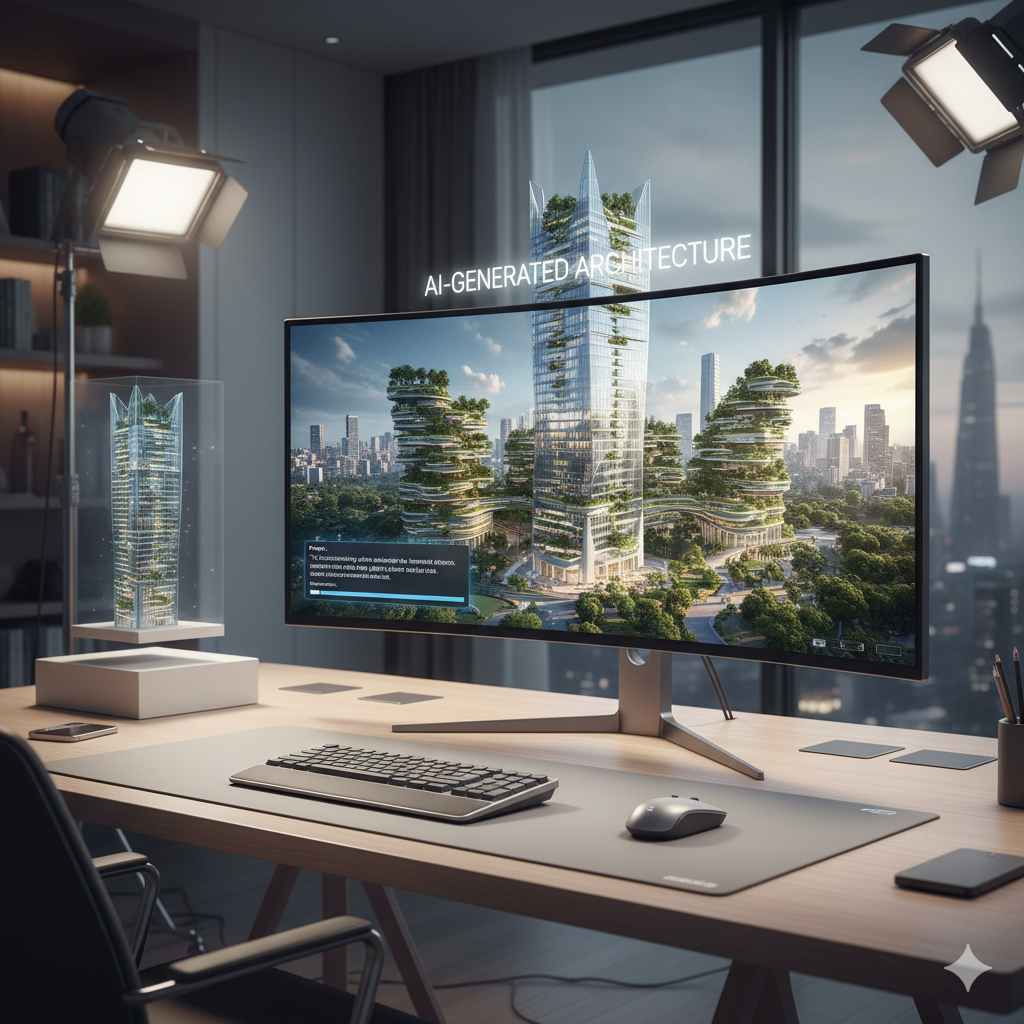
The field of architecture and interior design has always thrived on innovation, blending artistic vision with technical precision to create spaces that inspire and function. For centuries, the process of bringing a design concept to life involved meticulous hand drafting, followed by complex 2D and 3D software modeling. While these traditional methods are foundational, they often demand significant time and resources, particularly during the initial conceptualization and client presentation phases. Enter Generative AI, a revolutionary technology that is reshaping how architects and interior designers approach their work, promising to transform abstract ideas into tangible visuals with unprecedented speed and fluidity.
Imagine being able to sketch a rough floor plan or articulate a design theme in plain language, only for a sophisticated AI to instantly generate a multitude of photorealistic renderings, diverse stylistic interpretations, or optimized spatial arrangements. This is not a futuristic fantasy; it is the present reality enabled by Generative AI. This cutting-edge technology allows designers to move from abstract thought to detailed visualization in mere seconds, fundamentally altering the pace and scope of creative exploration. From urban planning scenarios to intricate interior details, Generative AI is proving to be an indispensable ally, pushing the boundaries of what is creatively possible and significantly streamlining the design workflow. This blog post will delve deep into how Generative AI is empowering architects and interior designers to visualize spaces instantly, iterate designs rapidly, and communicate their visions with unparalleled clarity.
Understanding Generative AI in Architectural Design
At its core, Generative AI refers to a class of artificial intelligence algorithms that can produce new, original content, rather than merely analyzing or classifying existing data. In the context of architectural design, this means AI systems are trained on vast datasets of architectural styles, building types, urban landscapes, interior designs, material textures, and rendering techniques. Once trained, these models can then generate entirely new images, 3D models, or even design layouts based on textual prompts, sketches, or existing design inputs provided by the user.
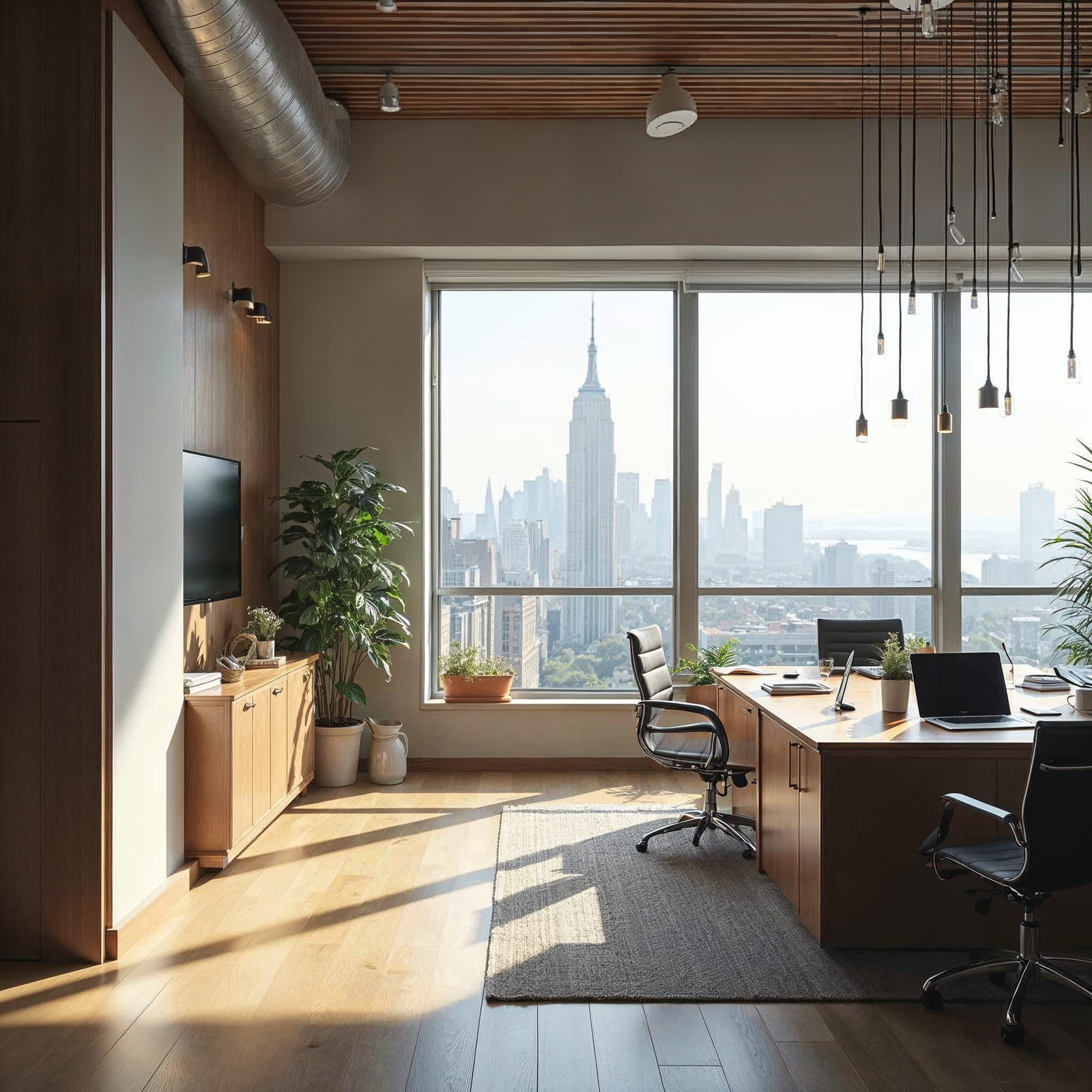
The most common application in architectural visualization today involves text-to-image generation. An architect might input a prompt like “a modern minimalist living room with large windows overlooking a city skyline, featuring a muted color palette and natural wood accents.” The AI model then processes this description, drawing upon its extensive training data to synthesize a unique, photorealistic image that aligns with the prompt. More advanced applications include image-to-image transformation, where a rough sketch or an existing photo can be stylized or enhanced according to new parameters, and even 3D model generation from 2D inputs or textual descriptions.
The underlying technology often involves complex neural networks, such as Generative Adversarial Networks (GANs) and Diffusion Models. GANs consist of two competing networks: a generator that creates new data and a discriminator that evaluates its realism. Diffusion Models work by gradually adding noise to an image and then learning to reverse that process, effectively “denoising” random data into coherent images. These powerful algorithms allow AI tools to not only replicate existing styles but also to innovate, blending elements in novel ways that can surprise and inspire human designers. Understanding these foundational concepts is crucial for architects looking to leverage Generative AI effectively, moving beyond simple prompt engineering to a more sophisticated interaction with these intelligent design partners.
The Paradigm Shift: From Manual to Instant Visualization
Historically, the journey from an architect’s initial concept to a polished visualization was a labor-intensive marathon. Sketching, drafting in CAD software, 3D modeling, texturing, lighting, and rendering could take days, weeks, or even months, depending on the complexity of the project. Each iteration, each design change, meant significant re-work, impacting project timelines and budgets. This arduous process often stifled spontaneous creativity and made rapid experimentation costly.
Generative AI introduces a profound paradigm shift, transforming this slow, linear process into a dynamic, iterative, and almost instantaneous feedback loop. Architects are no longer bound by the time constraints of manual rendering. With AI, a design idea can be articulated and visualized in seconds. This speed allows for an unparalleled level of experimentation. Instead of committing to one or two design directions for visualization, architects can explore dozens, even hundreds, of variations in a fraction of the time. This means:
- Unleashed Creativity: Designers can freely explore unconventional ideas without the fear of wasting precious time on concepts that might not pan out. The AI acts as a creative partner, generating unexpected interpretations that can spark new directions.
- Rapid Iteration: Changes to a design concept, such as altering a material, adjusting lighting, or experimenting with a different architectural style, can be implemented and visualized almost instantly. This accelerates the design development phase significantly.
- Enhanced Client Engagement: Presenting multiple, high-quality visual options early in the process helps clients better understand and engage with the design. It facilitates quicker decision-making and reduces misunderstandings, leading to more satisfied clients.
- Efficiency and Cost Savings: By automating the visualization process, firms can reallocate human resources to more complex problem-solving, detailed design development, or client relationship management. This leads to substantial savings in time and labor costs.
- Democratization of Visualization: High-quality rendering, once the exclusive domain of specialized visualization artists and expensive software, becomes more accessible to every architect and designer, even those with limited 3D modeling expertise.
This shift from manual to instant visualization is not just about speed; it’s about fundamentally altering the creative process, making it more fluid, more exploratory, and ultimately, more powerful. It empowers architects to spend less time on tedious tasks and more time on high-level design thinking and problem-solving.
Key Benefits for Architects and Designers
The integration of Generative AI into architectural and interior design workflows brings a multitude of compelling benefits that extend beyond mere speed. These advantages are transforming various aspects of the design process, from conceptualization to client presentation and even project optimization.
Rapid Conceptualization and Iteration
One of the most significant advantages is the ability to generate a vast array of design concepts in a remarkably short timeframe. Instead of spending hours or days modeling a single idea, an architect can use AI to visualize multiple variations of a building facade, a room layout, or a landscape design from a simple sketch or textual prompt. This rapid ideation process encourages designers to push creative boundaries, exploring diverse aesthetic and functional possibilities that might otherwise be overlooked due to time constraints. For instance, an architect can input a basic massing model and ask the AI to generate options for different window patterns, cladding materials, or roof designs, instantly seeing how these choices impact the overall aesthetic.
Enhanced Client Communication and Engagement
Visual communication is paramount in architecture. Generative AI allows designers to present highly realistic and compelling visuals to clients from the very early stages of a project. Instead of abstract plans or basic 3D models, clients can see photorealistic renderings that bring the proposed design to life. This clarity helps clients better understand the vision, provide informed feedback, and feel more engaged in the design process. The ability to quickly generate alternatives based on client feedback during a meeting can also significantly accelerate decision-making, minimizing back-and-forth revisions and ultimately leading to greater client satisfaction.
Unlocking Creative Exploration and Innovation
Generative AI acts as a powerful creative partner, offering unexpected perspectives and solutions. By generating novel combinations of forms, materials, and spatial arrangements, AI can help architects break free from conventional design tropes and explore truly innovative ideas. It can serve as a brainstorming tool, presenting a wider range of possibilities than a human designer might conceive alone. This extends to exploring different stylistic interpretations, historical influences, or even fantastical elements, pushing the boundaries of what is considered architecturally feasible or aesthetically pleasing.
Optimizing Design Processes and Problem-Solving
Beyond aesthetics, Generative AI can assist in optimizing functional aspects of design. While not yet fully integrated into mainstream architectural AI tools for real-time physics simulation, the underlying generative principles can be applied to optimize layouts for circulation, daylighting, energy efficiency, or structural integrity. For example, AI can generate various floor plan configurations that maximize natural light or minimize walking distances, providing data-driven insights to inform design decisions. This shift from purely aesthetic generation to performance-informed generation represents a significant step forward in intelligent design.
Sustainability and Performance Analysis (Emerging)
While still an evolving area, the potential for Generative AI to contribute to sustainable design is immense. By quickly generating and analyzing multiple design options, AI can help identify solutions that optimize energy performance, material usage, and environmental impact. For example, AI could evaluate how different facade designs respond to solar gain, or suggest layouts that promote natural ventilation, providing quantitative data alongside visual representations. This capability promises to integrate sustainability considerations much earlier and more effectively into the design process.
Popular Generative AI Tools and Platforms for Architects
The landscape of Generative AI tools is rapidly evolving, with new platforms emerging and existing ones gaining sophistication. For architects and interior designers, these tools offer various functionalities, from general image generation to specialized architectural applications.
General Purpose Generative AI Tools:
- Midjourney: Renowned for its artistic and often surreal image generation capabilities, Midjourney excels at creating evocative conceptual renderings and mood boards. Its strength lies in interpreting abstract prompts and producing highly aesthetic visuals, making it ideal for early-stage conceptual exploration and stylistic development. It is less focused on architectural accuracy but brilliant for atmosphere and mood.
- DALL-E 3 (integrated with ChatGPT Plus/Enterprise): Developed by OpenAI, DALL-E is highly versatile, capable of generating a wide range of images from textual descriptions. Its integration with ChatGPT allows for more natural language interaction, where users can refine prompts iteratively through conversation. DALL-E often produces visually coherent and contextually relevant images, useful for generating design options, material studies, or specific architectural elements.
- Stable Diffusion (open-source and various implementations): This open-source model offers unparalleled flexibility and customization. Users can host it locally, integrate it into various workflows, and fine-tune it with specific datasets. Its versatility allows for diverse applications, from photorealistic renders to stylized architectural drawings, and it supports image-to-image prompting, enabling designers to transform sketches or existing photos into detailed visuals. Many specialized architectural AI tools are built on top of or leverage Stable Diffusion’s capabilities.
- Adobe Firefly: Integrated into Adobe’s creative suite, Firefly offers capabilities like text-to-image, generative fill, and text effects. For designers, its primary appeal is seamless integration with tools like Photoshop, allowing for quick generation of textures, background elements, or even initial design concepts directly within their familiar environment. It focuses on creative control and ethical content generation.
Specialized Architectural AI Tools and Plugins:
Beyond general-purpose tools, a new wave of platforms is emerging specifically tailored for architectural applications:
- ARCHIREF: This platform is specifically designed to help architects generate design references and mood boards. Users can upload sketches or conceptual images and receive AI-generated variations or inspirations, streamlining the initial conceptual design phase.
- GetGround (formerly GetFloorplan): Focuses on transforming 2D floor plans into 3D renders. Users can upload a floor plan, and the AI will generate various interior design styles, furniture layouts, and realistic visualizations, making it excellent for residential and commercial interior design presentations.
- Krea AI: While not exclusively architectural, Krea AI’s real-time generation and image upscaling capabilities make it valuable. Designers can sketch or draw in real-time and see immediate AI-generated interpretations, offering a highly interactive and intuitive ideation process.
- TestFit: An AI-driven generative design tool for optimizing building layouts, particularly for multi-family residential, office, and hospitality projects. It can rapidly generate thousands of design options based on site constraints, programmatic requirements, and financial targets, helping architects find optimal massing and unit mixes.
- Spacemaker (acquired by Autodesk): This platform uses AI to generate and evaluate urban planning and building design options. It helps architects, urban planners, and developers optimize site layouts for factors like daylight, noise, wind, and views, ensuring smarter, more sustainable designs.
- Swapp: An AI-powered construction planning platform that generates detailed architectural drawings, including floor plans, sections, and elevations, based on initial design inputs. It aims to automate parts of the documentation process, increasing efficiency and reducing errors.
The choice of tool often depends on the specific stage of the design process and the desired outcome. General-purpose tools are excellent for broad conceptual exploration, while specialized platforms offer greater precision and integration for specific architectural tasks.
Workflow Integration: How Architects Are Using AI Today
Generative AI is not merely a novelty; it is rapidly becoming an integral part of the architectural workflow, offering support at various stages from initial ideation to client presentation. Its seamless integration is empowering architects to work smarter, faster, and more creatively.
1. Conceptual Design and Ideation:
This is arguably where Generative AI provides the most immediate impact. Architects begin with a rough sketch, a simple mood board, or even just a textual description of their vision. They then feed this input into an AI tool like Midjourney, DALL-E, or Stable Diffusion. The AI quickly generates a multitude of visual options, exploring different styles, forms, materials, and lighting conditions. For example, an architect designing a new museum might prompt, “a contemporary art museum with a flowing organic form, clad in weathered copper, set in a natural landscape.” The AI could return dozens of unique interpretations, providing immediate inspiration and a rich visual vocabulary to build upon. This rapid brainstorming allows designers to explore a wider range of possibilities before committing to a specific direction.
2. Design Iteration and Refinement:
Once an initial concept is selected, Generative AI facilitates rapid iteration. Designers can take an AI-generated image or a simple 3D model and use it as a base for further exploration. Tools with image-to-image capabilities (like Stable Diffusion’s img2img feature) allow architects to upload a base image and apply specific modifications through new prompts, such as “change facade material to exposed concrete,” “add more natural light from skylights,” or “reimagine in a brutalist style.” This allows for quick A/B testing of design choices, enabling architects to visually compare and contrast different design elements with unprecedented speed.
3. Material and Texture Studies:
Choosing the right materials and finishes is crucial. Generative AI can assist by quickly rendering how different materials will look in specific contexts. An interior designer can generate variations of a living room with different flooring types, wall finishes, or fabric patterns, helping them and their clients visualize the aesthetic impact. Tools like Adobe Firefly can even generate seamless textures directly within design software, greatly accelerating the process of material application and visualization.
4. Client Presentations and Communication:
High-quality visuals are key to effective client communication. Generative AI allows architects to produce compelling, photorealistic renderings for presentations much earlier in the design process and at a fraction of the traditional cost and time. This helps clients grasp complex design ideas more easily and provides them with a tangible sense of the proposed space. The ability to quickly generate alternatives during a client meeting, such as “show this kitchen with lighter cabinets,” can significantly enhance client engagement and satisfaction.
5. Specialized Generative Design for Optimization:
For more complex projects, specialized generative design tools like TestFit or Spacemaker are used for optimizing programmatic layouts. Architects provide site constraints, building requirements (e.g., number of units, specific areas), and performance criteria (e.g., daylighting, views). The AI then generates thousands of potential building forms and layouts that meet these criteria, evaluating them based on predefined metrics. This allows architects to quickly identify the most efficient and performant designs, particularly in urban planning or large-scale development scenarios.
In essence, Generative AI is moving beyond a novelty to a powerful co-pilot for architects, enhancing creativity, accelerating design cycles, and improving communication across all project stages. It is not about replacing the architect, but about augmenting their capabilities, freeing them to focus on higher-level design thinking and problem-solving.
Challenges and Ethical Considerations
While Generative AI offers immense promise for the architectural profession, its adoption is not without challenges and important ethical considerations that designers and firms must address proactively.
1. Data Privacy and Security:
Architectural projects often involve sensitive information, including proprietary designs, client data, and site-specific details. Uploading this information to cloud-based AI platforms raises concerns about data privacy and intellectual property. Firms need to carefully vet the security policies of AI tools and consider whether local or private deployments of AI models are more appropriate for confidential projects.
2. Bias in Training Data:
Generative AI models learn from the data they are trained on. If this data predominantly features certain architectural styles, building types, or demographic representations, the AI may perpetuate or amplify existing biases. This could lead to a lack of diversity in generated designs or an inability to accurately represent certain cultural contexts or user needs. Architects must be aware of these potential biases and actively guide the AI to ensure inclusive and equitable design outcomes.
3. Copyright and Intellectual Property:
The issue of copyright for AI-generated content is complex and largely unresolved. Who owns the copyright for an image generated by an AI based on an architect’s prompt? What if the AI generates something strikingly similar to an existing copyrighted work, having “learned” from it? These questions pose significant legal challenges, especially for commercial projects. Designers need to understand the terms of service for each AI tool regarding ownership and usage rights, and potentially seek legal counsel for specific cases.
4. Loss of Human Touch and Expertise:
Over-reliance on AI could potentially diminish critical thinking and the unique human intuition that is central to architectural design. There is a concern that designers might become mere “prompt engineers,” losing their mastery of traditional design principles, spatial understanding, and hands-on skills. The goal should always be augmented intelligence, where AI enhances human capabilities, rather than replacing them or dulling their edge.
5. ‘Black Box’ Nature and Lack of Control:
Many advanced AI models operate as “black boxes,” meaning their internal decision-making processes are not easily interpretable. While they can generate impressive results, understanding *why* the AI produced a particular design or how to precisely control its output can be challenging. This can be frustrating for architects who require precise control over every design element and need to explain design rationale to clients or regulatory bodies.
6. Job Displacement Concerns:
The increasing automation of visualization and even some design tasks raises concerns about job displacement, particularly for junior architects, renderers, and visualization specialists. While Generative AI is more likely to change job roles rather than eliminate them entirely, firms need to consider retraining and upskilling their workforce to adapt to these new tools and workflows.
7. Authenticity and ‘Deepfakes’ in Architecture:
The ability of AI to create photorealistic, yet entirely fictional, architectural images brings forth questions of authenticity. In public discourse or client presentations, differentiating between a real photograph and an AI-generated image can become difficult, leading to potential misrepresentation or ethical dilemmas if not handled transparently.
Navigating these challenges requires a thoughtful and responsible approach from the architectural community, balancing the incredible benefits of Generative AI with a keen awareness of its limitations and ethical implications.
Comparison Tables
Table 1: Generative AI Visualization vs. Traditional Design Visualization
| Feature | Generative AI Visualization | Traditional Design Visualization |
|---|---|---|
| Speed of Generation | Instantaneous to minutes for complex scenes. | Hours to weeks, depending on complexity and software. |
| Iteration Speed | Extremely rapid; immediate visual feedback on changes. | Slow and labor-intensive; significant re-work for each change. |
| Creative Exploration | Vast and diverse; AI can suggest unexpected stylistic variations. | Limited by human designer’s time, skill, and imagination per iteration. |
| Skill Level Required | Low to moderate (prompt engineering, basic software use). | High (CAD modeling, 3D rendering software mastery, artistic skill). |
| Cost (Software/Hardware) | Subscription fees for cloud services; potentially high GPU for local. | Expensive software licenses, powerful workstations, rendering farm costs. |
| Photorealism | Can achieve very high levels, often indistinguishable from real photos. | Achievable but requires significant time, skill, and computational power. |
| Control & Precision | Less precise control, ‘black box’ output; improving with specific tools. | Absolute, pixel-level control; every element is intentionally placed. |
| Use Case Suitability | Conceptual design, mood boards, rapid ideation, stylistic exploration. | Detailed design development, precise construction documentation, final presentations. |
Table 2: Overview of Selected Generative AI Tools for Architects
| Tool/Platform | Primary Function | Strengths for Architects | Ideal Use Case | Learning Curve |
|---|---|---|---|---|
| Midjourney | Text-to-Image Generation | High artistic quality, evocative concepts, diverse styles. | Early conceptual design, mood boards, stylistic exploration. | Moderate (mastering prompts is key). |
| DALL-E 3 (OpenAI) | Text-to-Image Generation | Good contextual understanding, coherent imagery, integrated with ChatGPT. | Conceptual ideation, specific object/scene generation, iterative refinement. | Low to Moderate (natural language prompting). |
| Stable Diffusion | Text-to-Image, Image-to-Image (open-source) | Highly customizable, supports fine-tuning, versatile for different styles and photorealism. | Image transformation (sketches to renders), custom model training, detailed control. | Moderate to High (depending on local setup/customization). |
| TestFit | Generative Design, Layout Optimization | Rapidly generates and evaluates optimized building layouts for specific programs. | Early feasibility studies, urban planning, massing optimization. | Moderate (understanding parameters). |
| ARCHIREF | Design Reference & Mood Board Generation | Specialized for architectural styles, context-aware suggestions. | Finding architectural inspiration, developing specific stylistic themes. | Low. |
| GetGround (formerly GetFloorplan) | 2D Floor Plan to 3D Render | Automated interior design and furnishing based on floor plans. | Real estate marketing, quick interior design proposals for residential/commercial. | Low. |
| Krea AI | Real-time Generation & Upscaling | Instant visual feedback on sketches, high-quality image upscaling. | Interactive brainstorming, enhancing low-res concepts, quick ideation. | Low. |
Practical Examples and Case Studies
Generative AI is not just a theoretical tool; it is actively being deployed in various architectural and interior design scenarios, yielding tangible benefits and showcasing its transformative power.
1. Residential Project Concept Ideation: The ‘Eco-Modern Home’
An architecture firm was tasked with designing an eco-friendly modern home on a challenging sloped site. Traditional methods would involve extensive sketching and 3D modeling to explore different massing and material options. Using Generative AI, the design team initiated the process by inputting a series of prompts: “a minimalist modern house on a hillside, integrating seamlessly with nature, sustainable materials, large cantilevered sections, natural light.”
- AI Output: Within minutes, the AI generated dozens of distinct exterior concepts, ranging from houses with green roofs and timber cladding to designs featuring large expanses of glass and concrete, all interpreting the ‘eco-modern’ brief in unique ways.
- Benefit: This rapid ideation allowed the architects to quickly identify several promising directions, evaluating how different forms and material palettes would interact with the site’s topography and desired aesthetic, without committing significant modeling time. They could then select a few top contenders for more detailed CAD work.
2. Commercial Interior Design: Revitalizing a Co-working Space
An interior design studio needed to revitalize a large, open-plan co-working space, making it more dynamic and inviting while accommodating various work styles. They provided the AI with basic floor plan outlines and prompts like “vibrant co-working space, flexible zones, biophilic design elements, industrial chic aesthetics.”
- AI Output: The AI produced multiple interior layouts, complete with furniture arrangements, color schemes, and material suggestions. Some variations introduced suspended acoustic panels, others featured indoor trees and living walls, and some explored different partitioning systems for quiet zones versus collaborative areas.
- Benefit: The design team could instantly visualize how different design philosophies translated into tangible spaces, presenting a comprehensive range of options to the client for feedback. This expedited the initial design phase and helped the client articulate their preferences more clearly.
3. Urban Planning Scenario Generation: A New Public Plaza
A municipality required design proposals for a new public plaza in a dense urban area, needing solutions that promoted pedestrian flow, incorporated green spaces, and offered flexible event areas. Using a specialized generative design tool like Spacemaker, coupled with more general AI visualization tools, the urban planners could explore possibilities.
- AI Output: The generative design tool analyzed site constraints and programmatic requirements to suggest optimal layouts for pathways, seating areas, and vegetation zones. Subsequently, text-to-image AI was used to render these layouts with various material finishes (e.g., permeable pavers, natural stone, timber decking) and street furniture, instantly visualizing the plaza’s atmosphere under different conditions (day, night, seasonal).
- Benefit: This allowed the planners to quickly test the feasibility of numerous design concepts, assessing their impact on usability, aesthetics, and environmental performance without manual drafting, leading to more informed decision-making and better public engagement.
4. Material and Texture Studies for a Boutique Hotel Lobby:
A designer was working on a boutique hotel lobby and wanted to experiment with luxurious yet understated material palettes. Instead of ordering dozens of physical samples or creating elaborate 3D renders for each combination, they used Generative AI.
- AI Output: By feeding the AI a base image of the lobby and then prompting variations like “lobby with dark marble and brass accents,” “lobby with Venetian plaster and natural linen,” or “lobby with polished concrete and rich velvet,” the AI instantly produced high-quality images showcasing these different material combinations in situ.
- Benefit: This streamlined the material selection process, allowing the designer to quickly visualize the overall impact of various textures and finishes, helping to refine the aesthetic direction efficiently and effectively communicate options to the client.
These examples illustrate how Generative AI is moving beyond a mere trend, establishing itself as a powerful, practical tool that enhances creativity, accelerates workflows, and improves communication across the diverse applications within architecture and interior design.
Frequently Asked Questions
Q: What exactly is Generative AI in the context of architectural design?
A: Generative AI refers to artificial intelligence systems capable of creating new and original content, such as images, 3D models, or design layouts, based on prompts or existing inputs. For architects, this means the AI can generate photorealistic renderings, explore different design styles, or optimize building layouts from simple text descriptions, sketches, or existing models, significantly accelerating the visualization and ideation process.
Q: How does Generative AI differ from traditional CAD or 3D modeling software?
A: Traditional CAD and 3D modeling software are tools for precise drafting, modeling, and documentation, requiring explicit input from the designer for every line, surface, or object. Generative AI, on the other hand, *creates* content autonomously based on high-level instructions (prompts) and its learned understanding of design principles, styles, and forms. While CAD is about manual construction, Generative AI is about intelligent generation and augmentation, working as a creative co-pilot rather than a drafting tool.
Q: Is Generative AI going to replace architects and interior designers?
A: No, Generative AI is highly unlikely to replace architects or interior designers entirely. Instead, it is best viewed as a powerful tool that augments human capabilities. It automates repetitive tasks, accelerates ideation, and enhances visualization, allowing designers to focus more on high-level conceptual thinking, problem-solving, client relationships, and ethical decision-making. The unique human elements of empathy, critical judgment, and strategic vision remain indispensable.
Q: What are the best Generative AI tools for architects today?
A: For general conceptual ideation and artistic renderings, popular tools include Midjourney, DALL-E 3, and Stable Diffusion. For more specialized architectural tasks like optimizing layouts or generating renders from floor plans, tools like TestFit, Spacemaker, ARCHIREF, and GetGround are emerging as valuable. The “best” tool often depends on the specific project stage and desired outcome.
Q: How can architects learn to effectively use Generative AI tools?
A: Learning to use Generative AI involves understanding prompt engineering (how to write effective prompts to get desired results), experimenting with different tools, and integrating them into existing workflows. Online tutorials, dedicated courses from platforms like Coursera or Udemy, community forums (e.g., Discord servers for Midjourney), and specialized workshops are excellent resources for architects looking to upskill in this area.
Q: What are the main limitations of Generative AI in architectural design?
A: Current limitations include a lack of precise control over minor details (the ‘black box’ problem), potential biases inherited from training data, legal ambiguities around copyright, and the fact that AI currently excels at aesthetics and form but struggles with deep functional or structural engineering validation. It also requires careful human oversight to ensure design quality and ethical considerations.
Q: Can Generative AI integrate with existing architectural software (CAD, BIM)?
A: Integration is an evolving area. While direct, real-time integration into major BIM software like Revit or ArchiCAD is still developing, architects often use Generative AI in adjacent workflows. They might generate concepts with AI, then bring those concepts into CAD/BIM for detailed modeling, or use AI to enhance renders created in traditional software. Some specialized tools are beginning to offer closer integration or plugins.
Q: What are the copyright implications of using AI-generated designs in professional projects?
A: Copyright for AI-generated content is a complex and largely unresolved legal area. In many jurisdictions, current copyright laws are designed for human authorship. The ownership of AI-generated content can vary depending on the tool’s terms of service, the extent of human input, and specific legal interpretations. Architects must thoroughly review the terms of use for any AI tool they employ and seek legal advice for critical projects to ensure compliance and protect intellectual property.
Q: Is Generative AI expensive to implement for architectural firms?
A: The cost varies. Many general-purpose Generative AI tools operate on a subscription model, which can be relatively affordable for individual designers or small firms (e.g., Midjourney, DALL-E). Specialized generative design platforms can have higher licensing fees. Running open-source models like Stable Diffusion locally might require significant hardware investment (powerful GPUs). Overall, the cost can be offset by significant time savings and increased efficiency compared to traditional visualization methods.
Q: How can Generative AI contribute to sustainable architectural design?
A: Generative AI can assist sustainable design by rapidly exploring and evaluating design options for energy efficiency, material optimization, and environmental impact. For instance, AI can generate and analyze numerous building forms or facade designs to optimize daylighting, passive ventilation, or solar gain. While it often focuses on visual aspects currently, its potential for performance-driven generative design is growing, enabling architects to make data-informed decisions for more sustainable outcomes early in the design process.
Key Takeaways
- Accelerated Visualization: Generative AI transforms conceptualization from a time-consuming process to an instantaneous one, allowing architects to visualize ideas in seconds.
- Enhanced Creativity: It acts as a creative partner, generating diverse and often unexpected design options that expand the boundaries of imagination.
- Rapid Iteration: Designers can quickly modify and re-render concepts, enabling efficient refinement and exploration of multiple design directions.
- Improved Client Communication: High-quality, photorealistic renders generated early in the process enhance client understanding and engagement.
- Diverse Toolset: A range of tools exists, from general-purpose image generators (Midjourney, DALL-E) to specialized architectural platforms (TestFit, Spacemaker, GetGround), each serving different stages of the design workflow.
- Workflow Integration: AI is increasingly integrated into architectural workflows, supporting ideation, material studies, client presentations, and even optimization.
- Ethical Awareness is Crucial: Addressing challenges like data privacy, bias, copyright, and the balance between human and AI input is vital for responsible adoption.
- Augmented Intelligence: Generative AI is best understood as a tool to augment human architectural intelligence, freeing designers to focus on complex problem-solving and strategic design thinking rather than replacing them.
- Future Potential: The technology is rapidly evolving, promising even deeper integration, more precise control, and broader applications in areas like sustainable design and performance analysis.
Conclusion
The advent of Generative AI marks a truly transformative moment for architects and interior designers, ushering in an era where the visualization of architectural concepts is no longer a bottleneck but a catalyst for creativity and efficiency. From the initial spark of an idea to its polished presentation, AI tools are redefining how design is conceived, developed, and communicated. The ability to instantly transform sketches and textual descriptions into photorealistic renderings, to rapidly iterate through countless design variations, and to communicate complex visions with unparalleled clarity is profoundly empowering.
While the journey with Generative AI is still unfolding, presenting both exciting opportunities and critical challenges, its trajectory is clear. It is not a fleeting trend but a fundamental shift in design methodology, moving towards an ecosystem where human ingenuity is amplified by intelligent automation. Architects and designers who embrace this technology, understanding its nuances, navigating its ethical considerations, and integrating it thoughtfully into their workflows, will be at the forefront of shaping the built environment of tomorrow. Generative AI is not just changing how we see design; it is fundamentally changing how we design, creating a future where imagination can take physical form with unprecedented speed and impact.













































































Leave a Reply