

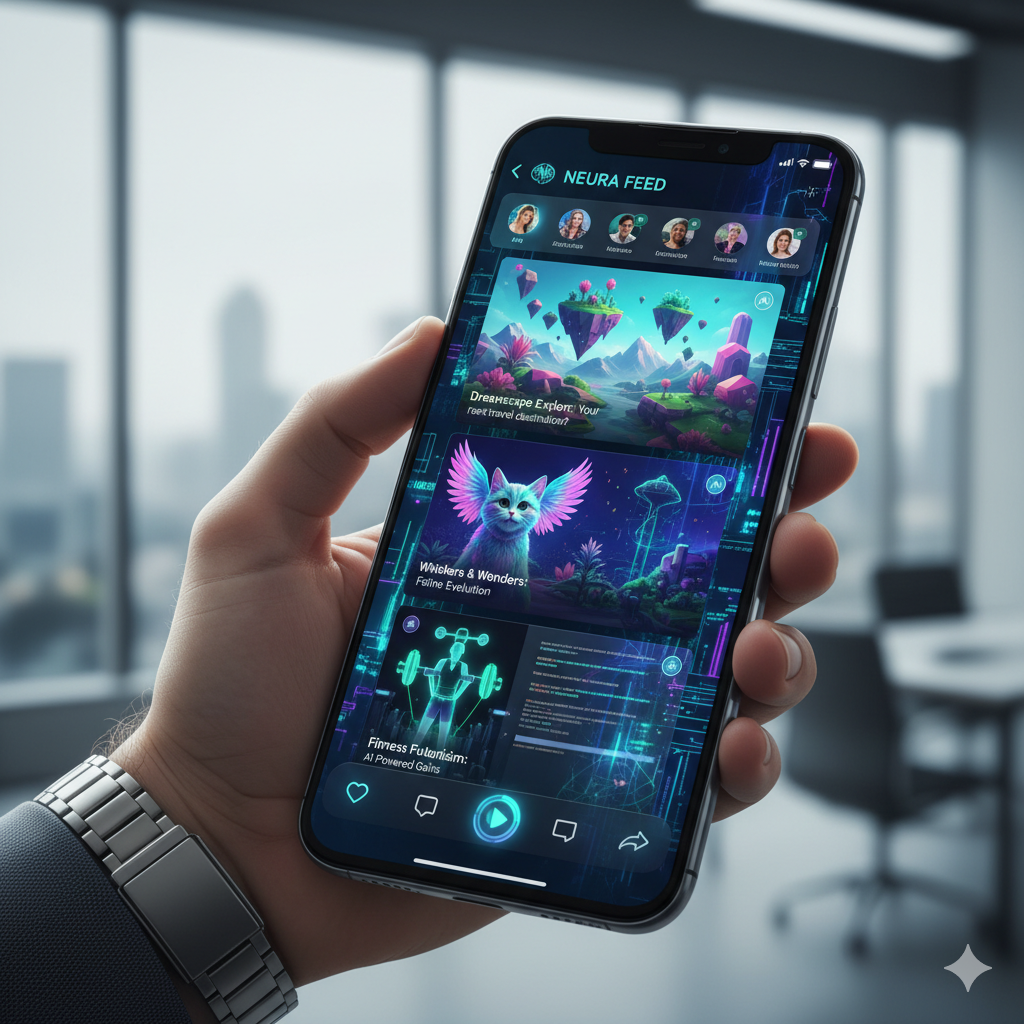
In the rapidly evolving landscape of social media, capturing and retaining audience attention has become an increasingly complex challenge. Users are bombarded with an endless stream of content, making it difficult for brands, creators, and individuals to stand out. The traditional one-size-fits-all approach to content creation is no longer effective in fostering deep connections. Enter Artificial Intelligence, specifically AI image generators, which are now poised to revolutionize how we create and consume visual content, ushering in an era of hyper-personalized social feeds that promise unprecedented levels of engagement.
This article delves into the profound impact of AI image generators on social media content creation, exploring how these powerful tools enable the tailoring of visual experiences to individual user preferences, behaviors, and demographics. We will uncover the mechanisms behind this transformation, examine practical applications, discuss the inherent challenges and ethical considerations, and cast a gaze into the future of an AI-powered social media ecosystem. Prepare to understand how AI is not just augmenting, but fundamentally reshaping the very fabric of digital interaction.
The Imperative of Hyper-Personalization in Today’s Digital Ecosystem
For decades, marketing and content strategies have strived for personalization. From email marketing with a user’s name to recommending products based on past purchases, the goal has always been to make the user feel seen and understood. However, the sheer scale and diversity of modern social media platforms have pushed the boundaries of what “personalization” truly means. Today, generic personalization is no longer enough; users expect content that resonates with their immediate interests, mood, and context – a concept we now call hyper-personalization.
Hyper-personalization goes beyond basic demographic segmentation. It leverages vast amounts of data, including real-time user behavior, interactions, sentiment, location, and even purchase history, to deliver content that feels uniquely crafted for an individual at a specific moment. On social media, this translates into feeds that intuitively understand what a user wants to see next, often before they even realize it themselves. The challenge, historically, has been the monumental effort required to manually create such a diverse array of content to cater to millions of individual preferences.
The human capacity to generate bespoke visual content for every conceivable niche and individual interest is inherently limited by time, resources, and creative bandwidth. A brand marketing a single product might need to create dozens, if not hundreds, of different visual variations to appeal to various age groups, cultural backgrounds, lifestyle interests, and aesthetic preferences. This is where AI image generators emerge as a game-changer, offering a scalable solution to an otherwise intractable problem. They promise to bridge the gap between the desire for hyper-personalized content and the practical constraints of its production, thereby unlocking new dimensions of audience engagement.
Understanding AI Image Generators: The Creative Engine Behind Personalization
Before diving into their application, it is crucial to grasp the fundamental technology driving AI image generators. These sophisticated tools, often powered by advanced deep learning models like Generative Adversarial Networks (GANs) and Diffusion Models, are trained on massive datasets of images and their corresponding text descriptions. This training enables them to learn the intricate relationships between words and visual concepts, allowing them to create novel images from textual prompts.
Leading platforms such as DALL-E 2, Midjourney, and Stable Diffusion have demonstrated astonishing capabilities, generating photorealistic images, abstract art, stylistic illustrations, and everything in between, all from simple text commands. The process typically involves a user providing a “prompt” – a descriptive phrase outlining the desired image. The AI then processes this prompt, drawing upon its learned understanding of visual patterns, colors, objects, and styles, to synthesize an entirely new image that matches the description.
What makes these tools particularly powerful for personalization is their ability to generate variations. A single prompt can often yield multiple distinct images, each with subtle differences in composition, lighting, style, or perspective. Furthermore, by refining prompts or employing techniques like “in-painting” and “out-painting,” creators can iteratively guide the AI to produce highly specific and nuanced visuals. This iterative, highly controllable generation process is what makes AI image generators uniquely suited for producing the diverse, tailored visual assets required for hyper-personalized social media feeds, moving beyond mere mass production to intelligent, contextualized creation.
The Evolution of Social Media Content and AI’s Transformative Role
Social media content has come a long way from simple text updates and blurry phone camera photos. Early platforms emphasized sharing personal updates and connecting with friends. As technology advanced, so did the quality and complexity of content. High-definition images, professional videos, interactive stories, and live streams became the norm. The rise of influencer marketing further professionalized content creation, making aesthetics, storytelling, and brand integration paramount.
However, even with these advancements, content creation often remained a labor-intensive process, demanding significant time, skill, and resources. Small businesses and individual creators often struggled to compete with larger entities that could afford professional photographers, graphic designers, and video editors. The sheer volume of content needed to maintain a consistent online presence, let alone tailor it to diverse audiences, was overwhelming.
AI image generators are fundamentally changing this dynamic. They democratize high-quality visual content creation, making it accessible to anyone with an idea and a prompt. This shift is transformative in several ways:
- Accelerated Production: What once took hours or days to conceptualize, shoot, and edit can now be generated in minutes, enabling rapid content iteration and deployment.
- Cost Efficiency: Reduces the need for expensive equipment, studio time, and professional design services, lowering the barrier to entry for producing polished visuals.
- Creative Scalability: Allows for the exploration of countless creative concepts and variations without additional effort, providing a vast library of unique assets.
- Niche Targeting: Facilitates the creation of highly specific visual content for extremely narrow demographics or interest groups that would otherwise be uneconomical to target.
This means that content creators can now focus more on strategy and narrative, while AI handles the heavy lifting of visual production. The role of the creator shifts from being solely a producer to also being a masterful “prompt engineer,” guiding the AI to bring their visions to life with unparalleled efficiency and precision. This technological leap represents a pivotal moment, allowing content to evolve beyond human-constrained limitations and enter a new era of AI-powered creativity.
Driving Engagement: The Power of Visually Tailored Content for Social Feeds
The core promise of AI-generated images for hyper-personalized social feeds lies in their ability to dramatically boost audience engagement. When content truly resonates with an individual, they are more likely to stop scrolling, interact, and remember the message. Visual content is particularly potent in this regard, as images are processed by the human brain much faster than text, making an immediate impact.
Here’s how visually tailored AI content enhances engagement:
- Increased Relevancy: AI can analyze user data (e.g., past likes, shares, comments, demographic information, explicit preferences) to predict what visual styles, themes, and subjects will appeal most to them. For example, a travel brand could use AI to show a user interested in adventure sports images of mountain climbing, while another user interested in relaxation receives images of serene beaches, all for the same destination promotion.
- Enhanced Emotional Connection: By generating images that tap into specific emotions or aspirations relevant to an individual, AI can forge a stronger emotional bond. A fitness brand might show different body types or success stories that are most relatable to various segments of its audience.
- Novelty and Surprise: AI’s ability to create unique, sometimes surreal or hyper-stylized images, can cut through the noise of conventional content, grabbing attention through novelty. This unexpected visual delight can lead to higher dwell times and shares.
- Cultural and Linguistic Nuance: AI can be prompted to generate images that incorporate specific cultural references, fashion styles, or environmental settings that are hyper-relevant to a particular demographic or geographic location, making content feel more authentic and inclusive.
- Dynamic A/B Testing: Marketers can quickly generate hundreds of visual variations using AI and then A/B test them in real-time across different audience segments. This rapid experimentation allows for continuous optimization, quickly identifying which visuals perform best for specific user groups and fine-tuning personalization strategies.
Consider a retail brand promoting a new fashion line. Instead of one generic campaign image, AI can generate countless variations: models with different body types, ethnicities, ages; garments styled for various occasions (casual, formal, athleisure); depicted in diverse settings (urban street, beach, office); and even rendered in specific artistic styles (minimalist, vibrant, grunge). Each variation can be served to a micro-segment of the audience based on their inferred style preferences, leading to significantly higher click-through rates and conversions. This dynamic, responsive approach to visual communication is the hallmark of effective hyper-personalization.
Challenges and Ethical Considerations in AI Image Generation
While the potential benefits of AI-generated images for social media are immense, it is imperative to address the significant challenges and ethical considerations that accompany this powerful technology. Responsible implementation requires a deep understanding and proactive mitigation of these issues.
1. Bias and Representation
AI models are trained on existing data, and if that data contains biases (e.g., underrepresentation of certain demographics, perpetuation of stereotypes), the AI will learn and amplify these biases in its generated images. This can lead to:
- Stereotypical Outputs: Generating images that reinforce harmful stereotypes about race, gender, profession, or culture.
- Lack of Diversity: Producing predominantly white, male, or youthful figures unless explicitly prompted otherwise, failing to represent the true diversity of global audiences.
Addressing this requires continuous efforts in dataset curation, bias detection algorithms, and conscious prompt engineering to ensure inclusive and equitable representation.
2. Misinformation and Deepfakes
The ability of AI to generate highly realistic, yet entirely fabricated images, raises serious concerns about misinformation. Malicious actors could use these tools to create convincing deepfakes or propaganda, eroding trust in visual media and potentially having severe societal impacts. Social media platforms and users must develop better tools for identifying and flagging AI-generated content, especially when it is misleading or harmful.
3. Copyright and Ownership
The legal and ethical landscape around copyright for AI-generated art is still murky. Who owns the copyright to an image created by an AI from a human prompt? What about the original artists whose works were used to train the AI model? These questions are actively being debated in courts and legislative bodies, posing challenges for commercial use and intellectual property rights.
4. Authenticity and Trust
As AI-generated content becomes indistinguishable from human-created content, there is a risk of diminishing authenticity. Users may become wary of all content, questioning its origin and genuine intent. Brands need to consider transparency, perhaps by disclosing when AI has been used, to maintain trust with their audience.
5. Job Displacement Concerns
While AI tools augment human creativity, there are legitimate concerns about job displacement for traditional graphic designers, illustrators, and photographers. The shift will likely be towards new roles focusing on prompt engineering, AI supervision, and strategic creative direction, rather than direct content production, requiring a re-skilling of the workforce.
6. Environmental Impact
Training and running large AI models consume significant computational resources, leading to a substantial carbon footprint. As AI image generation scales, its environmental impact becomes a growing concern, necessitating research into more energy-efficient models and practices.
Navigating these challenges requires a concerted effort from AI developers, social media platforms, policymakers, and content creators to establish ethical guidelines, develop robust detection mechanisms, and foster a culture of responsible AI use. Only then can the full potential of AI-generated imagery be harnessed for positive engagement while mitigating its risks.
Implementing AI for Personalized Feeds: Best Practices and Strategies
Successfully integrating AI-generated images into hyper-personalized social feeds requires a strategic approach beyond simply generating pretty pictures. It involves understanding your audience, leveraging data, and iteratively optimizing your content delivery.
1. Define Your Audience Micro-Segments
Before generating any images, meticulously segment your audience. Go beyond broad demographics. Identify specific interests, behavioral patterns, purchase intents, geographic locations, and aesthetic preferences. Tools like social listening, analytics platforms, and CRM data can provide these granular insights.
- Example: Instead of “Millennials,” think “Millennial parents interested in sustainable travel with young children,” or “Millennial tech enthusiasts interested in smart home gadgets.”
2. Craft Context-Rich Prompts
The quality of your AI-generated images directly correlates with the quality of your prompts. Learn to write detailed, descriptive prompts that specify not just the subject, but also style, mood, lighting, composition, colors, and even cultural nuances. Experiment with different keywords and phrases.
- Start with the main subject.
- Add descriptive adjectives and verbs.
- Specify style (e.g., “photorealistic,” “watercolor,” “cyberpunk”).
- Include aesthetic elements (e.g., “golden hour lighting,” “bokeh effect,” “minimalist”).
- Mention emotional tone (e.g., “joyful,” “serene,” “energetic”).
- Specify camera angles or lens types if desired (e.g., “wide angle,” “macro shot”).
3. Integrate with Data Analytics Platforms
To truly personalize, your AI image generation workflow needs to be integrated with your data analytics stack. This allows you to:
- Feed real-time user data into the AI content selection process.
- Automate the delivery of specific image variations to targeted segments.
- Track performance metrics for each personalized image variant.
4. Implement Dynamic Content Delivery Systems
Leverage platforms and tools that support dynamic content serving. This means the system automatically selects and displays the most relevant AI-generated image for an individual user based on their profile and real-time behavior. This often involves backend algorithms that match content to user profiles.
5. Continuous A/B Testing and Optimization
The beauty of AI-generated images is the ease of creating variations. Run continuous A/B tests across different segments. Test variations in:
- Color palettes and schemes
- Subject matter and focus
- Art styles and realism levels
- Emotional cues and expressions
- Inclusion of text overlays (if applicable)
Analyze the results to refine your prompts, adjust your segmentation, and improve your personalization algorithms. This iterative process is key to maximizing engagement.
6. Maintain Human Oversight and Ethical Guidelines
Even with advanced AI, human oversight is crucial. Regularly review AI-generated content for quality, accuracy, appropriateness, and compliance with ethical guidelines. Establish clear policies on bias detection, misinformation prevention, and transparent disclosure of AI usage.
7. Experiment with Interactive AI-Generated Content
Beyond static images, explore possibilities like AI-generated GIFs, short animated loops, or even interactive elements where users can influence what AI-generated visuals they see next. This elevates personalization to an interactive experience.
By following these best practices, brands and creators can move beyond theoretical personalization to practical, scalable, and highly effective strategies that truly resonate with individual social media users, driving deeper connections and measurable results.
Measuring Success: Key Metrics for AI-Powered Engagement
The ultimate goal of using AI-generated images for hyper-personalization is to enhance audience engagement. To determine the effectiveness of these strategies, it is crucial to establish clear metrics and consistently track performance. Simply pushing out personalized content without measurement is a missed opportunity for optimization and understanding ROI.
Here are key metrics to monitor when deploying AI-generated visuals for personalized social feeds:
1. Engagement Rate
This is a foundational metric, typically calculated as (Likes + Comments + Shares + Saves) / Reach. For AI-generated images, track the engagement rate for each specific image variation delivered to different audience segments. A higher engagement rate for personalized content compared to generic content indicates success.
2. Click-Through Rate (CTR)
If your social media content includes a call-to-action (CTA) leading to a landing page, product page, or article, CTR is vital. Measure how many users click on your personalized AI-generated image or its associated link. A higher CTR signifies that the visual effectively captured attention and motivated further action.
3. Dwell Time
While not always directly measurable on all social platforms, increased dwell time (how long a user spends viewing a piece of content) is a strong indicator of engagement. Platforms’ algorithms often prioritize content with longer dwell times. Indirectly, this can be inferred through video watch time or time spent on a linked page after clicking a personalized image.
4. Conversion Rate
For businesses, the ultimate metric is conversion. Track how many users who interacted with a personalized AI-generated image subsequently complete a desired action, such as making a purchase, signing up for a newsletter, or downloading an app. Attributing conversions back to specific AI-generated campaigns is crucial for ROI assessment.
5. Sentiment Analysis
Beyond quantitative metrics, analyze the sentiment of comments and reactions to your personalized AI content. Are users expressing positive emotions, confusion, or negative feedback? AI-powered sentiment analysis tools can help process large volumes of comments to gauge audience reception.
6. Reach and Impressions
While personalization often focuses on depth of engagement, it’s still important to track the overall reach and impressions of your AI-powered campaigns. Are your personalized visuals reaching a broader, yet still relevant, audience?
7. Cost Per Engagement/Conversion
Compare the cost of creating and distributing AI-generated personalized content against traditional methods. If AI tools significantly reduce content production costs while maintaining or improving engagement/conversion rates, this demonstrates strong efficiency and ROI.
8. User Feedback and Surveys
Supplement quantitative data with qualitative insights. Directly ask your audience about their preferences, how relevant they find your content, and their feelings about personalized experiences. This can uncover insights that metrics alone might miss.
By establishing a robust framework for measuring these metrics, businesses and creators can continuously refine their AI-driven personalization strategies, ensuring that their efforts translate into tangible improvements in audience connection and business objectives.
The Future Landscape: What’s Next for AI in Social Media Content Creation
The journey of AI in social media content creation is just beginning. As the technology continues to mature and integrate more deeply into existing platforms, we can anticipate even more sophisticated and seamless applications. The future promises a social media experience that is not just personalized, but truly adaptive, predictive, and potentially co-creative.
1. Real-time, Adaptive Personalization
Imagine social feeds that don’t just personalize based on past behavior, but adapt in real-time to your current mood, location, or even biometric data (via wearables). AI will be able to instantaneously generate or select visuals that align with your immediate context, making every scroll a unique and highly relevant experience. This could involve AI generating a specific image for a weather event in your location, or for a news topic you just viewed, almost instantly.
2. AI-Powered Co-Creation and Interactive Content
The line between content creator and content consumer will blur further. Users might be able to co-create AI-generated visuals directly within social platforms, tweaking prompts or providing input to tailor content even more acutely to their desires. Interactive AI experiences, where images or narratives evolve based on user choices, could become commonplace, moving beyond passive consumption to active participation.
3. Multimodal AI for Comprehensive Content
Current AI image generators are powerful, but the next generation will seamlessly integrate with AI for text, video, and audio generation. This means an AI could generate an entire social media post – including a captivating image, engaging caption, relevant hashtags, and even a short video clip – all tailored to a specific user and trend, from a single, high-level prompt.
4. Ethical AI and Regulatory Frameworks
As AI becomes more pervasive, the demand for robust ethical guidelines and regulatory frameworks will intensify. We will likely see clearer standards for identifying AI-generated content, protecting intellectual property, mitigating bias, and ensuring transparency. Platforms will invest heavily in AI safety features to prevent misuse and foster a trustworthy digital environment.
5. The Rise of “AI-Native” Influencers and Brands
The concept of virtual influencers is already established, but AI could empower the creation of entirely AI-native brands and personalities that exist solely in the digital realm, generating all their content autonomously (or with minimal human oversight). These entities could offer unprecedented scalability and personalization in their interactions.
6. Hyper-Realistic and Stylized Visuals On-Demand
The quality and versatility of AI-generated images will continue to improve, making it virtually impossible to distinguish between AI and human-created photorealism. Concurrently, AI’s ability to create highly stylized and artistic visuals will expand, offering an endless palette for creative expression previously unimaginable.
The future of social media content creation is undoubtedly intertwined with AI. It promises a world where content is not just consumed, but experienced in a deeply personal and meaningful way, transforming the very essence of online interaction and setting new benchmarks for audience engagement. Navigating this future successfully will require continuous innovation, ethical foresight, and a collaborative spirit among technology developers, content creators, and social platforms.
Comparison Tables
Table 1: Traditional vs. AI-Powered Content Creation for Social Media
| Feature | Traditional Content Creation | AI-Powered Content Creation | Impact on Personalization |
|---|---|---|---|
| Time to Create a Single Image | Hours to days (concept, shoot, edit) | Seconds to minutes (prompt to render) | Allows rapid generation of many variants for diverse segments. |
| Cost per Image | High (equipment, labor, talent, location) | Low (subscription fees, computational resources) | Makes creating unique images for micro-segments economically viable. |
| Scalability of Variants | Limited (manual effort required for each variant) | High (easy to generate countless variations via prompts) | Enables comprehensive personalization across vast user bases. |
| Creative Bandwidth | Dependent on human imagination and skill | Expansive (AI can explore styles and concepts beyond human imagination) | Unlocks novel visual styles and unexpected creative directions for niche audiences. |
| Data Integration for Tailoring | Manual or semi-automated selection of pre-made assets | Automated generation/selection based on real-time user data | Directly links user preferences to visual content for hyper-relevancy. |
| Skill Requirements | Photography, graphic design, editing expertise | Prompt engineering, artistic direction, critical evaluation | Shifts focus from technical production to strategic guidance of AI. |
Table 2: Potential Engagement Boost from AI-Personalized Visuals (Illustrative Data)
| Metric | Baseline (Generic Content) | With Basic Personalization | With Hyper-Personalized AI Visuals | Potential Gain (AI vs. Generic) |
|---|---|---|---|---|
| Engagement Rate (Likes, Comments, Shares) | 2.5% | 4.0% | 7.0% | +180% |
| Click-Through Rate (CTR) to Offer | 1.2% | 2.8% | 4.5% | +275% |
| Conversion Rate (Purchase/Signup) | 0.8% | 1.5% | 2.5% | +212.5% |
| Time Spent on Content (seconds) | 4 seconds | 6 seconds | 10 seconds | +150% |
| Brand Recall Rate | 30% | 45% | 65% | +116% |
| Negative Feedback Rate | 1.5% | 0.8% | 0.3% | -80% |
Note: The “Potential Gain” percentages are illustrative and represent typical improvements seen in studies and early adoption cases where hyper-personalization is effectively implemented. Actual results may vary based on industry, audience, and execution quality.
Practical Examples and Real-World Scenarios
The theoretical benefits of AI-generated images for hyper-personalization are compelling, but real-world applications truly demonstrate their transformative power. Here are several practical examples across different sectors:
1. E-commerce Product Catalogs and Ads
An online fashion retailer wants to promote a new line of customizable sneakers. Instead of using a few generic lifestyle shots, they leverage AI image generators:
- Scenario: For a user in a metropolitan area with a history of buying streetwear, the AI generates an image of the sneakers styled on a diverse model, in an urban setting with graffiti in the background.
- Scenario: For a user interested in minimalism and sustainability, the AI generates an image of the same sneakers in a clean, brightly lit, eco-friendly-looking studio, emphasizing recycled materials.
- Impact: Each user sees an ad that feels custom-made for their specific aesthetic and values, dramatically increasing click-through rates to product pages and ultimately, sales conversions.
2. Travel and Hospitality Promotions
A global hotel chain aims to attract diverse travelers to its resort in Bali.
- Scenario: For a young couple interested in adventure, the AI generates images of the resort featuring water sports, jungle trekking, or exploring ancient temples.
- Scenario: For an older couple interested in relaxation and luxury, the AI generates images of the resort showcasing serene infinity pools, spa treatments, fine dining, or private villas.
- Impact: Tailored visuals directly speak to individual travel aspirations, leading to higher engagement with travel packages and increased booking inquiries.
3. Content Creators and Influencers
A social media influencer focusing on healthy recipes wants to engage a broad audience with diverse dietary needs and preferences.
- Scenario: For followers who often interact with vegan content, the AI generates stunning images of plant-based dishes.
- Scenario: For followers interested in gluten-free baking, the AI creates appealing visuals of gluten-free desserts.
- Scenario: For a fitness enthusiast, the AI might generate a high-protein meal image.
- Impact: The influencer can rapidly produce a vast array of high-quality, varied food photography without costly photoshoots, ensuring each segment of their audience feels seen and catered to, boosting recipe downloads and engagement.
4. Education and E-Learning Platforms
An online learning platform offers courses on various subjects, from coding to art history.
- Scenario: When promoting a new course, the AI generates a visual featuring a diverse group of students in a modern, collaborative tech setting for users interested in programming.
- Scenario: For users who frequently engage with art content, the AI creates an image depicting classical art pieces or a historical library setting.
- Impact: Personalized visuals for course advertisements or learning module thumbnails grab the attention of prospective students more effectively, increasing enrollment rates and user satisfaction by making the learning experience feel more relevant from the outset.
5. Local Business Marketing
A restaurant chain with multiple locations in different neighborhoods wants to promote its daily specials.
- Scenario: For customers in a bustling downtown area, the AI generates an image of a vibrant, quick-lunch special to appeal to busy professionals.
- Scenario: For customers in a family-oriented suburb, the AI creates an image of a cozy family meal deal, perhaps with a warm, inviting atmosphere.
- Impact: Localized visual advertising created at scale ensures the restaurant’s promotions resonate with the specific lifestyle and preferences of each neighborhood, driving foot traffic and online orders.
These examples illustrate that AI-generated images are not just a novelty but a powerful, scalable tool for creating truly individualized content experiences. They empower businesses and creators to connect with their audiences on a deeper, more personal level, translating into tangible benefits in engagement, conversion, and brand loyalty.
Frequently Asked Questions
Q: What exactly is an AI image generator?
A: An AI image generator is a sophisticated artificial intelligence program that can create unique images from textual descriptions, known as prompts. These programs are trained on vast datasets of images and text, allowing them to understand relationships between words and visual concepts, and then synthesize new, original visuals that match the prompt’s specifications. Popular examples include DALL-E, Midjourney, and Stable Diffusion.
Q: How do AI-generated images enable hyper-personalization on social media?
A: AI-generated images enable hyper-personalization by allowing creators to rapidly produce an enormous number of visually distinct content pieces tailored to specific, narrow audience segments. Instead of one generic image, AI can generate hundreds of variations that appeal to different demographics, interests, or behaviors, ensuring that each user sees content uniquely relevant to them based on their data profile. This level of customization was previously impractical due to time and cost constraints.
Q: Is AI image generation replacing human graphic designers or photographers?
A: While AI image generation automates certain aspects of visual creation, it is more accurately seen as an augmenting tool rather than a complete replacement. It shifts the role of human creatives towards prompt engineering, artistic direction, curation, and strategic oversight. Designers and photographers can leverage AI to accelerate their workflow, explore more concepts, and focus on higher-level creative tasks, creating a symbiotic relationship rather than pure displacement.
Q: What are the main ethical concerns with using AI-generated images?
A: Key ethical concerns include algorithmic bias (AI perpetuating stereotypes from its training data), the spread of misinformation and deepfakes (creating fabricated but realistic imagery), copyright issues (ownership of AI-generated art and fair use of training data), authenticity (eroding trust in visual content), and environmental impact (high energy consumption for AI training). Addressing these requires careful development, regulation, and transparent usage policies.
Q: How can I ensure the AI-generated images are inclusive and diverse?
A: To ensure inclusivity, you must be explicit in your prompts. Instead of “a person at a computer,” specify “a diverse group of people from various ethnicities, genders, and ages collaborating at computers.” Regularly review generated content for bias and actively seek out and correct any stereotypes. Utilizing AI models known for their efforts in diverse output and providing critical human oversight are also essential practices.
Q: What kind of data is used to personalize content with AI-generated images?
A: Personalization leverages various data points, including user demographics (age, location, gender), behavioral data (past likes, shares, comments, content consumption patterns), stated preferences (from surveys or profile settings), interests (inferred from interactions), and sometimes real-time context (device, time of day, current trends). This data informs which AI-generated image variant is most likely to resonate with a particular user.
Q: Can AI-generated images be detected as artificial?
A: Detecting AI-generated images is becoming increasingly challenging as the technology improves. While some early AI art showed tell-tale signs (like distorted hands or strange artifacts), newer models produce highly photorealistic and coherent images. Researchers are developing detection tools, but it remains a cat-and-mouse game. Transparency from creators about using AI is often recommended to maintain trust.
Q: What are the costs associated with using AI image generators for social media?
A: Costs vary widely. Many AI image generators offer free tiers with limited features or generations. Paid subscriptions can range from a few dollars to hundreds per month, depending on the number of generations, advanced features, commercial rights, and access to newer models. Larger enterprises might also incur costs for integrating AI tools into existing content management or marketing platforms.
Q: How quickly can I generate personalized images with AI?
A: The generation process itself is incredibly fast, often taking mere seconds to a few minutes to produce multiple image variations from a single prompt. The main “time investment” comes from learning effective prompt engineering, refining prompts for desired outcomes, and integrating the AI output into a broader personalization strategy. This speed allows for rapid A/B testing and dynamic content updates.
Q: What’s the biggest advantage of AI-generated images over stock photos for personalization?
A: The biggest advantage is unparalleled uniqueness and specific customization. While stock photos offer variety, they are generic, used by many, and often cannot match very niche or specific prompts. AI-generated images are bespoke; they can be created precisely to fit a unique scenario, style, or cultural nuance for a hyper-targeted audience, ensuring truly original and highly relevant visual content that stock photos cannot replicate at scale.
Key Takeaways
- Hyper-Personalization is Key: Generic content is losing effectiveness; AI enables truly individualized visual experiences on social media.
- AI Image Generators Democratize Creation: Tools like DALL-E, Midjourney, and Stable Diffusion make high-quality visual content accessible and scalable for all creators.
- Engagement Boost: Tailored visuals lead to significantly higher engagement rates, click-throughs, and conversions due to increased relevancy and emotional connection.
- Challenges Require Vigilance: Bias, misinformation, copyright, and authenticity are critical ethical and practical issues that demand proactive management and human oversight.
- Strategic Implementation is Crucial: Success hinges on audience segmentation, precise prompt engineering, data integration, continuous testing, and adherence to ethical guidelines.
- Metrics Drive Optimization: Tracking engagement rate, CTR, conversion rate, and sentiment is vital for understanding ROI and refining AI-powered personalization strategies.
- Future is Adaptive and Co-Creative: AI’s role will evolve towards real-time adaptive content, multimodal generation, and more interactive, user-driven creative experiences.
- The Human Role Transforms: Instead of being solely content producers, humans become strategic ‘prompt engineers’ and ethical guardians, guiding AI’s creative potential.
Conclusion
The advent of AI image generators marks a pivotal moment in the evolution of social media content creation. We are moving beyond an era of mass consumption into one where every scroll can be a deeply personal and engaging experience, thanks to hyper-personalized visual feeds. This transformative technology empowers brands, marketers, and individual creators to connect with their audiences on unprecedented levels, fostering stronger emotional bonds and driving measurable results.
While the path forward is rich with potential, it also requires careful navigation of significant ethical and practical challenges. Addressing concerns around bias, misinformation, and intellectual property will be paramount to ensuring that AI serves as a force for good in the digital ecosystem. Responsible development and thoughtful implementation, coupled with robust human oversight, will be the cornerstones of successful AI integration.
As AI continues to mature, we can anticipate a future where social media is not just a platform for sharing, but a dynamic, adaptive canvas for infinite, personalized visual narratives. The shift from “content for everyone” to “content for every one” is not merely a technological advancement; it is a fundamental reshaping of how we interact with digital media, promising a more relevant, engaging, and ultimately richer online experience for all. The journey has begun, and the landscape of social media engagement will never be the same.









































































Leave a Reply