


In the whirlwind of modern life, where every minute is precious, the demands of home management can often feel overwhelming. From the endless cycle of cleaning and cooking to managing energy consumption and ensuring security, running a household efficiently is a significant undertaking. Imagine a world where many of these tasks are handled seamlessly, intelligently, and autonomously, freeing up your time and mental energy for what truly matters. This isn’t a futuristic fantasy; it’s the present reality with the integration of Artificial Intelligence (AI) into our homes.
Welcome to the era of the AI-powered smart home, a realm where technology doesn’t just respond to your commands but anticipates your needs, learns your preferences, and proactively enhances your living environment. This comprehensive guide will delve deep into the transformative power of AI in simplifying home chores and elevating the modern household experience. We will explore the essential AI technologies, provide real-world examples, compare leading solutions, and address common questions, demonstrating how AI can turn your home into a haven of efficiency, comfort, and security.
The Dawn of Smart Homes: Evolution and Promise of AI
The concept of a “smart home” has been evolving for decades, from simple programmable thermostats and timed lighting to sophisticated, interconnected ecosystems. Initially, smart homes relied on basic automation rules – “if this, then that.” While revolutionary at the time, these systems lacked adaptability and genuine intelligence. Enter Artificial Intelligence, a game-changer that has transformed mere automation into intuitive, learning, and proactive home management.
AI brings several critical capabilities to the smart home:
- Learning and Adaptability: Unlike static automation rules, AI systems can observe your habits, preferences, and environmental conditions, then adapt their behavior over time. For example, a smart thermostat learns your preferred temperatures at different times of day and adjusts accordingly, even pre-heating or pre-cooling before you arrive home.
- Predictive Capabilities: AI analyzes patterns to predict future needs. A smart fridge might notice you’re low on milk and suggest adding it to your grocery list, or an energy management system could predict peak energy demand and pre-cool your home during off-peak hours to save costs.
- Contextual Awareness: AI integrates data from multiple sensors and devices to understand the context of a situation. It knows if you’re home or away, awake or asleep, and can tailor its actions based on these insights. For instance, a security camera might differentiate between a pet and an intruder.
- Natural Language Processing (NLP): This allows for intuitive voice control, making interaction with your home as simple as speaking a command. Voice assistants like Alexa, Google Assistant, and Siri are prime examples of AI-powered NLP at work.
The promise of AI in the home is not just convenience; it’s about creating a living space that feels more responsive, efficient, and aligned with your lifestyle, making the complex task of home management feel effortless.
Intelligent Hubs: The Brains of Your AI-Powered Home
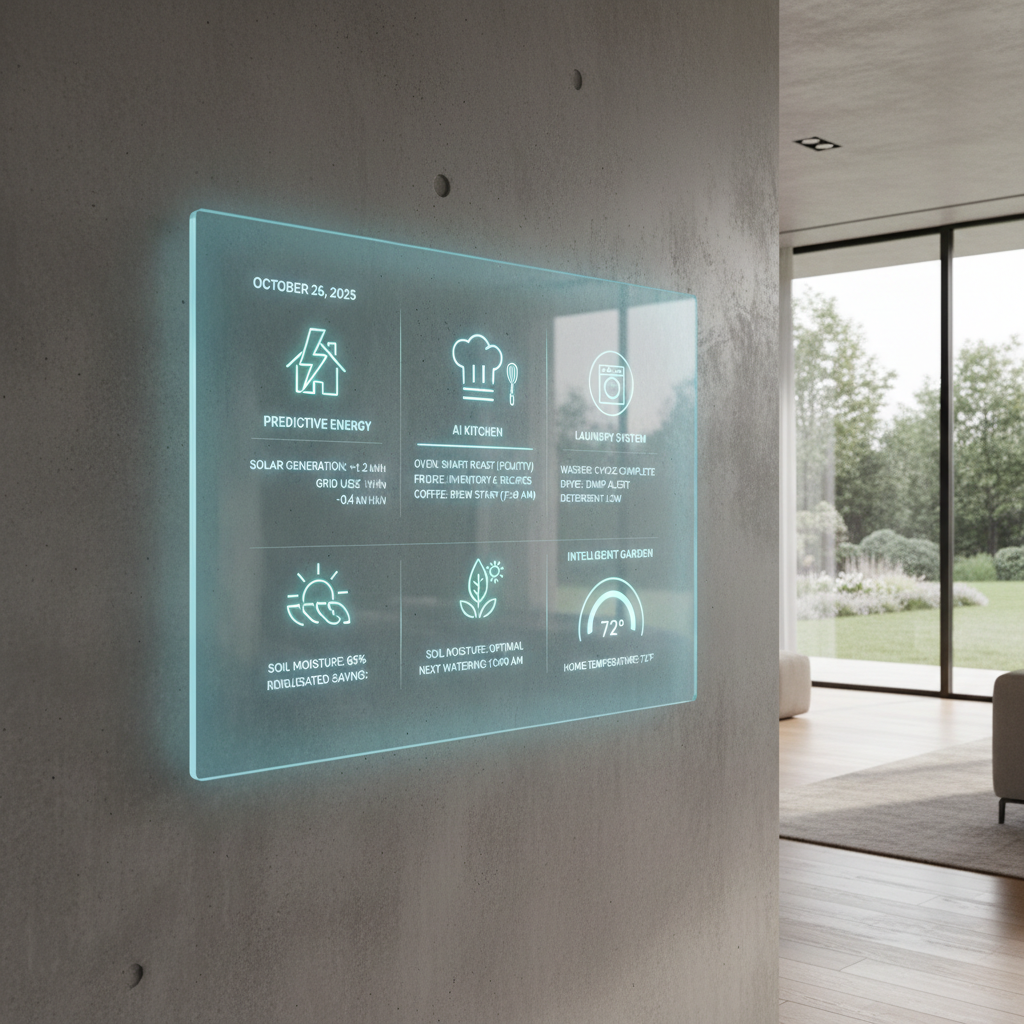
At the heart of every truly smart home is an intelligent hub, often equipped with a powerful AI-driven voice assistant. These hubs act as the central nervous system, integrating diverse devices, processing commands, and orchestrating complex routines. They are the gateway through which you interact with your AI-powered home, translating your intentions into actionable tasks across various connected gadgets.
The Role of Smart Home Hubs and Voice Assistants:
- Centralized Control: Instead of managing dozens of individual apps for different devices, a smart hub provides a unified interface. You can control lights, thermostats, locks, and entertainment systems from a single app or voice command.
- Device Integration: Hubs bridge communication gaps between devices from different manufacturers. Through protocols like Zigbee, Z-Wave, Wi-Fi, and Bluetooth, they allow disparate gadgets to work together harmoniously.
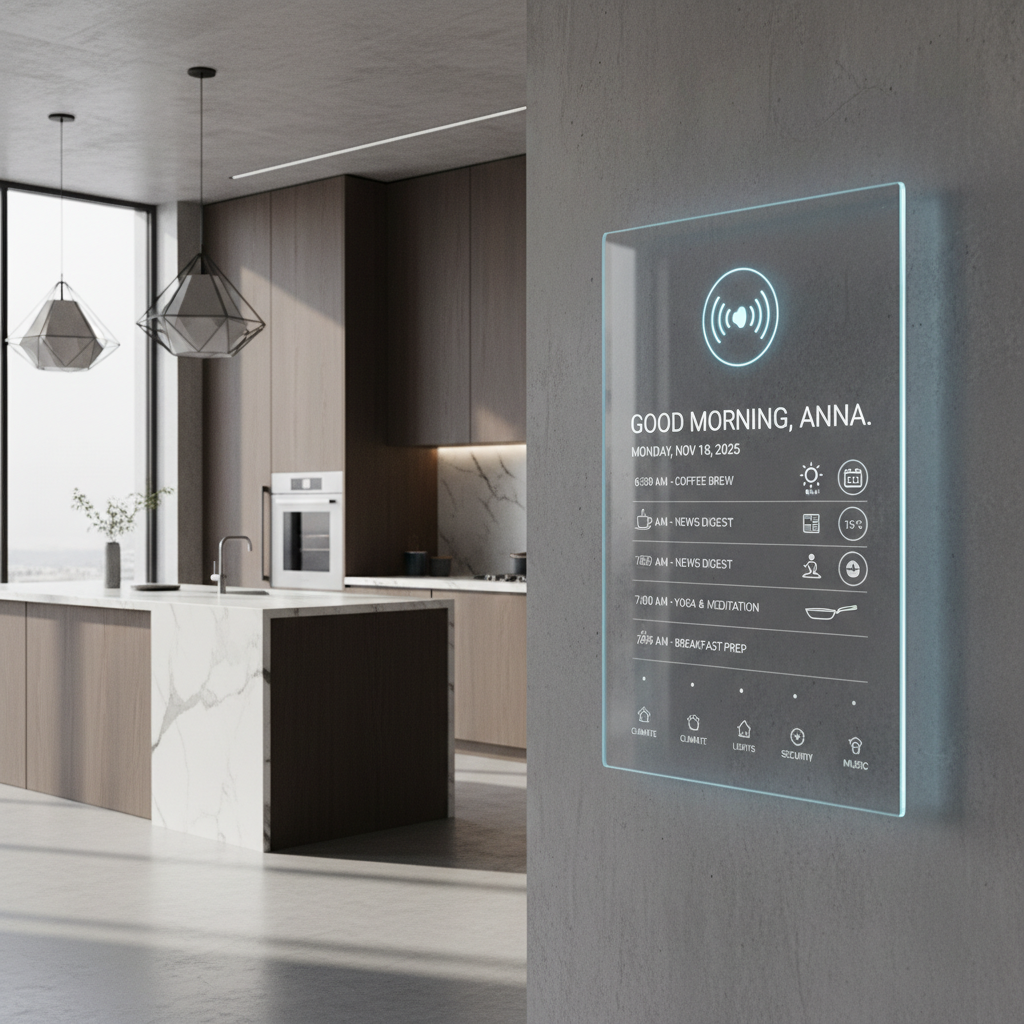
- Routine and Scene Creation: This is where AI truly shines. You can create complex routines (e.g., “Good Morning” routine that slowly brightens lights, turns on the coffee maker, and reads the news) or scenes (e.g., “Movie Night” scene that dims lights, closes blinds, and starts the TV). AI helps these routines become more intelligent, adjusting based on time of day, occupancy, or even external factors like weather.
- AI as an Interface: Voice assistants are more than just command processors; they are conversational AI interfaces. They understand nuanced requests, provide information, answer questions, and even engage in basic dialogue, making interaction with your home feel natural and intuitive.
- Proactive Intelligence: Modern hubs are evolving beyond reactive commands. They use AI to learn patterns and suggest automations, alert you to potential issues (e.g., “Your garage door has been open for 30 minutes”), or even execute actions autonomously based on learned behavior (e.g., “It’s 10 PM, time to lock the doors and arm the security system”).
Popular examples include the Amazon Echo family (powered by Alexa), Google Nest Hubs (Google Assistant), Apple HomePods (Siri), and Samsung SmartThings hubs. Each offers varying degrees of AI sophistication, integration capabilities, and ecosystem breadth, providing options for every user preference.
Automating Chores: From Cleaning to Cooking and Beyond
The most tangible benefit of AI in the home often comes in the automation of mundane, time-consuming chores. Imagine reclaiming hours previously spent on cleaning, cooking, or yard work, all thanks to intelligent machines working tirelessly in the background.
Cleaning with AI:
-
Robot Vacuums and Mops:
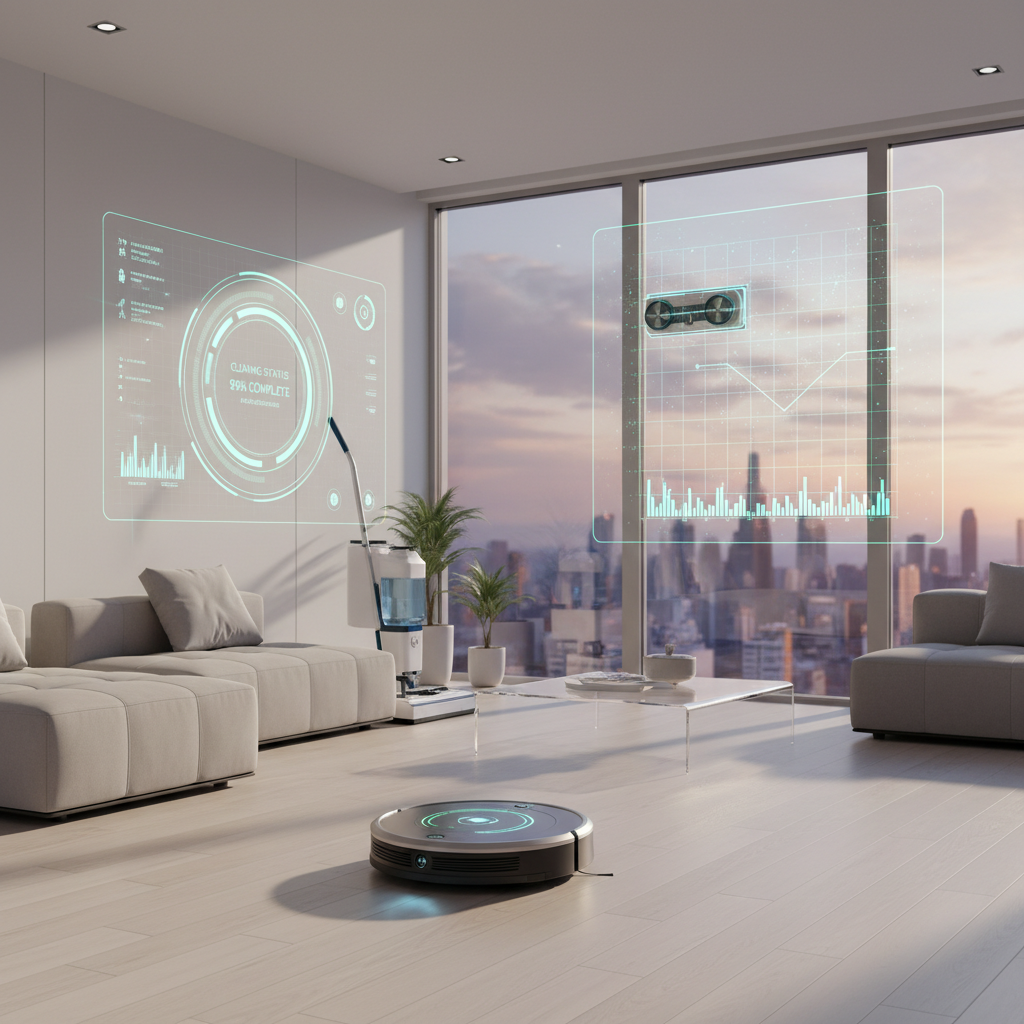
Modern robot vacuums are far from the bump-and-go devices of old. Equipped with advanced AI, LiDAR navigation, visual simultaneous localization and mapping (vSLAM), and object recognition, they can map your home with precision, identify different floor types, avoid obstacles like pet waste or charging cables, and even suggest “no-go” zones. High-end models like the iRobot Roomba j7+ or Roborock S8 Pro Ultra can automatically empty their dustbins, wash and dry their mop pads, and recharge themselves, offering truly hands-free cleaning. Some even integrate with smart home hubs to begin cleaning when you leave the house.
-
Smart Litter Boxes:
For pet owners, AI-powered self-cleaning litter boxes use sensors and automated mechanisms to detect when your cat has used the box and then rake or sift the waste into a sealed compartment. This dramatically reduces odor and the frequency of manual scooping, making pet ownership more pleasant.
Cooking and Kitchen Management with AI:
-
Smart Ovens and Cooktops:
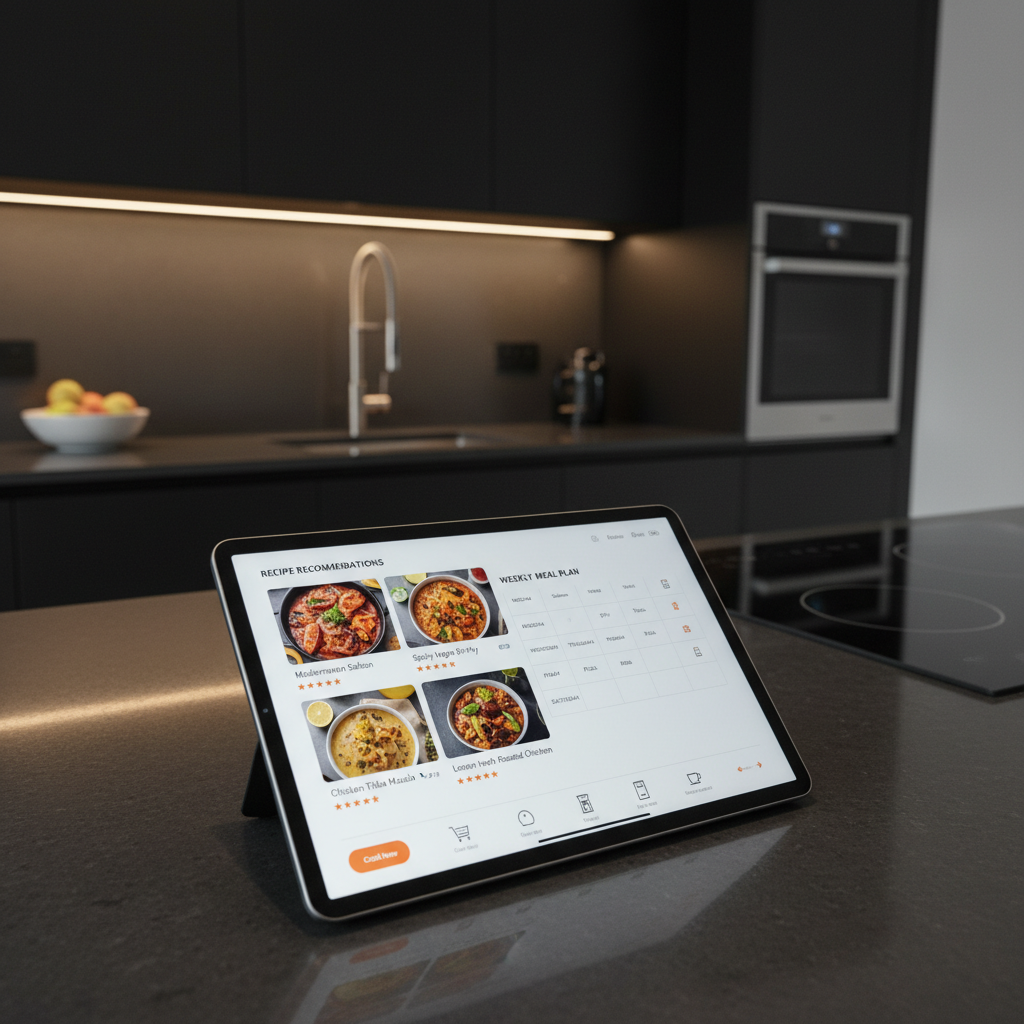
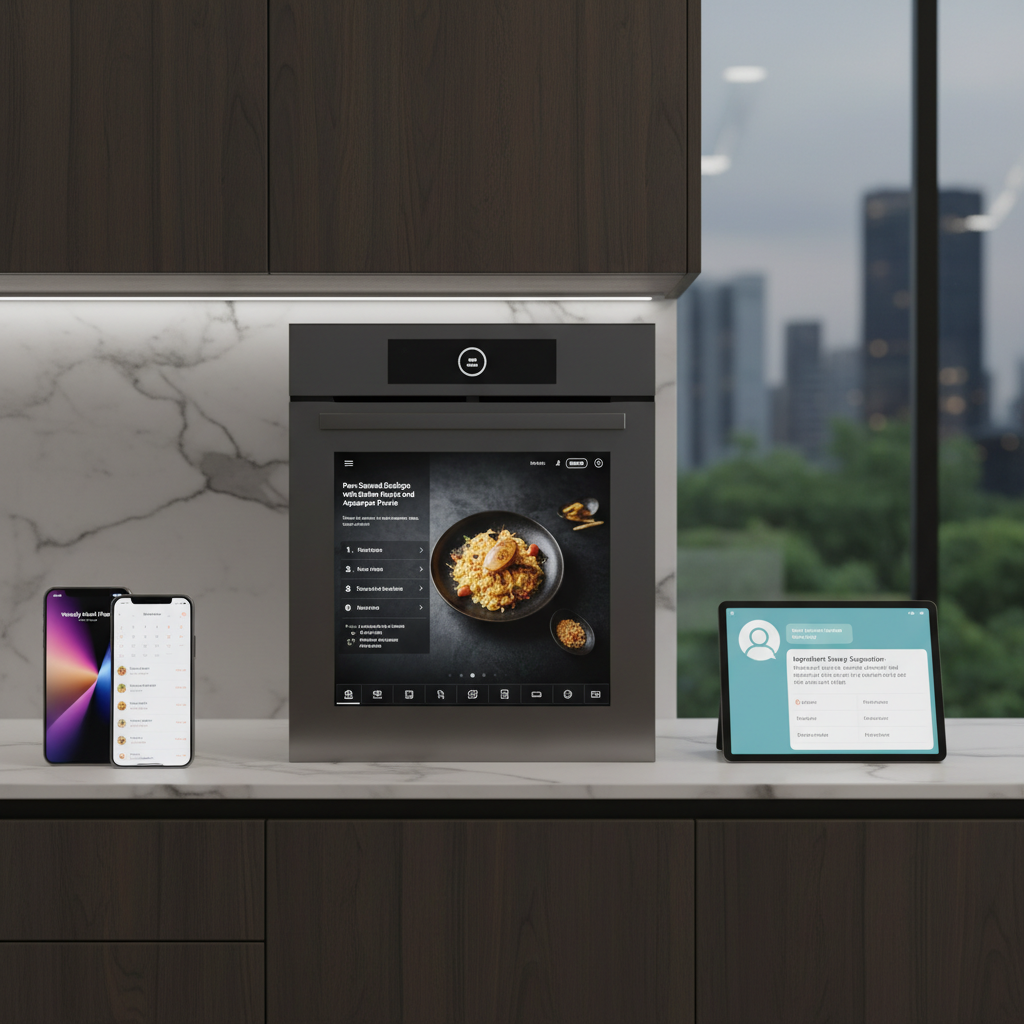
AI-integrated ovens can suggest recipes, preheat themselves to precise temperatures, and even automatically adjust cooking times based on sensors that detect the doneness of food. Some can connect to recipe apps, guiding you step-by-step or automatically setting the cooking parameters. For example, a June Oven uses internal cameras and AI to identify food and suggest optimal cooking methods.
-
Smart Refrigerators:
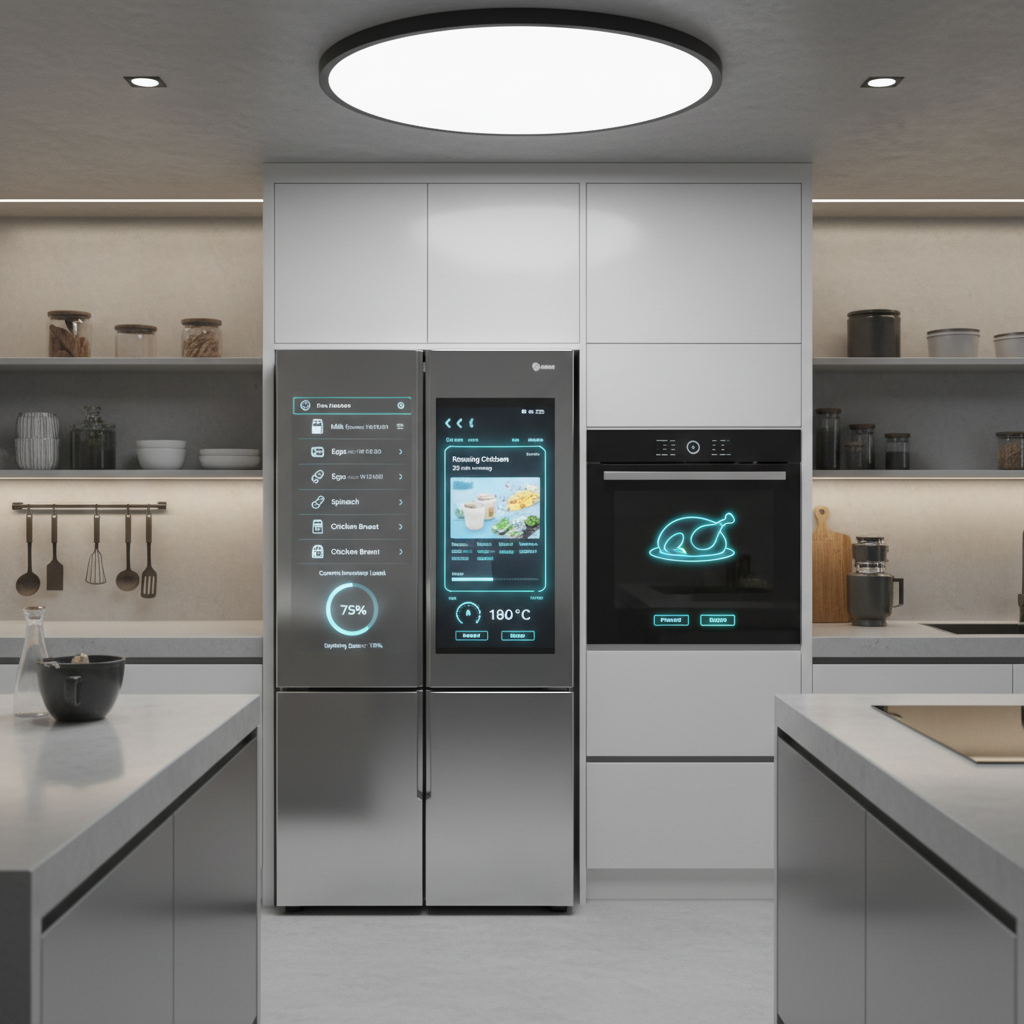
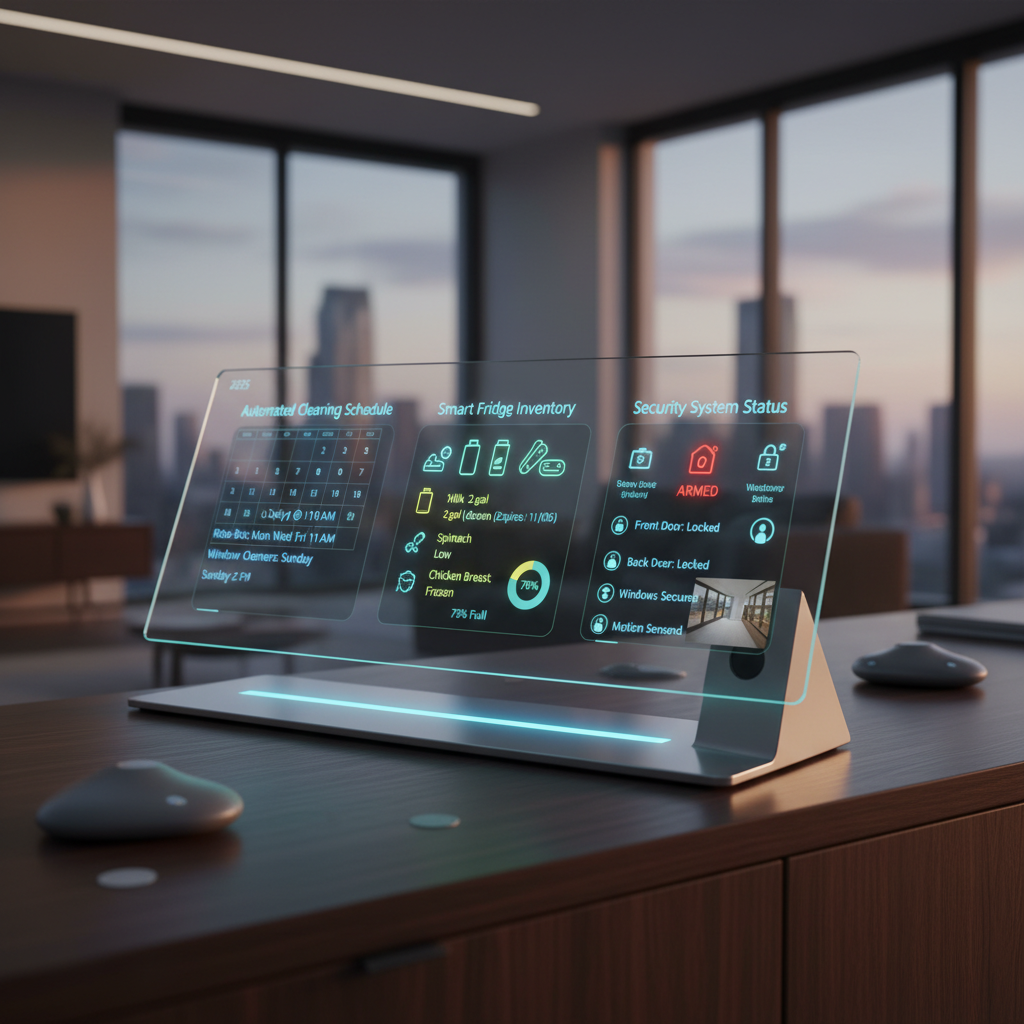
Beyond displaying calendars and photos, AI-powered smart fridges, like Samsung’s Family Hub, can inventory your food items, track expiry dates, suggest recipes based on available ingredients, and even create grocery lists that can be ordered online. Internal cameras allow you to check contents remotely while at the store.
-
Smart Small Appliances:
From coffee makers that brew your favorite cup at your wake-up time to blenders with AI programs for specific tasks, these devices automate repetitive kitchen tasks, ensuring consistency and convenience.
Laundry and Yard Work with AI:
-
Smart Washing Machines and Dryers:
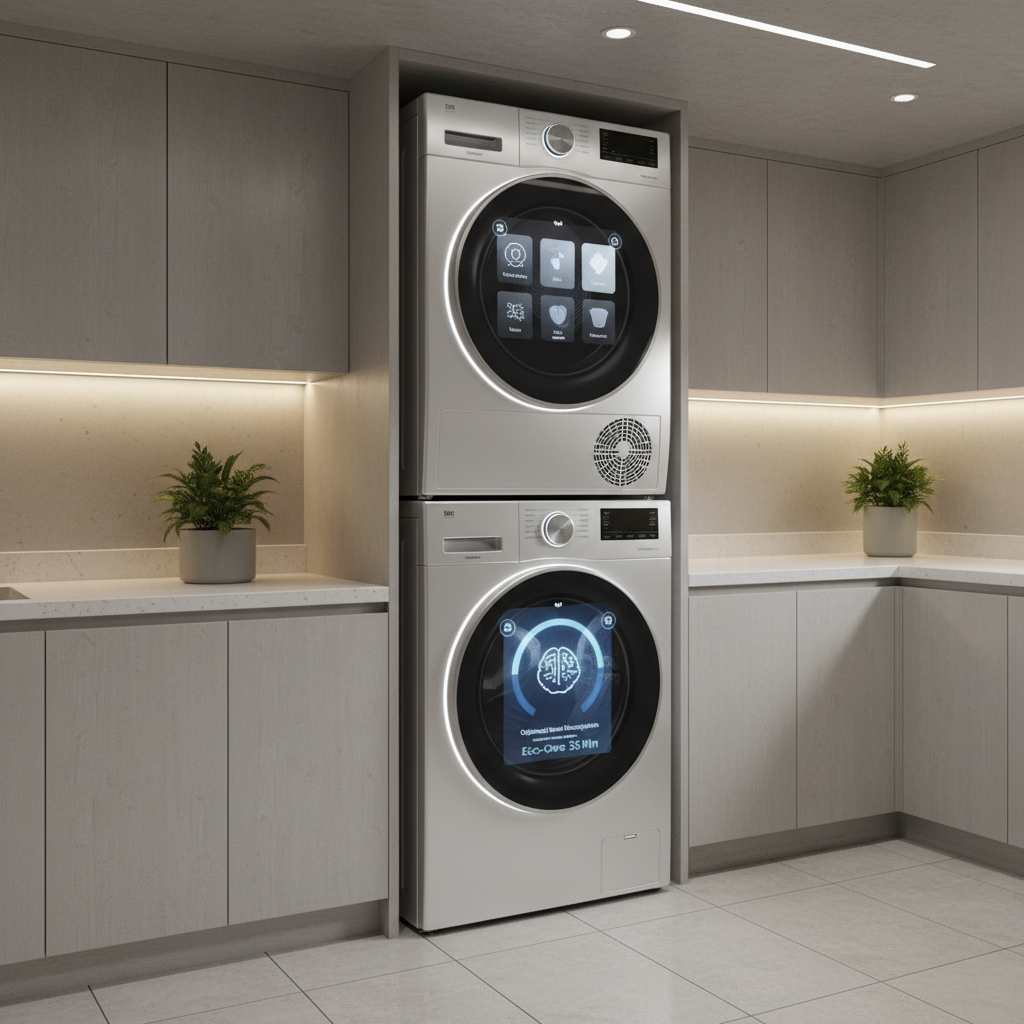
These appliances use AI to detect fabric types, load size, and soil levels, then automatically select the optimal wash cycle, water temperature, and detergent amount. They can also notify you when a load is finished, allowing you to start another remotely or send a reminder to transfer clothes to the dryer.
-
Robotic Lawn Mowers:
Similar to robot vacuums, AI-powered robotic lawn mowers map your yard, navigate obstacles, and cut grass autonomously. Some can detect grass length and adjust cutting patterns, operate in specific zones, and return to their charging stations when finished or low on battery, providing a perfectly manicured lawn without effort.
-
Smart Irrigation Systems:
AI-driven irrigation controllers analyze local weather forecasts, soil moisture levels, and plant types to optimize watering schedules. They can prevent overwatering during rainy periods or increase watering during droughts, saving water and keeping your garden healthy.
These AI technologies don’t just save time; they bring a new level of precision and efficiency to household chores, transforming the drudgery into delightful convenience.
Energy Efficiency and Sustainability with AI
Beyond convenience, AI plays a pivotal role in making our homes more energy-efficient and sustainable. By intelligently managing power consumption, AI can significantly reduce utility bills and minimize our environmental footprint.
Key AI Technologies for Energy Management:
-
Smart Thermostats:
Devices like the Nest Learning Thermostat are prime examples of AI in action. They observe your temperature preferences over a few days, learn your daily schedule, and then automatically adjust the heating and cooling. They can use geofencing to know when you’re leaving or arriving home, optimizing temperature settings to save energy when you’re out and ensure comfort when you return. Some also integrate with weather forecasts to pre-heat or pre-cool your home more effectively.
-
Smart Lighting Systems:
AI-powered smart lights go beyond simple scheduling. They incorporate motion sensors and ambient light sensors to turn lights on only when a room is occupied and adjust brightness based on natural light levels. They can also learn your usage patterns, dimming lights in unused areas or even mimicking occupancy while you’re away for security purposes, all while minimizing unnecessary energy consumption.
-
Smart Plugs and Power Strips:
These simple devices become intelligent with AI. They can monitor the energy consumption of connected appliances, identify “vampire drain” from devices in standby mode, and automatically cut power to save electricity. AI can also learn when certain devices (e.g., entertainment systems) are typically off and turn them off completely, then power them back on just before you usually use them.
-
AI-Powered Home Energy Management Systems (HEMS):
For a more holistic approach, HEMS utilize AI to monitor and optimize energy usage across the entire home. They can integrate with solar panels, battery storage, and smart appliances to predict energy needs, shift loads to off-peak hours, and even sell excess solar power back to the grid. These systems offer detailed analytics and recommendations for further energy savings.
The impact of AI in this area is twofold: it provides tangible financial savings by reducing electricity and gas bills, and it contributes to a greener planet by lowering overall energy consumption and carbon emissions. It’s a win-win for both your wallet and the environment.
Enhanced Home Security and Safety
The feeling of security in one’s home is paramount, and AI is revolutionizing home safety beyond traditional alarm systems. By adding intelligence to sensors and cameras, AI provides proactive, personalized, and highly effective protection.
AI in Home Security:
-
Smart Cameras with AI Analytics:
Modern security cameras are equipped with AI algorithms that can differentiate between people, pets, and vehicles. This significantly reduces false alarms caused by a squirrel in the yard or a car passing by. Features like facial recognition can identify family members or known visitors, while activity zones allow you to monitor specific areas and ignore others. Some cameras even detect unusual sounds like glass breaking or a smoke alarm going off, alerting you immediately.
-
Smart Doorbells:
AI-powered video doorbells, such as those from Ring or Nest, offer more than just a video feed. They can detect packages left at your door, alert you to loiterers, and allow for two-way communication with visitors, even when you’re not home. Advanced models can offer quick replies, simulating your presence.
-
Smart Locks:
AI enhances smart locks by allowing keyless entry via biometrics (fingerprint), facial recognition, or smartphone control. They can grant temporary access to delivery personnel or guests and automatically lock when you leave. Some systems use AI to detect unusual activity, such as repeated incorrect PIN attempts, and trigger additional security measures.
-
AI-Powered Smoke and Carbon Monoxide Detectors:
These aren’t your typical screeching alarms. AI-enabled detectors can differentiate between actual smoke and harmless steam from a shower or burnt toast, reducing nuisance alarms. They can also pinpoint the source of a threat, alert your phone, and even integrate with smart lighting to illuminate escape routes.
-
Integrated Security Systems:
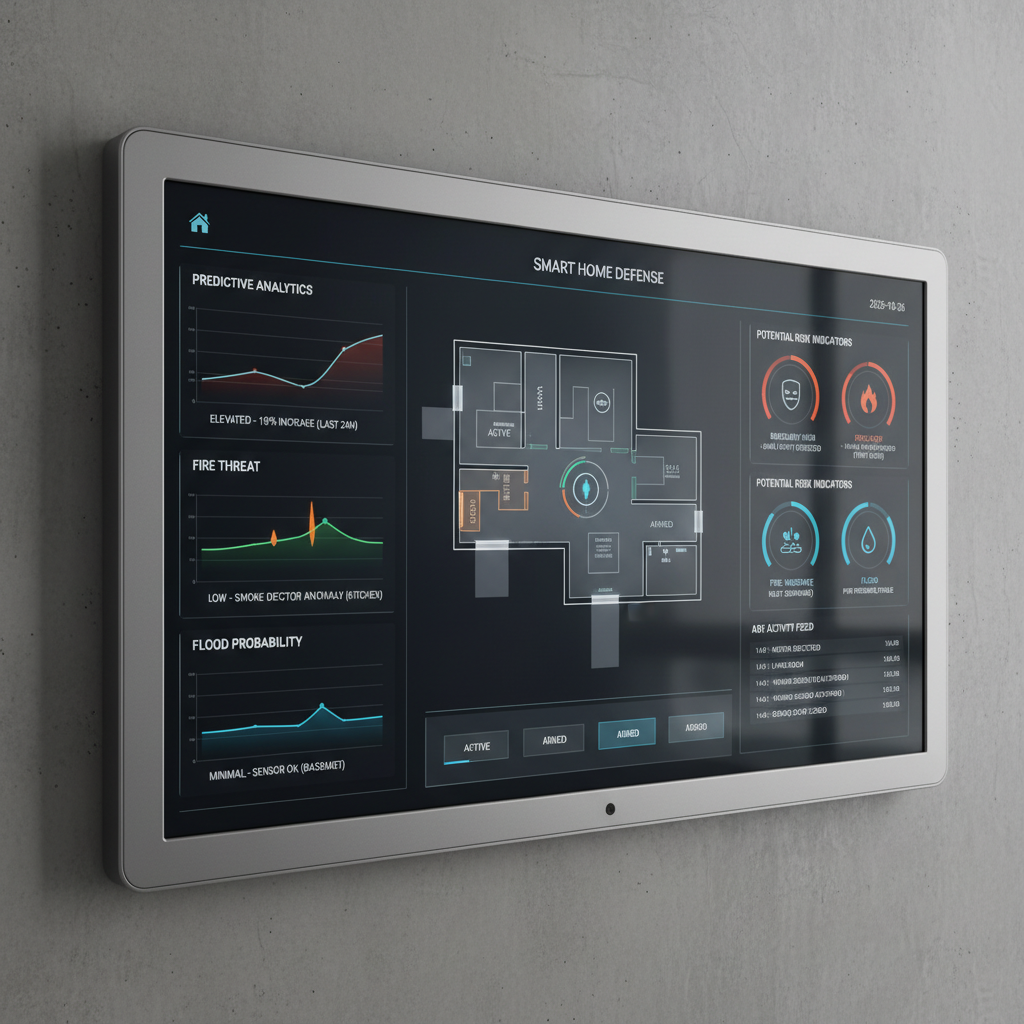
The true power lies in integration. When your AI-powered cameras, locks, and detectors communicate with a central hub, they create a cohesive security net. If an intruder is detected by a camera, the system can automatically lock all doors, turn on lights, sound an alarm, and notify emergency services, all without manual intervention.
AI transforms home security from a reactive measure into a proactive, intelligent defense system, offering unparalleled peace of mind.
Personalized Comfort and Entertainment
The modern home is a sanctuary of comfort and a hub for entertainment. AI takes these experiences to a new level by personalizing them to your unique preferences and making them effortlessly accessible.
Tailored Comfort:
-
Automated Blinds and Curtains:
AI-powered smart blinds can adjust automatically based on the time of day, sunlight intensity, or even your daily schedule. They can close in the afternoon to block heat, open in the morning to let in natural light, or provide privacy in the evenings, optimizing natural light and temperature without you lifting a finger.
-
Adaptive Lighting Scenes:
Beyond energy saving, smart lighting uses AI to create dynamic lighting scenes tailored to your mood or activity. A “reading” scene might provide focused, warm light, while a “relax” scene might dim and shift to softer hues. AI can learn your preferences and even adjust light color temperature to mimic natural daylight cycles, supporting circadian rhythms.
-
Multi-zone Climate Control:
In homes with multiple smart thermostats or temperature sensors, AI can manage different zones independently, ensuring optimal comfort in each room while minimizing energy waste. It can learn which rooms are used at different times and adjust accordingly.
Effortless Entertainment:
-
AI in Media Streaming:
Your smart TV and streaming devices already use AI to analyze your viewing habits and recommend movies, shows, and music tailored to your taste. Voice assistants integrated into these systems allow for seamless navigation, search, and control without needing a remote.
-
Smart Speakers and Multi-Room Audio:
AI-powered smart speakers (e.g., Sonos with Alexa/Google Assistant, Apple HomePod) deliver high-quality audio throughout your home. AI enables features like adaptive sound, which adjusts the audio based on the room’s acoustics. You can command your music, podcasts, or audiobooks to follow you from room to room, creating a truly immersive audio experience.
-
Home Theater Integration:
AI allows for sophisticated control of home theater setups. A single voice command like “Movie Night” can dim the lights, close the blinds, turn on the projector and amplifier, and start your preferred streaming service, all orchestrated seamlessly by your smart hub.
By learning your habits and preferences, AI turns your home into a personalized oasis of comfort and entertainment, making every moment more enjoyable and less effortful.
AI for Health and Wellness Monitoring
The application of AI extends beyond convenience and security, reaching into the crucial domain of health and wellness within the home. As our understanding of ambient intelligence grows, AI is increasingly being leveraged to create healthier living environments and provide subtle, non-intrusive monitoring.
Creating a Healthier Home Environment:
-
Smart Air Purifiers and Quality Monitors:
AI-powered air purifiers use sophisticated sensors to detect airborne pollutants (e.g., dust, pollen, VOCs, pet dander) and allergens in real-time. The AI then intelligently adjusts fan speed and filtration levels to maintain optimal air quality without constant manual intervention. Some systems can even learn patterns of pollution (e.g., higher pollen count at certain times of day) and proactively filter the air. Integration with smart home hubs can trigger purification cycles based on outdoor air quality reports or specific events, such as cooking.
-
Circadian Lighting Systems:
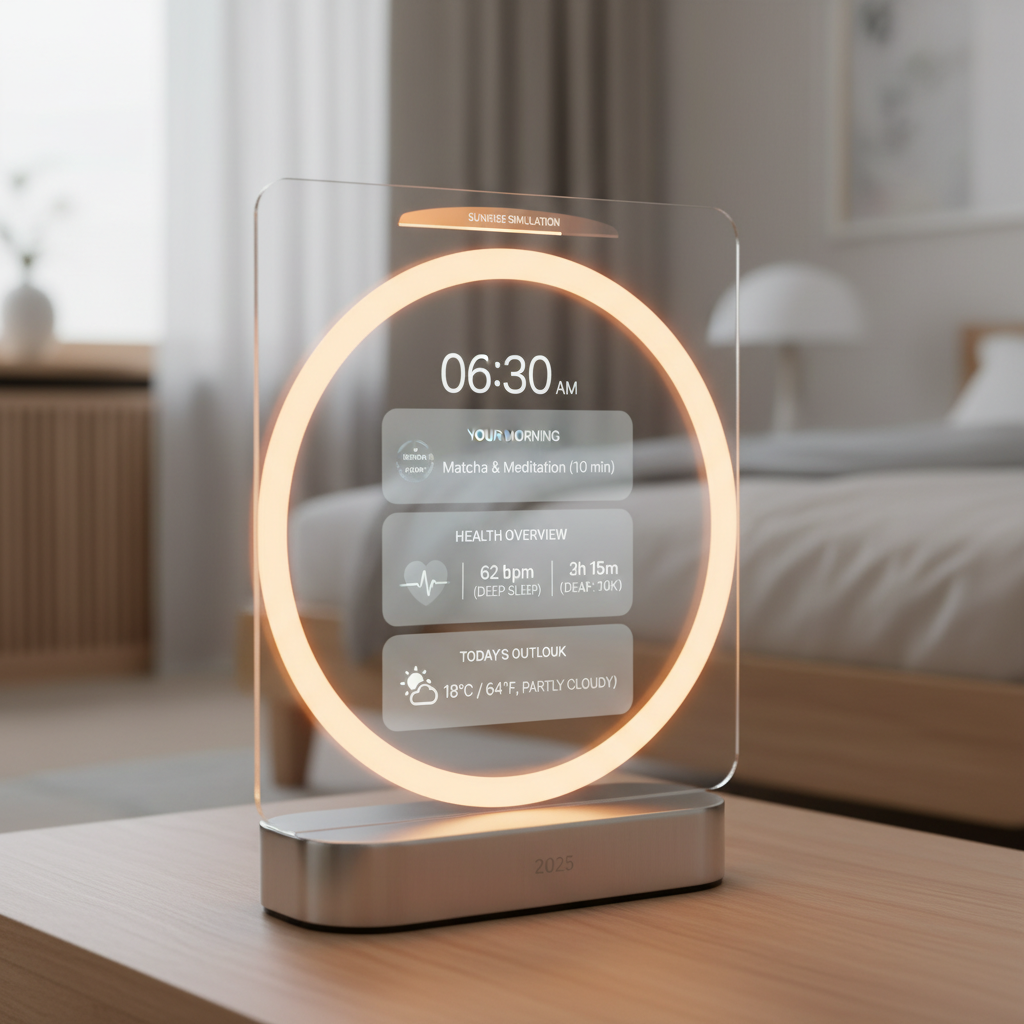
Beyond basic dimming, AI-driven circadian lighting systems adjust the color temperature and intensity of lights throughout the day to mimic natural sunlight. This helps regulate the body’s natural sleep-wake cycle (circadian rhythm), promoting better sleep at night and increased alertness during the day. The AI can learn your schedule and preferences to fine-tune these light changes.
-
Smart Humidifiers and Dehumidifiers:
Maintaining optimal humidity levels is crucial for health and comfort. AI-enabled humidifiers and dehumidifiers use sensors to monitor indoor humidity and automatically adjust their operation to prevent mold growth, alleviate respiratory issues, and ensure a comfortable environment, especially for those with allergies or asthma.
Subtle Wellness Monitoring and Support:
-
Sleep Tracking Integration:
While often starting with wearables, AI is increasingly bringing sleep tracking into the bedroom itself. Smart beds, under-mattress sensors, or even non-contact radar sensors can monitor sleep patterns, heart rate, and breathing without requiring you to wear anything. AI then analyzes this data to provide insights into sleep quality, offer personalized recommendations for improvement, and integrate with other smart devices like thermostats or lights to create an ideal sleep environment.
-
Ambient Sensing for Elder Care:
One of the most promising areas is non-invasive monitoring for elderly or vulnerable individuals. AI-powered ambient sensors (e.g., radar, pressure sensors, smart cameras with privacy modes) can detect falls, changes in routine, or prolonged inactivity without the need for intrusive cameras or wearable pendants. The AI learns the individual’s normal behavior patterns and alerts caregivers or family members only when significant deviations or emergencies occur, preserving independence while ensuring safety.
-
Smart Mirrors with Health Insights:
Emerging AI tech includes smart mirrors that can provide health insights, such as analyzing skin condition, tracking fitness goals, or even monitoring vital signs through advanced imaging and sensor technology. While still somewhat nascent, these promise a future where health monitoring is seamlessly integrated into daily routines.
AI for health and wellness transforms the home into an active partner in maintaining your well-being, offering both environmental optimization and subtle, intelligent support for a healthier lifestyle.
Future Trends and Ethical Considerations
As AI continues to advance at an astonishing pace, the future of home management promises even more sophisticated and integrated experiences. However, alongside these exciting prospects, come important ethical considerations that users and developers must address.
Future Trends in AI Home Management:
-
Ambient Computing and Invisible AI:
The goal is for AI to become truly ambient – present everywhere, but felt nowhere. Instead of explicit commands, your home will anticipate needs based on subtle cues and context. Think of systems that adjust lighting and temperature as you move through rooms, or kitchens that prepare your meal based on your calendar and dietary preferences, all without direct interaction.
-
Hyper-Personalization and Predictive Maintenance:
AI will create an even deeper understanding of individual habits, leading to hyper-personalized environments. Homes will not only adjust to your current preferences but also predict future needs – for example, ordering replacement filters for your air purifier before they’re needed, or scheduling appliance maintenance based on usage patterns and predictive analytics.
-
Emotive AI and Human-AI Symbiosis:
Future AI might detect your emotional state through vocal tone or facial expressions and respond accordingly – perhaps playing calming music if you seem stressed or offering a supportive message. The boundary between human and AI interaction will become increasingly seamless, fostering a symbiotic relationship.
-
Advanced Robotics and Dexterous Manipulation:
While robot vacuums are common, general-purpose household robots capable of complex tasks like folding laundry, loading dishwashers, or even assisting with personal care are on the horizon. Advances in AI-driven robotics, particularly in computer vision and dexterous manipulation, are bringing these possibilities closer to reality.
-
Decentralized AI and Edge Computing:
To enhance privacy and speed, more AI processing will occur on devices themselves (“at the edge”) rather than relying solely on cloud servers. This means your data stays more local, and your home can react faster, even if the internet connection is disrupted.
Ethical Considerations:
While the benefits are immense, the integration of AI into our homes also raises critical ethical questions:
-
Data Privacy and Security:
AI systems collect vast amounts of personal data (habits, schedules, conversations, even health metrics). Ensuring this data is securely stored, not misused, and protected from breaches is paramount. Users must understand what data is collected, how it’s used, and have control over it.
-
Bias in AI:
If AI algorithms are trained on biased data, they can perpetuate or even amplify those biases. This could manifest in smart home systems that are less responsive to certain accents, skin tones (for facial recognition), or cultural norms.
-
Transparency and Explainability:
It’s often difficult to understand why an AI system made a particular decision. For critical functions like security or health monitoring, users need transparency and an explanation for AI’s actions to build trust and allow for intervention if necessary.
-
Autonomy and Control:
As AI becomes more autonomous, concerns about who is truly in control – the human or the AI – may arise. Striking the right balance between convenience and maintaining human agency is crucial.
-
Digital Divide:
The cost and complexity of advanced AI home tech could exacerbate existing social inequalities, creating a “digital divide” where only affluent households can access the full benefits of smart living.
-
Ethical AI Development:
Manufacturers have a responsibility to develop AI ethically, prioritizing user well-being, privacy, and security. Clear ethical guidelines and regulations will be essential as these technologies become more pervasive.
Navigating these ethical landscapes responsibly will be key to unlocking the full, positive potential of AI in our homes, ensuring that technology serves humanity without compromising fundamental values.
Comparison Tables
To help illustrate the differences and capabilities of various AI home technologies, here are two comparison tables:
Table 1: Popular Smart Home Hubs and Their AI Prowess
| Hub/Assistant | Core AI Feature | Key Integrations | Pros | Cons |
|---|---|---|---|---|
| Amazon Echo (Alexa) | Advanced voice recognition, routine creation, proactive suggestions (e.g., reordering supplies). | Wide range of devices (Zigbee, Wi-Fi, Bluetooth), thousands of skills, Ring, Philips Hue, Ecobee. | Vast ecosystem, affordable entry, robust smart home routines, strong music integration. | Privacy concerns (data collection), can be overly complex for beginners, limited visual interface on some models. |
| Google Nest Hub (Google Assistant) | Contextual understanding, natural conversation, visual answers, personalized daily briefings. | Nest devices, Chromecast, Philips Hue, Samsung SmartThings, Tado, Google Home ecosystem. | Superior contextual AI, excellent visual interface, strong Google services integration (Calendar, Maps, Photos). | Smaller device ecosystem than Alexa, Google’s data privacy practices, sometimes less proactive than Alexa. |
| Apple HomePod (Siri) | Secure on-device processing, personal requests, adaptive audio, seamless Apple ecosystem integration. | HomeKit devices exclusively, Apple Music, Apple TV. | Strong privacy focus, excellent audio quality, easy setup for Apple users, robust local control (Thread). | Limited device compatibility (HomeKit only), higher price point, Siri’s capabilities can lag behind Alexa/Google Assistant. |
| Samsung SmartThings Hub | Device orchestration, advanced automation logic, broad protocol support. | Thousands of Z-Wave, Zigbee, Wi-Fi devices, Samsung appliances, Arlo, Ring, Yale. | Extremely broad device compatibility, advanced customization, local processing for some automations. | Requires more technical know-how, less intuitive voice assistant (relies on Alexa/Google Assistant for voice), app interface can be complex. |
Table 2: AI-Powered Cleaning Robots: A Comparative Look
| Device Type | Key AI Feature | Navigation/Mapping | Specialty | Price Range |
|---|---|---|---|---|
| Robot Vacuum (e.g., Roomba j7+/s9, Roborock S8) | Object recognition (e.g., pet waste, cables), personalized cleaning suggestions, dirt detection. | LiDAR, vSLAM, precise room mapping, multi-floor support, obstacle avoidance. | Automated vacuuming, deep cleaning on carpets, self-emptying, obstacle recognition. | $400 – $1600+ |
| Robot Mop (e.g., Braava jet m6, Roborock S7 MaxV Ultra) | Intelligent mopping patterns, auto-detection of floor types, targeted stain removal. | vSLAM, precise mapping, avoids carpets, navigates around furniture. | Hard floor washing (wet/dry mopping), tackling sticky messes, integration with robot vacuums. | $300 – $1000+ |
| Robotic Lawn Mower (e.g., Husqvarna Automower, Luba) | GPS/RTK navigation, boundary wire-free operation, weather adaptation, anti-theft. | Satellite navigation, precise boundary definition, multi-zone management. | Automated lawn mowing, silent operation, consistent cut, steep slope handling. | $1000 – $4000+ |
| Robotic Pool Cleaner (e.g., Dolphin Nautilus, Polaris P955) | Advanced scanning algorithms, adaptive cleaning paths, dirt sensor. | Intelligent scanning for pool size/shape, wall climbing, obstacle avoidance. | Automated pool cleaning (floor, walls, waterline), fine debris filtration. | $500 – $2000+ |
Practical Examples: Real-World Use Cases and Scenarios
To truly grasp the impact of AI in home management, let’s look at a few real-world scenarios illustrating how these technologies work together seamlessly.
Scenario 1: The Busy Working Parent
Meet Sarah, a mother of two who juggles a demanding job with school runs and family life. Her home is an AI sanctuary:
- Morning Rush: Her smart thermostat proactively preheats the house 30 minutes before her family wakes up. As her alarm sounds, smart blinds slowly open, and kitchen lights gently illuminate. Her smart coffee maker starts brewing. While she gets ready, Alexa provides a personalized flash briefing of news, weather, and traffic.
- During the Day: Once everyone leaves for school and work, the smart lock automatically engages, and the security system arms itself. Her robot vacuum, a Roomba j7+, begins its daily clean, navigating around forgotten toys thanks to its object recognition AI. The smart irrigation system checks local weather and skips watering the lawn due to an impending rain shower, saving water.
- Evening Routine: As Sarah drives home, her smart fridge sends a notification reminding her she’s low on milk and suggests a quick weeknight dinner recipe based on available ingredients. Upon her arrival, the lights adjust to a warm, welcoming glow, and her smart oven has already preheated itself for the suggested meal. After dinner, a simple voice command initiates the “Good Night” routine, which locks all doors, turns off all lights, sets the thermostat to sleep mode, and arms the perimeter security.
Sarah saves hours each week on chores and mental energy previously spent on coordination, allowing her more quality time with her children.
Scenario 2: An Elderly Couple Seeking Safety and Convenience
John and Mary, both in their late 70s, live independently and value their autonomy. AI tech helps them maintain a comfortable and secure lifestyle:
- Enhanced Safety: AI-powered smart cameras differentiate between John’s cat and an actual intruder, reducing false alarms. Smart smoke detectors ignore burnt toast but instantly alert John’s smartphone and automatically call their son if a real fire is detected. Ambient sensors subtly monitor their movements, alerting their son if a fall is detected or if there’s prolonged inactivity, without the need for intrusive cameras or wearables.
- Ease of Access: A smart lock allows their home care provider easy access with a temporary code, which is automatically revoked after their scheduled visit. John can answer the smart doorbell from his armchair, seeing and speaking to visitors without having to rush to the door.
- Simple Control: They primarily use voice commands through their Google Nest Hub to control lights, adjust the thermostat, and play music. “Hey Google, turn on the living room lights” is far simpler than fumbling with small switches. The smart humidifier automatically maintains optimal indoor air quality, reducing Mary’s allergy symptoms.
AI provides John and Mary with a greater sense of security and simplifies daily tasks, empowering them to live comfortably and independently longer.
Scenario 3: The Environmentally Conscious Homeowner
Mark is passionate about reducing his carbon footprint and minimizing energy waste. His AI-powered home is designed for sustainability:
- Optimized Energy Use: Mark’s smart thermostat, equipped with AI, learns his family’s heating and cooling patterns and optimizes schedules. It integrates with weather forecasts to pre-cool the house during off-peak hours before a predicted heatwave, saving on peak-hour electricity rates. Smart plugs monitor “vampire drain” from electronics and automatically cut power when devices are idle.
- Water Conservation: The smart irrigation system, connected to local weather data, precisely waters his garden only when necessary, adjusting for rainfall and soil moisture. It even detects leaks and alerts him instantly.
- Waste Reduction: His smart refrigerator tracks food expiry dates and suggests meals to use up ingredients before they spoil, significantly reducing food waste. An AI-powered app analyzes his electricity usage patterns, providing actionable insights and recommending further adjustments to save energy.
- Renewable Integration: Mark’s home energy management system uses AI to optimize the charging and discharging of his home battery storage system, ensuring he maximizes the use of his solar panels and minimizes reliance on the grid, especially during peak demand.
Mark’s AI-driven home not only saves him money but also actively contributes to his goal of living a more sustainable and environmentally friendly lifestyle.
Frequently Asked Questions
Q: What exactly is “AI” in a smart home context?
A: In a smart home context, “AI” refers to the ability of devices and systems to learn from data, adapt to situations, and make intelligent decisions without explicit human programming for every single scenario. It enables devices to understand natural language (voice assistants), recognize objects (security cameras), learn user preferences (thermostats), predict needs (smart fridges), and orchestrate complex routines dynamically. It moves beyond simple automation (e.g., “turn lights on at 6 PM”) to intelligent automation (e.g., “turn lights on when I arrive home, but adjust brightness based on time of day and natural light, and learn my preferred lighting for different activities”).
Q: Is AI home tech expensive, and how much does it cost to get started?
A: The cost of AI home tech varies widely. You can start small and affordably with a smart speaker (like an Amazon Echo Dot or Google Nest Mini) for under $50. From there, individual devices like smart plugs ($15-30), smart bulbs ($10-25 each), or a basic robot vacuum ($200-400) are also accessible. More advanced systems like premium robot vacuums with self-emptying docks ($800-1600), smart thermostats ($150-300), or comprehensive security systems can be a larger investment. Building a fully integrated, AI-powered smart home can range from a few hundred dollars to several thousand, depending on the number of devices and their sophistication. Many users choose to build their smart home gradually, adding devices over time as their needs and budget allow.
Q: What about privacy and data security with AI smart home devices?
A: Privacy and data security are legitimate concerns with AI smart home devices, as they collect significant amounts of personal data. Manufacturers use encryption, secure servers, and regular security updates to protect data. However, vulnerabilities can exist. Users should always:
- Use strong, unique passwords for all accounts.
- Enable two-factor authentication (2FA) wherever possible.
- Keep device firmware and apps updated.
- Understand the privacy policies of each device and service.
- Consider where data is stored (locally or in the cloud).
- Limit the data you share by adjusting privacy settings.
- Be mindful of where voice assistants are placed and what they might record.
Reputable brands generally prioritize security, but diligence from the user is also crucial.
Q: Do I need to be tech-savvy to set up and manage AI home tech?
A: Not necessarily. Many modern AI smart home devices are designed for easy setup, often involving just plugging them in and following simple instructions in a smartphone app. Voice assistants like Alexa and Google Assistant make interaction intuitive. While advanced customization or troubleshooting might require a bit more technical comfort, most basic functionalities are very user-friendly. Starting with a single device or a starter kit can help ease you into the technology without needing extensive tech knowledge.
Q: Will my smart home still work if the internet goes down?
A: It depends on the device and the smart home hub. Many AI-powered smart home devices rely on an internet connection to communicate with cloud services for AI processing, voice commands, and remote control. If the internet goes down:
- Cloud-dependent features (voice commands, remote access, AI learning that happens in the cloud) will likely stop working.
- Local control (e.g., controlling a smart light with its physical switch, or basic automation rules processed directly by a hub like SmartThings) might still function.
- Devices using protocols like Z-Wave or Zigbee that are managed by a local hub often retain some functionality.
- Certain devices, like robot vacuums, can often continue their pre-programmed cleaning routines offline.
It’s important to check the offline capabilities of devices you plan to purchase if internet reliability is a concern.
Q: Can AI devices truly learn my habits, and how accurate is this learning?
A: Yes, many AI devices are designed to learn your habits. For example, smart thermostats observe your preferred temperatures at different times and adapt schedules accordingly. Smart lighting systems can learn your occupancy patterns. The accuracy of this learning varies. Initial learning periods require some human input or correction. Over time, as devices gather more data and you provide feedback, their understanding of your habits generally improves significantly, leading to more accurate and proactive automation.
Q: How do I ensure compatibility between different brands and ecosystems?
A: Compatibility is a key challenge in the smart home world. To ensure it:
- Choose a central ecosystem: Decide whether you want to primarily use Amazon Alexa, Google Assistant, or Apple HomeKit as your main voice assistant and control platform.
- Check “Works With” labels: Look for “Works With Alexa,” “Works With Google Home,” or “Works With Apple HomeKit” on product packaging.
- Consider open standards: Devices using protocols like Z-Wave, Zigbee, or the newer Matter standard are often more interoperable across different hubs and ecosystems.
- Utilize IFTTT: If This Then That is a service that can bridge communication between devices and services that don’t natively connect, allowing for custom automations.
- Research before buying: Always check product specifications and reviews for compatibility information before making a purchase.
Q: What’s the environmental impact of these AI devices, and do they help or hurt sustainability?
A: The environmental impact is a complex topic. On the positive side, AI-powered devices like smart thermostats, smart lighting, and energy management systems can significantly reduce energy consumption, leading to lower utility bills and a smaller carbon footprint. Smart irrigation systems conserve water. However, the manufacturing of these devices requires raw materials and energy, and their disposal contributes to e-waste.
To mitigate negative impacts:
- Choose devices from companies committed to sustainability (e.g., using recycled materials, energy-efficient manufacturing).
- Look for products with long lifespans and repairability.
- Properly recycle old electronics.
- Focus on devices that genuinely offer energy savings rather than just convenience.
Overall, the potential for energy savings and resource conservation with AI often outweighs the environmental cost of manufacturing, especially when chosen thoughtfully.
Q: Are there any ethical concerns I should be aware of regarding AI in my home?
A: Yes, ethical concerns include:
- Data privacy: The vast amount of data collected about your routines and habits.
- Security vulnerabilities: Potential for hacking if devices aren’t secure.
- Bias in AI: Algorithms trained on unrepresentative data could lead to biased outcomes.
- Loss of autonomy: Over-reliance on AI could diminish human decision-making.
- Transparency: Understanding how AI makes decisions can be difficult.
It’s crucial to stay informed, understand device settings, and choose reputable brands that prioritize user privacy and ethical AI development. Engaging with these technologies responsibly is key.
Q: What are the best first steps for someone new to AI home tech?
A: Starting small is key:
- Identify a Pain Point: What’s one chore or inconvenience you want to solve first? (e.g., forgetting to turn off lights, wanting to wake up to coffee).
- Choose a Voice Assistant/Hub: Pick either Amazon Alexa or Google Assistant as your primary ecosystem. Most devices work with both, but one will likely become your main interface.
- Start with Simple Devices: Smart plugs, smart bulbs, or a basic smart speaker are affordable entry points.
- Experiment with Routines: Once you have a few devices, try creating simple routines (e.g., “Good Morning” routine).
- Expand Gradually: As you get comfortable, add devices that address other needs, like a smart thermostat, robot vacuum, or security camera.
- Prioritize Needs: Decide whether energy savings, security, or convenience is your top priority and invest in devices that align with those goals first.
This approach allows you to learn and adapt without being overwhelmed, building your AI-powered home piece by piece.
Key Takeaways
Embracing AI technology for home management offers a multitude of benefits that can profoundly transform your daily life. Here are the main points to remember:
- Unprecedented Convenience: AI automates tedious chores, from cleaning to cooking and yard work, freeing up valuable time and mental energy.
- Enhanced Efficiency: Smart thermostats, lighting, and energy management systems leverage AI to significantly reduce energy consumption and lower utility bills.
- Superior Security: AI-powered cameras, locks, and detectors provide intelligent, proactive protection, offering greater peace of mind through features like person detection and remote monitoring.
- Personalized Comfort: Your home can learn your preferences for temperature, lighting, and entertainment, creating an environment perfectly tailored to your mood and activities.
- Better Health and Wellness: AI contributes to a healthier home by monitoring air quality, optimizing sleep environments, and even offering non-intrusive monitoring for loved ones.
- Constant Evolution: AI in the home is rapidly advancing towards more ambient, predictive, and integrated experiences, promising an even more intuitive future.
- Ethical Considerations are Crucial: While embracing the benefits, it’s vital to be aware of and address concerns around data privacy, security, and the responsible development of AI.
- Accessible Entry Points: Starting your AI smart home journey doesn’t have to be expensive or complicated; you can begin with simple devices and expand incrementally.
- Integration is Key: The true power of AI in the home comes from devices and systems communicating and working together seamlessly, often orchestrated by an intelligent hub.
Conclusion
The vision of an effortless, intuitively managed home is no longer a distant dream but a tangible reality, powered by the incredible advancements in Artificial Intelligence. From robot vacuums that meticulously clean your floors and smart thermostats that optimize energy usage, to intelligent security systems that stand vigilant and voice assistants that orchestrate your entire living space, AI is reshaping the very fabric of our modern households.
By learning your habits, anticipating your needs, and adapting to your lifestyle, AI technology transforms the burden of daily chores into a symphony of automated convenience. It grants us the most precious commodity in our busy lives: time. Time to spend with loved ones, pursue hobbies, or simply relax in a home that caters to our every need.
As we look to the future, AI will become even more integrated, subtle, and indispensable, blurring the lines between technology and intuition. While ethical considerations around privacy and security demand our continued attention and responsible development, the trajectory is clear: an AI-powered home is a smarter, more efficient, safer, and ultimately, a more enjoyable place to live. Embrace the intelligence that awaits, and unlock a new era of effortless home management for your modern household.




































































Leave a Reply