


Smart Home Security: How AI Protects Your Sanctuary
In an age where our homes are becoming increasingly interconnected and intelligent, the concept of security is also undergoing a profound transformation. Gone are the days when a simple alarm system and a locked door were considered sufficient. Today, the vanguard of home protection extends far beyond the physical walls of your sanctuary, leveraging the formidable power of Artificial Intelligence (AI) to create an invisible, proactive shield around your property. This is the era of smart perimeter protection, where AI doesn’t just react to an intrusion; it predicts, detects, and often deters threats before they even reach your doorstep.
Imagine a security system that can differentiate between a squirrel, a delivery driver, and a potential intruder. A system that learns your daily routines, understands environmental changes, and only alerts you when a genuine threat is present, dramatically reducing false alarms. This isn’t science fiction; it’s the reality offered by advanced AI-powered perimeter detection systems. These innovative solutions are redefining what it means to truly protect your home, offering peace of mind by extending surveillance and threat assessment to the very edges of your property line and beyond. This comprehensive guide will delve into the intricacies of this revolutionary technology, exploring its mechanisms, benefits, practical applications, and what the future holds for smart home security.
1. Understanding Perimeter Protection: Beyond Traditional Security
Traditionally, home security has been reactive. Sensors on doors and windows trigger an alarm once an intruder has already gained entry. While effective to a degree, this approach often means damage has already occurred, or the intruder is inside your private space, creating a more dangerous situation. Perimeter protection fundamentally shifts this paradigm, aiming to detect threats at the very boundary of your property, long before they can reach the house itself.
This “outer layer” of defense is crucial. It provides early warning, giving homeowners and security services precious time to respond. Instead of waiting for a window to be smashed, an AI-powered perimeter system can identify suspicious activity, such as someone lurking near a fence line or attempting to breach a gate, moments after it begins. This proactive stance is not just about deterrence; it’s about prevention and significantly enhancing the overall safety and security posture of your home.
Early perimeter solutions might have involved simple motion detectors or rudimentary infrared beams, which were prone to numerous false alarms caused by animals, falling leaves, or even strong winds. The integration of AI has revolutionized this field, bringing an unprecedented level of sophistication and reliability to external security layers. AI algorithms are trained on vast datasets of visual and sensor information, enabling them to interpret complex scenarios and make intelligent distinctions that traditional systems simply cannot.
2. The Evolution of AI in Security: From Simple Alarms to Smart Detection
The journey of AI in security has been a remarkable one, mirroring the broader advancements in computing power and machine learning. What began with basic programmed responses has evolved into sophisticated neural networks capable of complex pattern recognition and predictive analysis.
2.1. Early Stages: Basic Automation and Rules-Based Systems
In its nascent form, AI in security was largely about automation. Think of systems that could turn lights on and off based on a schedule, or alarms that triggered when a simple sensor reported a breach. These were rules-based systems, following explicit instructions without any real ‘intelligence’ or ability to learn. False alarms were rampant, and their effectiveness was limited by the rigidity of their programming.
2.2. The Rise of Machine Learning: Pattern Recognition
The advent of machine learning marked a significant leap. With access to computational power, security systems could now analyze data to identify patterns. For instance, a system could learn what a typical human silhouette looks like, or distinguish between the normal movement of tree branches and the deliberate movement of a person. This reduced false alarms but still required significant human oversight for training and fine-tuning.
2.3. Deep Learning and Neural Networks: True Intelligent Detection
Today’s cutting-edge AI security systems leverage deep learning, a subset of machine learning that uses multi-layered neural networks inspired by the human brain. These systems can process enormous amounts of data – video feeds, audio signatures, thermal patterns – to learn highly intricate distinctions. They can identify specific objects (persons, vehicles, animals), understand context (a person walking a dog versus someone hiding behind bushes), and even predict intent based on observed behaviors. This is where true smart perimeter protection truly shines, offering unparalleled accuracy and proactive capabilities.
This evolution has transformed security from a reactive measure into a proactive, intelligent defense mechanism. AI-powered systems can now operate autonomously, constantly learning and adapting to provide a robust, reliable, and intelligent layer of protection.
3. How Smart Perimeter AI Works: The Technology Under the Hood
The magic of smart perimeter protection lies in the synergy of advanced sensor technology and sophisticated AI algorithms. It’s a complex interplay designed to create a comprehensive and intelligent barrier.
3.1. Sensor Fusion: Gathering Diverse Data
Modern AI perimeter systems don’t rely on just one type of sensor. Instead, they employ a fusion of technologies to gather rich, multi-layered data about the environment:
- High-Resolution Cameras (Visible Light): These are the eyes of the system, providing detailed visual information. AI analyzes video streams for objects, movements, and behaviors.
- Thermal Imaging Cameras: Crucial for night vision and detecting heat signatures, thermal cameras can spot intruders even in complete darkness, fog, or heavy camouflage, unaffected by light conditions.
- Radar Sensors: These can detect motion and distance, even through dense foliage or adverse weather conditions where cameras might struggle. They’re excellent for covering large, open areas.
- Lidar (Light Detection and Ranging): Using pulsed laser light, Lidar creates 3D maps of the environment, offering highly accurate distance measurements and object recognition, less susceptible to shadows or light changes.
- Vibration Sensors (Fence, Ground): Embedded in fences or buried underground, these sensors detect physical vibrations caused by climbing, digging, or walking, providing a discrete detection layer.
- Acoustic Sensors: Microphones trained with AI can differentiate between ambient noise, animal sounds, breaking glass, footsteps, or even suspicious whispers, adding an auditory layer of detection.
3.2. AI-Powered Analytics: The Brain of the System
Once data is collected from these diverse sensors, it’s fed into the AI engine. Here’s what happens:
- Object Detection and Classification: AI algorithms, often based on deep neural networks, are trained to identify specific objects. This allows the system to distinguish between a human, a vehicle, an animal (e.g., deer, cat), and inanimate objects (e.g., a blowing plastic bag).
- Behavioral Analysis: Beyond mere identification, AI analyzes patterns of movement and behavior. Is someone loitering? Are they attempting to scale a fence? Are they moving suspiciously fast or slow? This context is vital for determining intent.
- Anomaly Detection: The system learns what “normal” activity looks like for your property. Any deviation from this baseline – an unfamiliar vehicle at an odd hour, someone appearing in a restricted zone – is flagged as an anomaly for further investigation.
- False Alarm Reduction: This is one of AI’s most significant contributions. By understanding context and accurately classifying objects and behaviors, the AI can filter out environmental triggers that would plague traditional systems, sending alerts only for genuine threats.
- Contextual Understanding: AI can integrate information from multiple sensors. For example, a thermal camera might detect a heat signature, a visible light camera confirms it’s a person, and an acoustic sensor picks up suspicious whispers, all confirming a potential intrusion.
This sophisticated blend of hardware and software creates an intelligent, adaptive, and highly reliable perimeter defense system that significantly elevates your home security beyond conventional methods.
4. Key Features and Capabilities of AI-Powered Perimeter Systems
Modern AI-driven perimeter protection systems offer a suite of advanced features designed to provide comprehensive and intelligent security.
4.1. Precision Intruder Detection and Classification
At its core, the ability to accurately detect and classify objects is paramount. These systems can reliably distinguish between a human, various animals (from raccoons to deer), vehicles, and environmental factors like rain or swaying branches. This precision is what drastically reduces false alarms, ensuring that alerts you receive are genuinely important.
4.2. Real-Time Alerts and Notifications
When a legitimate threat is detected, the system provides instant notifications. These can come in various forms:
- Smartphone Push Notifications: Direct alerts to your mobile device, often with a live video feed or snapshot of the event.
- Email/SMS Alerts: Alternative notification methods for redundancy.
- Integration with Smart Home Hubs: Triggering other smart home devices, such as turning on external lights, locking smart doors, or activating an audible siren.
- Professional Monitoring Integration: Seamlessly sending alerts to a central monitoring station for immediate professional response.
4.3. Proactive Deterrence Features
Beyond detection, many systems incorporate active deterrence measures:
- Two-Way Audio: Allows you to speak directly to an individual on your property, warning them that they have been detected.
- Integrated Sirens: Loud audible alarms that can be triggered automatically or manually to scare off intruders.
- Spotlights/Floodlights: Automated lighting that illuminates the detected area, disorienting potential intruders and making them more visible.
- Pre-recorded Messages: Automated verbal warnings that play when an intruder is detected in a specific zone.
4.4. Customizable Zones and Sensitivity
Users can define specific zones of interest on their property. For example, you might want higher sensitivity around the main entry points, while having a lower sensitivity for areas further away or where pets frequently roam. This customization allows for tailored protection specific to your property’s layout and personal preferences.
4.5. AI-Powered Video Analytics and Forensic Capabilities
All recorded footage is intelligently indexed and searchable. Need to find all instances of a person wearing a red shirt between 2 AM and 4 AM last Tuesday? AI can sift through hours of footage in seconds. This greatly aids in post-incident investigation and provides valuable forensic evidence.
4.6. Remote Access and Control
Manage your entire perimeter security system from anywhere in the world via a smartphone app or web portal. View live feeds, review recorded events, adjust settings, arm/disarm the system, and receive alerts, all remotely.
4.7. Integration with Broader Smart Home Ecosystems
These systems often integrate seamlessly with other smart home devices and platforms (e.g., Google Home, Amazon Alexa, Apple HomeKit, Zigbee, Z-Wave). This allows for complex automation, such as outdoor lights turning on when a perimeter breach is detected, or the thermostat adjusting when the house is empty based on security status.
5. Benefits of AI-Driven Intrusion Detection: Why It Matters
The adoption of AI in perimeter security brings a multitude of compelling benefits that significantly elevate home protection beyond traditional methods.
5.1. Drastic Reduction in False Alarms
This is arguably one of the most significant advantages. Traditional motion sensors are notorious for triggering alarms due to animals, swaying trees, or bad weather. AI’s ability to classify objects and understand context means you’re only alerted for genuine threats. This prevents alarm fatigue and ensures that when an alert does come through, you know it needs immediate attention.
5.2. Proactive Threat Deterrence
Unlike reactive systems that only trigger after an intrusion, AI perimeter protection aims to deter criminals before they even gain entry. The combination of early detection, automated lighting, and audible warnings can often be enough to scare off potential intruders, keeping them off your property entirely.
5.3. Enhanced Accuracy and Reliability
AI algorithms continuously learn and improve. This self-optimization leads to higher detection rates and fewer missed threats. The fusion of multiple sensor types (visual, thermal, radar) provides a robust and redundant detection capability, making the system highly reliable in various environmental conditions.
5.4. Comprehensive Property Coverage
AI perimeter systems can monitor vast areas, including property boundaries, driveways, gardens, and outbuildings. This ensures no blind spots and provides a full 360-degree protective envelope around your home.
5.5. Valuable Forensic Evidence
High-quality, AI-analyzed video footage is invaluable in the event of an incident. The system can quickly isolate relevant clips, categorize events, and provide clear evidence for law enforcement, aiding in investigations and potential prosecutions.
5.6. Peace of Mind and Convenience
Knowing that your property is under constant, intelligent surveillance provides immense peace of mind. The ability to remotely monitor and control your system, coupled with the reduction in false alarms, offers unparalleled convenience and confidence in your home’s security.
5.7. Scalability and Future-Proofing
Many AI systems are modular and scalable, allowing you to expand your coverage as needed. As AI technology advances, software updates can often enhance the capabilities of your existing hardware, ensuring your security system remains at the forefront of protection.
6. Deployment Considerations and System Integration
Implementing a smart perimeter protection system requires careful planning and consideration to ensure optimal performance and seamless integration with your existing smart home ecosystem.
6.1. Site Assessment and Coverage Planning
Before any installation, a thorough site assessment is crucial. This involves:
- Identifying Vulnerabilities: Gateways, fences, low-light areas, dense foliage, and secluded spots.
- Defining Perimeter Boundaries: Clearly marking the detection zones for the system.
- Considering Environmental Factors: Weather patterns, local wildlife, and potential sources of interference.
- Camera Placement: Strategic positioning to avoid blind spots, optimize field of view, and deter tampering. This often involves choosing locations that offer both broad coverage and specific detail where needed.
- Sensor Location: Placing radar, Lidar, or ground sensors in areas most likely to detect early approach or breach attempts, considering factors like terrain and vegetation.
6.2. Network Infrastructure and Power Requirements
AI perimeter systems, especially those with numerous cameras and sensors, demand a robust network:
- High-Bandwidth Internet: Essential for transmitting high-resolution video streams and for cloud-based AI processing.
- Reliable Wi-Fi or Wired Ethernet: Wired connections are generally preferred for outdoor cameras for stability and security. If using Wi-Fi, ensure strong signal strength across the entire property.
- Power Supply: Outdoor cameras and sensors typically require constant power. Options include Power over Ethernet (PoE), solar power for remote locations, or dedicated power lines.
6.3. Integration with Existing Smart Home Systems
For a truly smart sanctuary, your perimeter protection should ideally integrate with your broader smart home:
- Central Hub Compatibility: Ensure the system works with your preferred smart home hub (e.g., Apple HomeKit, SmartThings, Google Home, Amazon Alexa).
- Device Interoperability: Can the perimeter system trigger other devices? For example, detecting an intruder could automatically turn on floodlights, lock smart doors, or activate indoor cameras.
- Unified App Control: A single app to manage security, lighting, climate, and other smart devices enhances user experience.
6.4. Data Storage and Privacy Considerations
Storing vast amounts of video data requires planning:
- Local vs. Cloud Storage: Local storage (NVR/DVR, SD cards) offers more privacy and avoids ongoing subscription fees but can be vulnerable to theft. Cloud storage provides off-site backup and easier access but typically involves a recurring cost. Many systems offer a hybrid approach.
- Data Encryption: Ensure all data, both in transit and at rest, is encrypted to protect your privacy and prevent unauthorized access.
- Legal and Ethical Use: Be aware of local laws regarding surveillance, especially if cameras capture public areas or neighboring properties. Transparent signage can also be important.
6.5. Professional Installation vs. DIY
While some simpler systems can be DIY, complex AI perimeter systems often benefit from professional installation. Experts can correctly assess your property, optimize sensor placement, ensure robust network connectivity, and properly configure AI settings for maximum effectiveness and minimal false alarms.
7. Addressing Challenges and Future Trends
While AI perimeter protection offers unparalleled advantages, it’s important to acknowledge current challenges and anticipate future developments in this rapidly evolving field.
7.1. Current Challenges
- Cost: Advanced AI systems, especially those with multiple sensor types and robust hardware, can be a significant initial investment compared to basic security cameras.
- Complexity of Setup and Calibration: Optimal performance requires careful calibration and fine-tuning of AI algorithms, which can be complex for the average user. Professional installation often mitigates this.
- Power Consumption: High-resolution cameras and continuous AI processing can draw considerable power, requiring reliable power solutions for outdoor installations.
- Data Privacy and Security: As more data is collected and processed, concerns about data privacy, potential breaches, and misuse of surveillance footage become more prominent. Robust encryption and adherence to privacy regulations are critical.
- Environmental Factors: While AI reduces false alarms, extreme weather conditions (e.g., severe blizzards, hurricanes, dense fog) can still present challenges for optimal sensor performance.
7.2. Future Trends and Innovations
The field of AI security is dynamic, with exciting innovations on the horizon:
- Edge AI Processing: Moving AI computation from the cloud to the device itself (the “edge”). This reduces latency, improves privacy (less data sent off-device), and makes systems more resilient to internet outages.
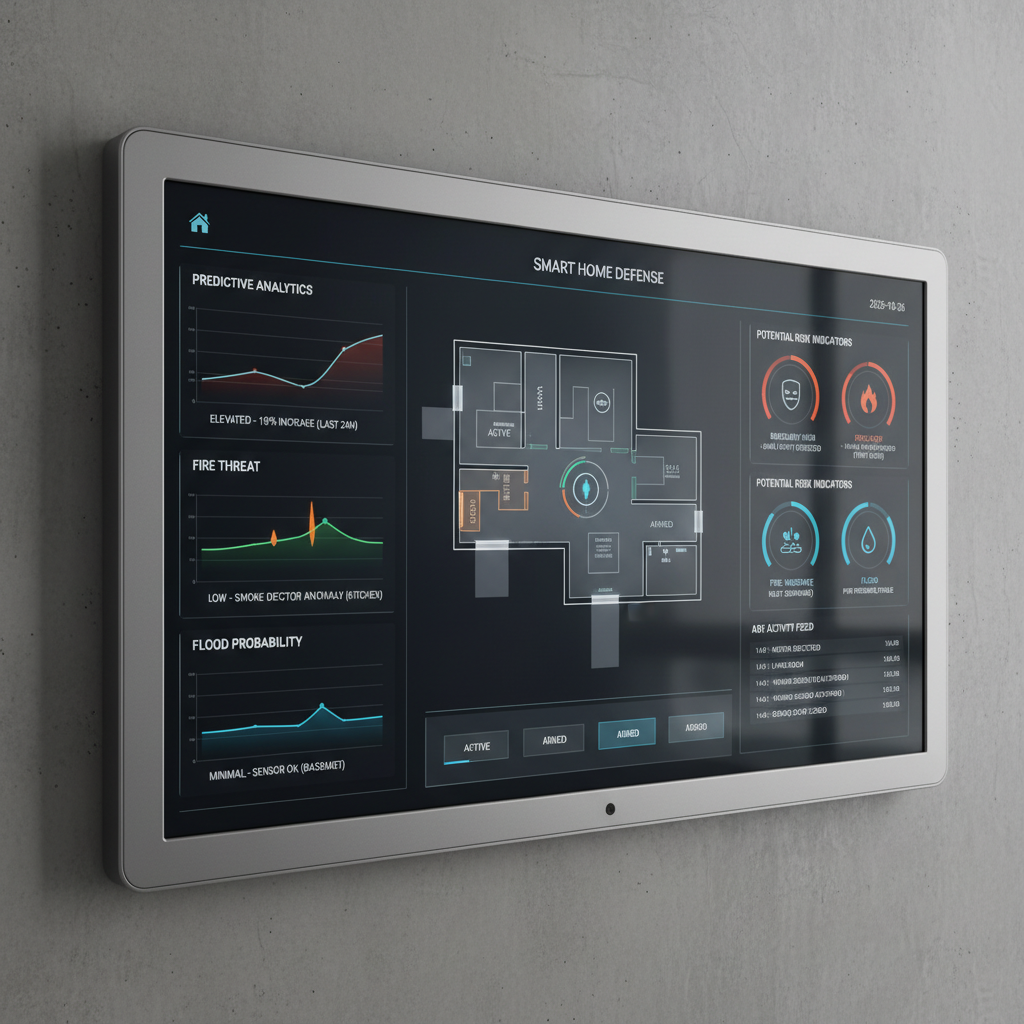
- Predictive Analytics and Intent Recognition: More advanced AI will not only detect activity but also predict potential threats based on observed behaviors and contextual data. For example, recognizing patterns of movement that often precede a break-in attempt.
- Swarm Intelligence and Drone Integration: Imagine a network of interconnected sensors and possibly autonomous drones that can be dispatched to investigate perimeter breaches, offering a dynamic and mobile surveillance capability.
- Biometric Integration: Future systems might integrate with biometric data (e.g., facial recognition for authorized personnel only) to further refine access control and identification.
- Hyper-Personalization: AI systems will become even more attuned to individual household needs and preferences, dynamically adjusting security parameters based on occupants’ schedules, presence, and specific events.
- Haptic Feedback and Augmented Reality (AR) for Monitoring: Security personnel or homeowners might receive haptic alerts indicating the direction of a threat, or use AR overlays on their mobile devices to visualize security zones and identified objects in real-time on a live video feed.
- Self-Healing Networks: AI-managed security networks that can detect and automatically recover from component failures or communication disruptions, ensuring continuous protection.
These advancements promise an even more intelligent, seamless, and impenetrable shield for our homes, continuously pushing the boundaries of what smart home security can achieve.
8. Choosing the Right Smart Perimeter Protection for Your Home
Selecting the ideal AI-powered perimeter protection system requires careful consideration of your specific needs, property characteristics, and budget. It’s not a one-size-fits-all solution.
8.1. Assess Your Property’s Specific Needs
- Property Size and Layout: Large properties with multiple entry points will require a more comprehensive system with wider coverage sensors (e.g., radar, more cameras). Smaller properties might do well with fewer, strategically placed devices.
- Vulnerability Points: Identify areas most susceptible to intrusion – secluded backyard access, gates, low fences, or areas with dense shrubbery. Prioritize these zones for robust protection.
- Environmental Factors: Consider local wildlife (to avoid false alarms), extreme weather conditions (requiring robust, weather-resistant equipment), and ambient light levels (for night vision capabilities).
8.2. Key Features to Look For
- AI Capabilities: Ensure the system offers advanced object classification (humans vs. animals/vehicles), behavioral analytics, and genuine false alarm reduction.
- Sensor Diversity: A combination of visible light cameras, thermal cameras, and perhaps radar or ground sensors offers superior detection redundancy and accuracy.
- Resolution and Field of View: High-resolution (4K recommended) cameras with wide fields of view are crucial for clear identification and comprehensive coverage.
- Night Vision: Essential for 24/7 protection. Look for advanced infrared (IR) night vision or thermal imaging.
- Integration and Compatibility: Check if the system integrates seamlessly with your existing smart home ecosystem and offers compatibility with major smart home platforms.
- Remote Access and App Functionality: A user-friendly, feature-rich mobile app for real-time monitoring, alerts, and system control is vital.
- Storage Options: Evaluate local vs. cloud storage, considering your privacy preferences and budget for subscription fees.
- Power Options: PoE (Power over Ethernet) or solar options can simplify installation and reduce wiring complexity for outdoor devices.
8.3. Budget Considerations
AI perimeter systems vary widely in price. Factor in:
- Initial Hardware Cost: Cameras, sensors, NVR/DVR, and any necessary wiring.
- Installation Costs: Professional installation can add significantly but ensures optimal setup.
- Subscription Fees: For cloud storage, advanced AI features, or professional monitoring. These are ongoing costs.
Remember: Investing in robust perimeter security is an investment in your peace of mind and the safety of your home and family. While cheaper options exist, they often come with compromises in detection accuracy and reliability.
8.4. Professional Installation and Support
For complex systems, professional installation is highly recommended. They can ensure proper placement, calibration, and integration. Also, inquire about warranties, customer support, and ongoing maintenance services.
By carefully evaluating these factors, you can select an AI-powered perimeter protection system that provides a truly intelligent and impenetrable shield for your sanctuary, detecting intruders beyond your walls and offering unparalleled peace of mind.
Comparison Tables
Table 1: Traditional vs. AI-Powered Perimeter Security
| Feature | Traditional Perimeter Security | AI-Powered Perimeter Security |
|---|---|---|
| Detection Mechanism | Basic motion sensors, simple infrared beams, contact sensors. | Multi-sensor fusion (visible light, thermal, radar, Lidar, vibration, acoustic) with deep learning analytics. |
| Intruder Classification | Limited or none. Triggers on any detected motion/break. | Highly accurate classification (human, animal, vehicle, object) with behavioral analysis. |
| False Alarm Rate | High, frequent alerts due to animals, weather, foliage. | Extremely low, due to intelligent object recognition and contextual understanding. |
| Response Time | Reactive. Alerts often after an initial breach has occurred. | Proactive. Early warning, often detecting threats before they reach the building, allowing for deterrence. |
| Deterrence Capabilities | Audible alarms (after breach). | Pre-recorded warnings, two-way audio, automated spotlights, integrated sirens (before/during approach). |
| Night Vision | Basic IR, often limited range and clarity. | Advanced IR, thermal imaging, superior clarity and range in total darkness or adverse conditions. |
| Learning & Adaptation | Static, fixed rules. | Dynamic, continuously learns and adapts to environments and user preferences, improving over time. |
| Forensic Value | Basic recorded footage, difficult to search. | Intelligent indexing, quick search for specific events, high-resolution evidence. |
| Integration | Limited to basic alarm panels. | Seamless integration with smart home ecosystems, other smart devices, and professional monitoring. |
Table 2: Common Perimeter Sensor Technologies and Their AI Enhancements
| Sensor Type | Traditional Function | AI Enhancement / Role in AI Systems | Typical Use Case |
|---|---|---|---|
| Visible Light Camera | Records video, basic motion detection. | Object classification (person, vehicle, animal), behavioral analysis, facial recognition, attribute search. | General surveillance, detailed identification, evidence collection during daylight. |
| Thermal Camera | Detects heat signatures, basic night vision. | Enhanced human/animal differentiation (even camouflaged), ignores visual noise (fog, smoke), complements visible light. | 24/7 detection in complete darkness, adverse weather, long-range detection. |
| Radar Sensor | Detects moving objects and their speed/distance. | Filters out small objects (leaves), tracks multiple targets, operates through foliage/weather, provides precise location data. | Large open areas, dense vegetation, extreme weather conditions where cameras struggle. |
| Lidar Sensor | Creates 3D point clouds for mapping. | Accurate 3D object detection and tracking, less affected by shadows or varying light, defines virtual fences. | High-security zones, precise boundary detection, object sizing and volume measurement. |
| Vibration Sensor | Detects physical impact or movement on fences/ground. | Learns specific vibration patterns to distinguish climbing/digging from environmental noise (wind, small animals). | Fence line protection, ground intrusion detection (buried cables). |
| Acoustic Sensor | Detects sound above a threshold. | Classifies specific sounds (footsteps, breaking glass, vehicle engines, voices), localizes sound sources. | Listening for suspicious activity, detecting specific events like glass breaking or specific verbal cues. |
Practical Examples: Real-World Use Cases and Scenarios
To truly grasp the power of AI-powered perimeter protection, let’s explore some real-world scenarios where these systems make a tangible difference.
Scenario 1: The Suburban Home with a Large Backyard
The Challenge: A family living in a suburban home with a large, tree-lined backyard frequently experiences false alarms from traditional motion sensors due to deer, raccoons, and strong winds. They worry about the safety of their children playing in the yard and valuable outdoor equipment.
The AI Solution: An AI perimeter system with a combination of high-resolution visible light cameras, thermal cameras, and ground vibration sensors is installed. The AI is trained to distinguish between humans, various wildlife, and environmental movements. When a deer enters the yard, the system logs it but doesn’t trigger an alarm. However, late one night, a human figure is detected lingering near the shed. The AI instantly classifies it as a person, triggers a silent alert to the homeowner’s phone, and simultaneously activates a discreet spotlight and plays a pre-recorded message: “You are on private property. Your activity has been recorded.” The potential intruder, startled, immediately leaves the premises. The homeowner reviews the clear footage the next morning and shares it with neighborhood watch.
Scenario 2: The Remote Vacation Property
The Challenge: A homeowner owns a vacation property in a secluded, wooded area, often left unoccupied for extended periods. Traditional security is difficult to monitor remotely, and the property is vulnerable to trespassers or even squatters.
The AI Solution: A robust AI perimeter system with radar sensors covering the long driveway and wooded approaches, coupled with thermal cameras around the cabin, is deployed. Since internet access is limited, an edge AI system is chosen, processing data on-site. The system learns the normal activity patterns (e.g., mail delivery once a week). One winter evening, the radar detects an unfamiliar vehicle slowly approaching the property, followed by two human figures attempting to cut through the woods. The AI analyzes their suspicious behavior, sends a satellite-based notification with images to the owner and a local security service, and activates a loud siren and external floodlights. The intruders, realizing they’re detected, abandon their attempt and flee. The local security service confirms the all-clear after a physical check.
Scenario 3: Protecting Valuables in an Integrated Smart Home
The Challenge: A tech-savvy homeowner with numerous smart home devices wants seamless, intelligent security for their high-value car collection housed in a detached garage, integrated with their existing smart home ecosystem.
The AI Solution: Lidar sensors are strategically placed to create an invisible, three-dimensional ‘tripwire’ around the garage’s exterior and interior. AI analyzes the Lidar data to detect any unauthorized object breach. The perimeter system is fully integrated with the home’s central smart hub. If an intruder is detected approaching the garage, the AI not only sends an alert but also triggers a chain of events: the garage door automatically locks more securely, all external lights illuminate intensely, the indoor smart camera in the garage begins continuous recording, and a message is sent to the homeowner’s smart speaker stating, “Perimeter breach detected at garage.” This multi-layered, automated response provides both deterrence and immediate documentation, safeguarding the valuable assets.
Scenario 4: Reducing False Alarms in a Pet-Friendly Environment
The Challenge: A family with multiple large dogs struggled with traditional motion sensors triggering alarms every time their pets played in the yard, leading to frustration and ignoring actual alerts.
The AI Solution: An AI perimeter system with advanced object classification is installed. The AI is meticulously trained to recognize the family’s dogs by their size, gait, and typical movement patterns. Specific ‘pet zones’ are configured where dog movement is ignored. However, if a human-sized figure enters a restricted area or exhibits suspicious behavior not characteristic of a pet, the AI immediately flags it. The family can enjoy their pets without constant false alarms, and when an alert comes in, they know it signifies a genuine potential threat requiring their attention.
Frequently Asked Questions
Q: What exactly is ‘Smart Perimeter Protection AI’?
A: Smart Perimeter Protection AI refers to advanced security systems that utilize Artificial Intelligence to detect and analyze activities at the boundaries of your property, typically beyond the immediate structure of your home. It employs various sensors (cameras, thermal, radar, etc.) and AI algorithms to accurately identify objects (humans, animals, vehicles), understand their behavior, and distinguish between genuine threats and harmless environmental factors, thereby providing early warning and significantly reducing false alarms.
Q: How is AI perimeter protection different from a standard home security system?
A: A standard home security system is primarily reactive, triggering alarms once an intruder has already opened a door or window, or entered an interior space. AI perimeter protection is proactive; it detects threats at the property line or approach, often before an intruder reaches the house itself. Its intelligence lies in differentiating objects and behaviors, drastically reducing false alarms and allowing for earlier deterrence, giving you more time to respond.
Q: Can AI perimeter systems really tell the difference between a person and an animal?
A: Yes, this is one of AI’s core capabilities in security. Modern AI algorithms are trained on vast datasets of images and video, enabling them to classify objects with high accuracy. They can distinguish between the heat signature, size, and movement patterns of a human versus various animals (e.g., a deer, a cat, a raccoon), significantly minimizing false alerts caused by wildlife.
Q: What kind of sensors are used in these AI perimeter systems?
A: AI perimeter systems often use a combination of sensors for comprehensive coverage. Common types include high-resolution visible light cameras (for detailed visuals), thermal imaging cameras (for night and low-light detection), radar sensors (for motion and distance through obstacles), Lidar sensors (for 3D mapping and precise object detection), vibration sensors (for fence or ground breaches), and acoustic sensors (for sound analysis). The AI then fuses data from these sensors for a more robust detection.
Q: Are these systems expensive to install and maintain?
A: The initial cost for AI perimeter protection can be higher than basic security systems due to the advanced technology and multiple sensors involved. However, the exact cost varies widely depending on the size of your property, the number and type of sensors, whether professional installation is required, and any ongoing subscription fees for cloud storage or advanced AI features. While an investment, the enhanced security and reduced false alarms often justify the cost for many homeowners.
Q: How do AI perimeter systems reduce false alarms?
A: AI significantly reduces false alarms by using advanced object detection and classification, behavioral analysis, and contextual understanding. Instead of just reacting to any motion, the AI processes sensor data to identify if the detected object is a human, an animal, a vehicle, or an environmental factor (like a swaying branch). It then assesses the behavior of the identified object against learned patterns, only sending alerts for genuine potential threats.
Q: Can I integrate AI perimeter protection with my existing smart home devices?
A: Absolutely. Most modern AI perimeter systems are designed to integrate seamlessly with popular smart home ecosystems and devices (e.g., smart lights, smart locks, thermostats, smart speakers). This allows for powerful automation, such as turning on floodlights and locking doors when an intrusion is detected, or receiving voice alerts through your smart speaker, creating a more cohesive and intelligent security layer.
Q: What happens if my internet connection goes down? Will the system still work?
A: The functionality during an internet outage depends on the specific system. Many advanced AI systems incorporate “edge AI processing,” where much of the AI analysis happens directly on the device, rather than relying solely on cloud servers. This means basic detection and recording might continue locally. However, remote notifications, cloud storage, and certain advanced AI features that require cloud computing would typically be interrupted until the internet connection is restored. Battery backups are also common for critical components to ensure continued operation during power outages.
Q: What are the privacy implications of using AI perimeter security cameras?
A: Privacy is a significant consideration. While protecting your property, it’s crucial to be mindful of capturing public spaces or neighboring properties. Good practices include strategically pointing cameras to focus on your property, using privacy zones to block out specific areas in the camera’s view, and ensuring strong encryption for all recorded data. Always be aware of local laws and regulations regarding surveillance. Some systems also offer local storage options to keep data off the cloud for enhanced privacy.
Q: How does AI perimeter protection handle severe weather conditions like heavy rain or snow?
A: AI perimeter systems are designed to be robust in various weather conditions. By combining multiple sensor types, they can overcome limitations. For example, while heavy rain or snow might obscure a visible light camera’s view, thermal cameras can still detect heat signatures, and radar sensors can penetrate through precipitation to detect movement. The AI is also trained to filter out common environmental interferences, maintaining high accuracy even in challenging weather.
Key Takeaways
- Proactive Defense: AI perimeter protection extends security beyond your home’s walls, detecting threats at the property boundary rather than after an intrusion has occurred.
- AI-Driven Intelligence: Utilizes advanced AI (machine learning, deep learning) for precise object classification, behavioral analysis, and contextual understanding.
- Multi-Sensor Fusion: Combines data from various sensors like visible light cameras, thermal imagers, radar, Lidar, and vibration sensors for robust and redundant detection.
- Massive False Alarm Reduction: A core benefit of AI, as it intelligently differentiates between humans, animals, vehicles, and environmental factors, ensuring alerts are genuine.
- Enhanced Deterrence: Features like two-way audio, automated spotlights, and sirens actively deter intruders before they can cause harm or damage.
- Comprehensive Coverage: Provides a 360-degree protective shield, monitoring driveways, gardens, and outbuildings, eliminating blind spots.
- Valuable Forensic Evidence: High-resolution, AI-indexed footage aids in post-incident investigations, offering clear evidence for authorities.
- Seamless Smart Home Integration: Connects with broader smart home ecosystems for automated responses and centralized control.
- Continuous Learning: AI systems adapt and improve over time, becoming more effective and tailored to your property’s specific environment.
- Future-Proofing: Innovations like edge AI, predictive analytics, and drone integration promise even more sophisticated security solutions in the future.
Conclusion
The landscape of home security has dramatically evolved, and at its forefront is the revolutionary capability of AI-powered perimeter protection. No longer are we confined to reactive defenses that only alert us once a breach has occurred. Instead, we now have access to intelligent systems that vigilantly watch the boundaries of our properties, capable of discerning friend from foe, squirrel from suspicious individual, and innocent movement from genuine threat.
By leveraging sophisticated sensor fusion and advanced deep learning algorithms, these systems provide an unparalleled layer of proactive defense. They don’t just detect; they analyze, learn, deter, and ultimately offer a level of peace of mind that traditional security systems could only aspire to. The drastic reduction in false alarms means that when your system sends an alert, you know it’s a call to action, not just another environmental anomaly.
As our homes become smarter, so too must our security. Investing in AI-driven perimeter protection is not merely an upgrade; it’s a fundamental shift towards a truly intelligent sanctuary. It’s about empowering homeowners with the knowledge and tools to protect their loved ones and valuables effectively, extending their protective reach far beyond their walls. Embrace the future of home security, where AI acts as your vigilant, unblinking guardian, ensuring your sanctuary remains truly safe and sound.

















































































Leave a Reply