


In an increasingly connected world, our homes are becoming smarter, more responsive, and, crucially, more secure. The evolution of smart home technology has brought unprecedented convenience, but its most profound impact might well be in the realm of security. Gone are the days when home protection relied solely on simple alarms triggered by opened doors or broken windows. Today, we stand on the cusp of a revolution, driven by Artificial Intelligence (AI), specifically in the powerful domain of anomaly detection. This groundbreaking technology allows our homes to not just react to threats, but to anticipate them, identifying the subtle, unusual patterns that signal something is amiss, often before it escalates into a full-blown emergency. This article will delve deep into how AI is transforming home security, making our sanctuaries safer and offering unparalleled peace of mind through instant anomaly detection.
The Evolution of Home Security: From Reactive to Proactive
Traditional home security systems, while effective for their time, largely operated on a reactive model. A door sensor would trip an alarm when a door was forced open, or a motion detector would activate when an intruder entered a room. These systems were binary: an event either happened, or it didn’t. They lacked context, understanding, and the ability to distinguish between a genuine threat and a harmless everyday occurrence, often leading to a high rate of false alarms. This fundamental limitation meant that by the time an alarm sounded, an intrusion was already underway. The goal was damage mitigation, not proactive prevention.
The advent of smart home technology began to shift this paradigm, introducing interconnected devices, remote monitoring, and rudimentary automation. Users could check camera feeds from their smartphones or remotely arm their systems. However, even these advancements largely kept security within the reactive framework. The real game-changer arrived with the integration of Artificial Intelligence. AI doesn’t just process rules; it learns. It understands patterns, establishes baselines of normal behavior, and, most importantly, can identify deviations from these norms. This ability to learn and adapt transforms security from merely reacting to incidents into a sophisticated, proactive system that can spot irregularities before they become problems. This is the essence of anomaly detection: an intelligent guardian constantly observing, learning, and alerting us to anything out of the ordinary, instantly.
What Exactly is Anomaly Detection?
At its core, anomaly detection is the process of identifying data points, events, or observations that deviate significantly from the majority of the data. These “anomalies” are often referred to as outliers, novelties, noise, or deviations, and they can indicate a critical event or a potential problem. In the context of home security, it means identifying patterns of activity or environmental conditions that are unusual compared to the established norm for that specific home.
Defining Normal Behavior
For an AI system to spot something unusual, it first needs a clear understanding of what “usual” looks like. This involves a learning phase where the AI continuously monitors various data streams from sensors throughout the home. Over days, weeks, or even months, it builds a comprehensive profile of typical activities and environmental states. This baseline includes:
- Occupancy Patterns: When people are typically home, which rooms are used at what times, common pathways of movement.
- Device Usage: Normal operating times for appliances, lights turning on/off schedules, thermostat settings.
- Environmental Conditions: Usual temperature ranges, humidity levels, ambient noise patterns, light intensity.
- Entry/Exit Habits: How and when doors/windows are typically opened or locked, the duration of such events.
- Network Traffic: Typical bandwidth usage, connected devices, and communication patterns of smart devices.
This detailed understanding of normal operations creates a dynamic fingerprint of your home’s daily life. Once this baseline is established, the AI system can then effectively compare real-time data against this learned norm to identify any significant deviations.
Types of Anomalies AI Can Detect
The beauty of AI-driven anomaly detection lies in its versatility. It’s not limited to just recognizing a stranger in the house; it can uncover a myriad of subtle, yet critical, unusual activities:
- Behavioral Anomalies:
- Unusual Movement: Motion sensors detecting activity in an unoccupied home, movement patterns inconsistent with known occupants (e.g., someone trying to avoid cameras), or activity at unusual hours.
- Unfamiliar Faces/Vehicles: AI-powered cameras identifying individuals or cars not recognized from a stored database of authorized persons or vehicles.
- Door/Window Tampering: Sensors detecting repeated attempts to open a door or window, or a door being ajar for an unusually long time.
- Garage Door Left Open: A garage door that usually closes automatically remaining open beyond its typical operational window.
- Environmental Anomalies:
- Sudden Temperature Drops/Spikes: Indicative of a broken window, HVAC malfunction, or even a fire.
- Water Leaks: Smart leak detectors identifying abnormal moisture levels in basements, bathrooms, or near appliances.
- Unusual Sound Patterns: Glass breaking, unusual noises from appliances (like a struggling furnace), or even the sound of an unknown pet.
- Smoke/CO Detection: While traditional, AI can enhance these by learning typical air quality and alerting to subtle, early changes.
- Device-Specific Anomalies:
- Energy Spikes/Dips: An appliance drawing significantly more or less power than usual, potentially indicating a malfunction, an overloaded circuit, or an unauthorized device.
- Network Intrusion: Unrecognized devices attempting to connect to the home network, unusual data transfers, or smart devices behaving erratically (e.g., sending data to unknown external servers).
- Malfunctioning Devices: A smart lock failing to respond, a camera going offline unexpectedly, or a thermostat reporting inconsistent readings.
By constantly monitoring and analyzing these diverse data points, AI creates a robust, multi-layered security net that traditional systems simply cannot match. It transforms your home into an intelligent entity that understands its own rhythms and can instantly detect when something is out of tune.
How AI Powers Anomaly Detection in Homes
The intelligence behind anomaly detection in smart homes comes from sophisticated AI and Machine Learning (ML) algorithms. These algorithms process vast amounts of data collected from various sensors and devices throughout your home, learning complex patterns and making real-time decisions.
Machine Learning Models at Play
Several types of machine learning techniques are employed for anomaly detection:
- Supervised Learning (Classification):
In some cases, if enough examples of both normal and anomalous data are available and labeled, supervised learning models can be trained. For instance, a model could learn to classify specific sound patterns as “doorbell,” “dog barking,” or “glass breaking.” However, labeled anomaly data is often scarce, making this approach challenging for truly novel anomalies.
- Unsupervised Learning (Clustering and Density-Based):
This is often the most practical approach for anomaly detection because it doesn’t require pre-labeled anomalous data. Algorithms like K-Means, Isolation Forests, One-Class SVMs, and Local Outlier Factor (LOF) are trained on the “normal” operational data of your home. They learn to identify clusters of typical behavior. Any data point that falls far outside these clusters or has a significantly lower density of neighbors is flagged as an anomaly. For example, if the usual light cycle in the living room is 6 PM to 11 PM, an unsupervised model would flag lights turning on at 3 AM as an outlier.
- Semi-Supervised Learning:
This approach uses a small amount of labeled data (typically only normal data) and a large amount of unlabeled data. Autoencoders, a type of neural network, are often used here. They learn to reconstruct normal input data effectively. When presented with anomalous data, they struggle to reconstruct it accurately, leading to a high “reconstruction error” which signals an anomaly.
- Deep Learning (Neural Networks):
For more complex data types like video feeds, audio streams, and network traffic, deep learning models, particularly Convolutional Neural Networks (CNNs) for image/video and Recurrent Neural Networks (RNNs) or Transformers for time-series data, are highly effective. These models can identify very subtle, intricate patterns and context. For example, a CNN could detect not just motion, but specific types of motion (e.g., crawling vs. walking) or recognize faces, while an RNN could learn temporal sequences of events (e.g., “door opens, then person enters, then lights turn on” is normal, but “door opens, no person enters, then lights turn on” might be an anomaly).
Sensor Fusion and Data Integration
A truly intelligent anomaly detection system doesn’t rely on a single sensor. Instead, it employs sensor fusion, integrating data from a multitude of devices to build a holistic picture of your home’s state. This includes:
- Security Cameras: Providing visual data for object recognition, facial recognition, movement tracking, and activity analysis.
- Motion Sensors: Detecting presence and movement in specific zones.
- Door/Window Sensors: Monitoring open/closed states and potential forced entry.
- Environmental Sensors: Tracking temperature, humidity, air quality, smoke, and CO levels.
- Smart Plugs and Energy Monitors: Monitoring power consumption of appliances.
- Smart Locks: Logging access attempts and lock/unlock states.
- Glass Break Sensors: Detecting the specific sound frequency of breaking glass.
- Water Leak Detectors: Identifying unexpected moisture.
- Smart Home Hubs/Routers: Monitoring network traffic and device connectivity.
By correlating data from these diverse sources, the AI can achieve a higher level of accuracy and reduce false positives. For example, a motion sensor might detect movement, but if the camera simultaneously identifies a known resident, it’s not an anomaly. If the motion sensor detects movement, the camera sees an unfamiliar figure, and a door sensor registered an unusual entry, then the alarm certainty is extremely high. This multi-modal data analysis is where AI truly shines, enabling context-aware and intelligent security decisions.
Benefits of AI-Driven Anomaly Detection for Home Security
Integrating AI-powered anomaly detection into your smart home security system offers a myriad of advantages that transcend traditional security measures, significantly enhancing safety, efficiency, and user experience.
1. Proactive Threat Neutralization
Perhaps the most significant benefit is the shift from reactive to proactive security. Instead of simply alerting you once an intrusion has occurred, anomaly detection aims to identify suspicious patterns before a critical event fully unfolds. For instance, repeatedly lingering around your property, attempting to tamper with smart locks, or an unusual spike in network traffic could trigger an alert, allowing you to take action (e.g., activate two-way audio, sound an external siren, or notify authorities) before entry is gained. This proactive stance can deter potential threats and prevent incidents altogether.
2. Drastically Reduced False Alarms
Traditional systems are notorious for false alarms triggered by pets, falling leaves, or even shadows. This desensitizes homeowners and can lead to costly dispatches by emergency services. AI, with its ability to learn and differentiate, dramatically reduces false alarms. It can distinguish between a squirrel scampering across the lawn and a human figure, or between the sound of your child playing and a window breaking. By understanding the context and patterns of normal home activity, AI ensures that when an alarm does sound, it’s a legitimate concern, enhancing trust in the system and ensuring a more effective response.
3. Granular Insights and Contextual Awareness
AI doesn’t just say “something is wrong”; it provides specific, contextual details. An alert might state: “Unfamiliar person detected at front door, 3:15 PM, attempting to access smart lock, followed by unusual motion in driveway.” This level of detail empowers homeowners to understand the situation immediately and respond appropriately. Moreover, AI can identify trends over time, such as areas of the home that frequently show unusual activity, or devices that consistently malfunction, providing valuable insights for improving overall home safety and efficiency.
4. Personalized and Adaptive Security
Every home is unique, and so are its occupants’ routines. AI systems are designed to adapt to your specific lifestyle. They learn your family’s comings and goings, your pet’s habits, and your typical energy consumption. This personalization means the security system evolves with you, becoming more accurate and less intrusive over time. If your routine changes – perhaps you start working from home more often – the AI will eventually adjust its baseline, continuously optimizing its performance for your specific environment.
5. Enhanced Beyond Intrusion Detection
The capabilities of anomaly detection extend far beyond just preventing burglaries. It can monitor for a wide range of home safety issues:
- Elderly Care: Detecting unusual inactivity (e.g., no movement for an extended period) or a fall, sending alerts to caregivers.
- Child Safety: Notifying parents if a child enters an off-limits area (e.g., a tool shed, swimming pool area) or opens a dangerous cabinet.
- Environmental Hazards: Early detection of water leaks (preventing costly damage), unusual temperature fluctuations (indicating HVAC failure), or even appliance malfunctions through abnormal energy draw.
- Network Security: Identifying cyber threats by flagging unusual network activity or unauthorized device connections to your smart home ecosystem.
6. Seamless Integration and Automation
AI-driven anomaly detection systems integrate seamlessly with other smart home devices, enabling automated responses. If an anomaly is detected, the system can automatically:
- Turn on exterior lights to deter intruders.
- Lock smart doors and windows.
- Record and store video footage.
- Sound an internal and/or external siren.
- Notify neighbors or emergency contacts.
- Initiate two-way communication through smart speakers.
This level of automation provides rapid, intelligent responses, enhancing overall home security without requiring constant manual intervention.
Implementing Anomaly Detection in Your Smart Home
Bringing AI-powered anomaly detection into your home involves a strategic approach to selecting devices, integrating platforms, and understanding the system’s operational nuances. It’s not just about buying a single “AI sensor” but building an intelligent ecosystem.
1. Foundational Smart Home Infrastructure
The core of any anomaly detection system is a robust smart home infrastructure. This typically includes:
- Reliable Wi-Fi Network: A strong, secure, and stable network is crucial for all smart devices to communicate effectively. Consider mesh Wi-Fi systems for larger homes.
- Smart Home Hub: Devices like Amazon Echo, Google Nest Hub, Apple HomeKit, or dedicated Z-Wave/Zigbee hubs act as central controllers, allowing different brands and protocols to communicate and create unified routines.
- Cloud Connectivity: Most AI processing and data storage occur in the cloud, so a reliable internet connection is essential.
2. Essential Sensors and Devices
To feed the AI system with sufficient data, a comprehensive array of sensors is required:
- Smart Cameras with AI Capabilities: Look for cameras offering features like person detection, facial recognition (with privacy considerations), vehicle detection, pet detection, and activity zones. Brands like Arlo, Ring, Eufy, and Google Nest offer advanced AI features.
- Contact Sensors for Doors and Windows: These are fundamental for tracking entry and exit points. Newer versions often integrate tilt sensors or vibration detection.
- Motion Sensors: Crucial for detecting movement within rooms or specific areas. Consider passive infrared (PIR) and millimeter-wave (mmWave) sensors for different levels of sensitivity and accuracy.
- Environmental Sensors: Smoke/CO detectors (e.g., Google Nest Protect), water leak detectors, temperature/humidity sensors, and air quality monitors provide crucial environmental data.
- Smart Plugs and Energy Monitors: Monitor the power draw of appliances to detect unusual energy consumption patterns.
- Smart Locks: Provide data on access attempts, successful entries, and lock status, often with integrated biometric or keypad authentication.
- Glass Break Sensors: Acoustic sensors designed to detect the specific frequency of breaking glass.
3. Choosing the Right AI Platform/Service
The “brain” of your anomaly detection system will typically be provided by a third-party AI platform or integrated into your smart home hub’s ecosystem:
- Security System Providers: Many modern security companies (e.g., ADT, SimpliSafe, Vivint) now offer AI-enhanced monitoring services that leverage their proprietary sensors and cloud AI.
- Smart Home Ecosystems: Google Nest, Amazon Alexa, and Apple HomeKit are increasingly integrating advanced AI routines and third-party device compatibility, allowing users to build custom anomaly detection rules.
- Dedicated AI Analytics Services: Some companies offer AI analytics specifically for security cameras, which can be integrated into existing camera setups (e.g., Agent Video Intelligence, various cloud VMS solutions).
- DIY Solutions (Home Assistant, openHAB): For tech-savvy users, open-source platforms like Home Assistant offer immense flexibility to integrate various sensors and use local AI/ML libraries (e.g., Frigate for object detection) to build highly customized anomaly detection routines. This approach often prioritizes privacy by keeping data local.
4. Configuration and Training Phase
Once devices are installed and integrated, the system enters its crucial learning phase:
- Initial Setup: Connect all devices to your hub/network and configure basic settings through their respective apps.
- Learning Period: Allow the AI system several days to weeks to observe and learn your home’s normal patterns. During this time, it’s vital to live as naturally as possible, as consistent data helps build an accurate baseline.
- Calibration and Refinement: Provide feedback to the system. If it flags a pet as an intruder, mark it as a false alarm. If it misses a genuine anomaly, adjust sensitivity or add more context. Most AI systems improve over time with user interaction and continuous data input.
- Privacy Settings: Carefully configure privacy settings, especially for cameras and facial recognition. Decide what data is stored, where it’s processed (edge vs. cloud), and who has access.
5. Regular Maintenance and Updates
Like any sophisticated system, AI anomaly detection requires ongoing attention:
- Software Updates: Regularly update firmware for devices and software for hubs/platforms to ensure optimal performance, security, and access to new features.
- Sensor Health Check: Periodically check sensor battery levels and ensure they are clean and unobstructed.
- Review Alerts: Regularly review logged alerts and detected anomalies (even those that didn’t trigger an alarm) to understand patterns and provide feedback to the AI.
- Adapt to Changes: If you install new appliances, add a pet, or change your routine significantly, the system may need a brief re-learning phase or manual adjustment to its parameters.
By carefully planning and maintaining your system, you can leverage the full power of AI for robust and intelligent home security.
Challenges and Considerations for Home Anomaly Detection
While AI-driven anomaly detection offers transformative benefits for home security, it also comes with its own set of challenges and considerations that homeowners must address to ensure effective and responsible implementation.
1. Privacy Concerns and Data Security
The very nature of anomaly detection involves continuous monitoring and data collection. This raises significant privacy concerns:
- Data Collection: Cameras, microphones, and various sensors are constantly collecting highly personal data about your home life.
- Cloud Storage: Much of this data is often processed and stored in the cloud, raising questions about data ownership, access, and potential breaches.
- Facial Recognition: While powerful, the use of facial recognition technology in homes can be controversial, with concerns about surveillance and potential misuse.
Mitigation: Homeowners should prioritize systems with robust encryption, clear data privacy policies, and options for local (edge) processing where data stays within the home network rather than being sent to the cloud. Understanding how a service provider handles your data is paramount. Disabling unnecessary features, especially audio recording, can also help.
2. Complexity and Setup Difficulty
Setting up and fine-tuning an AI-powered anomaly detection system can be more complex than installing a simple alarm. It involves integrating multiple devices, configuring AI models, and navigating potentially intricate settings during the learning phase.
Mitigation: Choose user-friendly platforms and devices that offer guided setup processes. Consider professional installation for complex systems. Be prepared for an initial learning curve and the need to provide feedback to the AI to refine its accuracy.
3. Cost of Entry and Ongoing Maintenance
Advanced AI-enabled cameras, sensors, and the cloud services required for robust anomaly detection can be significantly more expensive than basic security setups. There might also be subscription fees for AI analytics, cloud storage, or professional monitoring.
Mitigation: Budget effectively, balancing desired features with cost. Research different providers and their pricing models. Consider starting with a modular system, adding advanced components over time, and exploring DIY open-source solutions like Home Assistant which can reduce recurring costs.
4. False Positives and False Negatives
While AI dramatically reduces false alarms compared to traditional systems, it’s not infallible. False positives (flagging normal activity as anomalous) can still occur during the initial learning phase or due to unusual, but harmless, events. Equally concerning are false negatives (failing to detect a real anomaly), which can compromise security.
Mitigation: A comprehensive learning period, continuous feedback to the AI, and multi-sensor fusion help to improve accuracy. Regular review of the system’s performance and prompt software updates are also critical. Some level of human oversight and vigilance will always remain necessary.
5. Connectivity Reliance and Latency
Most AI anomaly detection systems rely heavily on a stable internet connection for cloud processing and alerts. A power outage or internet disruption can render parts or all of the system inoperable. Latency in communication can also delay alerts.
Mitigation: Opt for devices that offer local processing (edge AI) for critical functions, reducing reliance on cloud connectivity. Implement backup power solutions (UPS) for your router and smart home hub. Systems with cellular backup for alerts can maintain communication even if the home internet goes down.
6. Ethical Considerations and Bias
AI models, particularly those involving facial recognition or behavioral analysis, can inherit biases from the data they are trained on. This could potentially lead to unfair or inaccurate detections, although this is more pronounced in public surveillance contexts.
Mitigation: Be aware of the limitations of any AI system. Choose reputable providers committed to ethical AI development and transparent practices. Understand that AI is a tool, and human judgment remains important.
By proactively addressing these challenges, homeowners can maximize the benefits of AI-driven anomaly detection while mitigating potential downsides, creating a truly intelligent and secure living environment.
The Future of Anomaly Detection in Smart Homes
The journey of AI in home security is only just beginning. As technology continues to evolve, we can anticipate even more sophisticated, integrated, and predictive anomaly detection capabilities that will transform our homes into truly intelligent guardians.
1. Hyper-Personalized Behavioral Biometrics
Future systems will move beyond simply recognizing faces to understanding individual gait, posture, voice patterns, and even subtle nuances in movement that are unique to each resident. This “behavioral biometric” approach will allow the AI to not just identify who is home, but also if that person is behaving normally for them. For instance, detecting an elderly resident’s unusual difficulty in walking or a child’s repeated attempts to access forbidden areas based on their unique movement signature. This level of personalization will make systems incredibly difficult to deceive and significantly enhance safety for vulnerable residents.
2. Predictive Analytics and Proactive Intervention
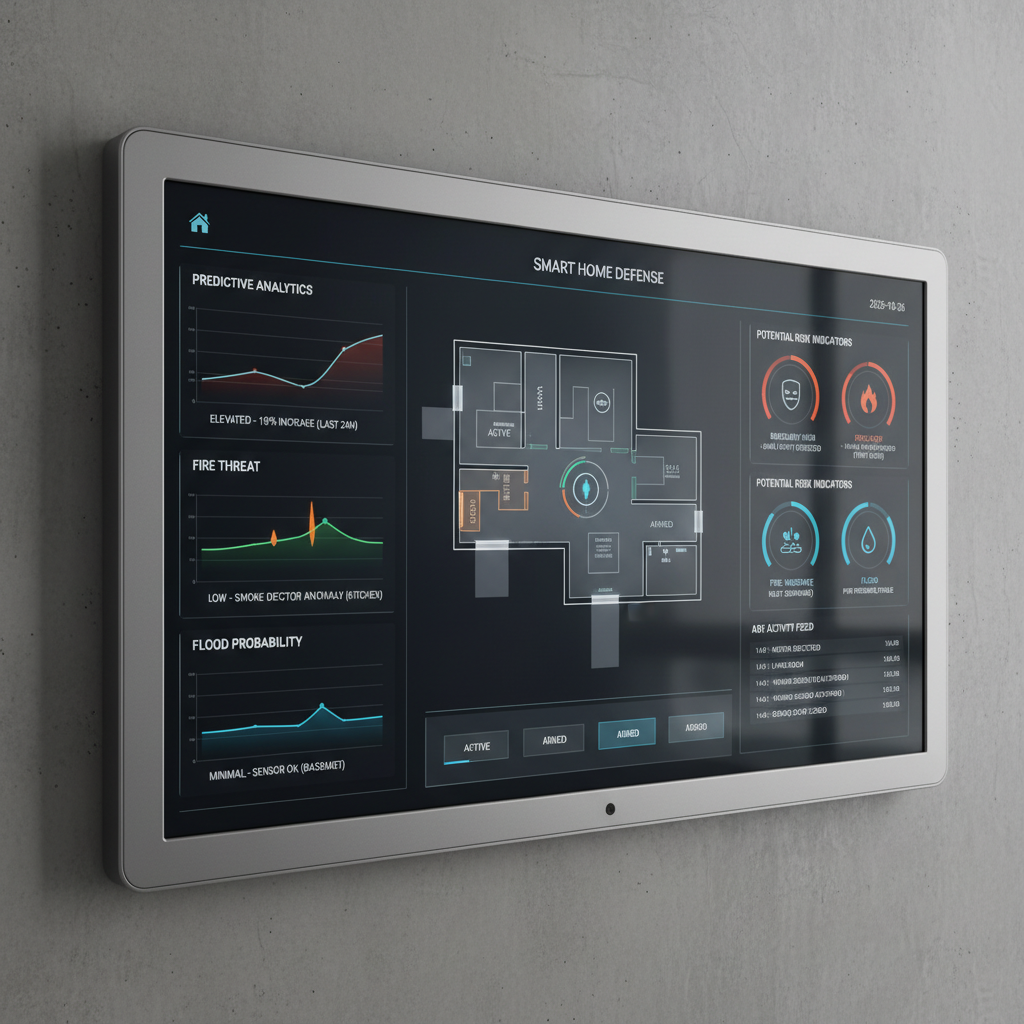
The next generation of anomaly detection will leverage predictive analytics to anticipate potential issues before they manifest. By analyzing long-term trends and correlating seemingly disparate data points, AI could predict a failing appliance by detecting subtle power fluctuations over weeks, or forecast a potential plumbing issue by noticing minute changes in water pressure and flow. On the security front, AI might identify a developing threat by recognizing patterns of reconnaissance (e.g., repeated unknown vehicle passes, unusual Wi-Fi probing) even days before an attempted intrusion, allowing for earlier and more effective intervention.
3. Deeper Sensor Fusion and Environmental Understanding
We’ll see an even broader array of sensors integrated into the anomaly detection fabric. Imagine systems incorporating:
- Lidar and Radar: Providing highly accurate 3D mapping and motion tracking, even through walls or in complete darkness, enhancing privacy compared to cameras.
- Thermal Imaging: Detecting body heat signatures, useful for identifying hidden intruders or detecting unusual heat sources (e.g., potential fire hazards).
- Chemical and Gas Sensors: More advanced air quality sensors that can detect a wider range of dangerous chemicals or gases, beyond just smoke and CO, including volatile organic compounds (VOCs) or even explosives.
- Micro-Vibration Sensors: Detecting subtle structural vibrations that could indicate an earthquake, foundation issues, or even attempts to breach walls.
This deeper fusion will allow AI to build an even richer, more nuanced model of the home environment, enabling detection of anomalies that are currently invisible to present systems.
4. Edge AI and Enhanced Privacy
A significant trend will be the shift towards more processing occurring directly on devices (at the “edge”) rather than solely in the cloud. This Edge AI reduces latency for alerts, minimizes bandwidth usage, and crucially, enhances privacy by keeping sensitive data (like video feeds) within the home network. Only anonymized metadata or alerts would be sent to the cloud, giving users more control over their personal information while still benefiting from advanced AI capabilities.
5. Self-Healing and Autonomous Systems
Future smart home security systems might evolve to become partially self-healing and autonomous. If a camera goes offline or a sensor fails, the AI could automatically attempt troubleshooting, switch to alternative sensors, or even reroute monitoring tasks. In critical situations, the system might be empowered to take autonomous protective actions, such as shutting off water mains during a major leak or activating an internal fog deterrent during a confirmed intrusion, all while notifying homeowners and authorities.
6. Integration with Community and Public Services
The most advanced vision involves seamless integration with neighborhood watch programs, community security networks, and even emergency services. With proper user consent, AI systems could anonymously share aggregated threat intelligence (e.g., “unusual activity reported in Sector B between 2-3 AM”) to help local authorities or community groups identify broader patterns and deploy resources more effectively. Direct, permission-based integration could also streamline communication with emergency responders, providing them with critical information (e.g., floor plans, number of occupants) during an incident.
The future of anomaly detection is one where our homes are not just passive structures but active, intelligent partners in our safety and well-being, constantly learning, predicting, and protecting with unprecedented sophistication.
Comparison Tables
To better understand the paradigm shift brought by AI-driven anomaly detection, let’s compare it with traditional home security systems and then examine different aspects of AI anomaly detection itself.
Table 1: Traditional Security vs. AI-Driven Anomaly Detection
This table highlights the fundamental differences in approach, capabilities, and outcomes between conventional home security systems and modern AI-powered solutions.
| Feature | Traditional Security System | AI-Driven Anomaly Detection |
|---|---|---|
| Core Principle | Rule-based: Triggers on predefined events (e.g., door opened, motion detected). | Learning-based: Establishes a baseline of “normal” and flags deviations. |
| Detection Method | Binary (on/off): Did a sensor trip? | Contextual: Analyzes patterns, behaviors, and correlations across multiple sensors. |
| False Alarms | High: Often triggered by pets, weather, shadows, or benign events. | Low: AI differentiates between known norms and genuine threats, significantly reducing false positives. |
| Proactivity | Reactive: Alerts after an event has occurred (e.g., door already opened). | Proactive/Predictive: Identifies suspicious patterns before a critical event fully manifests (e.g., loitering, unusual network activity). |
| Insights Provided | Basic: “Motion in living room.” “Front door open.” | Granular: “Unfamiliar person detected at front door, 3:15 PM, attempting smart lock access.” |
| Adaptability | Static: Requires manual reconfiguration for routine changes. | Dynamic: Learns and adapts to changes in home routines, seasonality, and occupants’ habits over time. |
| Data Sources | Primarily contact, motion, and glass break sensors. | Fuses data from cameras, motion, contact, environmental, energy, network, and biometric sensors. |
| Beyond Intrusion | Limited: Focuses almost exclusively on intrusion. | Broad: Detects water leaks, HVAC issues, appliance malfunctions, network intrusions, falls (elderly care), and more. |
| Cost (Initial) | Generally lower for basic systems. | Generally higher due to advanced hardware and software/subscription needs. |
| Privacy Concern | Minimal data collection. | Higher: Continuous monitoring raises concerns about data storage, processing, and access (mitigated by edge AI and strong policies). |
Table 2: Types of Anomaly Detection Data and Methods in Smart Homes
This table categorizes the different kinds of data points utilized by AI for anomaly detection in a smart home, along with the primary methods employed and common examples of anomalies detected.
| Data Type/Sensor | Primary Detection Method (AI) | Examples of Anomalies Detected | Real-World Scenario |
|---|---|---|---|
| Video (Cameras) | Deep Learning (CNNs), Object Detection, Facial Recognition, Activity Recognition. | Unfamiliar person, unusual movement patterns, loitering, packages left/taken, vehicle recognition. | Camera detects an unrecognized individual repeatedly walking back and forth in the driveway at odd hours. |
| Audio (Microphones) | Deep Learning (RNNs), Sound Event Detection, Acoustic Anomaly Detection. | Glass breaking, unusual animal sounds, smoke/CO alarm (from neighbor’s), unusual mechanical noises. | System identifies the distinct sound frequency of breaking glass in the backyard. |
| Motion/Occupancy | Unsupervised Learning, Time-Series Analysis, Clustering. | Movement in an unoccupied zone, sustained inactivity, unusual foot traffic patterns. | Motion sensor detects activity in the master bedroom while homeowners are away on vacation. |
| Contact Sensors (Doors/Windows) | Time-Series Analysis, Rule-based (AI contextualization). | Door/window opened at unusual times, left open for too long, multiple forced entry attempts. | Garage door, usually closed by 8 PM, remains open until 11 PM. |
| Environmental (Temp, Humidity, Leak) | Thresholding (AI-adaptive), Time-Series Anomaly Detection. | Sudden temperature spikes/drops, abnormal humidity, water leaks, unusual air quality. | Water leak detector senses moisture in the basement in an area that’s typically dry. |
| Energy Consumption (Smart Plugs) | Time-Series Anomaly Detection, Change Point Detection. | Sudden power surges/dips, appliance running at unusual times/durations, unexpected device connected. | Washing machine draws abnormally high power, indicating a potential malfunction. |
| Network Traffic | Unsupervised Learning, Behavioral Analysis, Deep Packet Inspection. | Unrecognized device connection, unusual outbound data transfer, DDoS attempt, port scanning. | A new, unknown device attempts to join the home Wi-Fi network repeatedly. |
| Access Control (Smart Locks) | Time-Series Analysis, Behavioral Biometrics (future), Pattern Recognition. | Repeated failed access attempts, unusual entry times for authorized users, door left unlocked. | Smart lock logs multiple incorrect PIN entries within a short period. |
Practical Examples and Real-World Scenarios
To truly grasp the power of AI-driven anomaly detection, let’s explore several practical, real-world scenarios where this technology makes a tangible difference in home security and safety.
Scenario 1: Deterring a Potential Burglary
Traditional Approach: A burglar attempts to force open a back window. The window sensor triggers, an alarm sounds, and the homeowner gets an alert. By this time, the burglar has already gained entry or caused damage.
AI Anomaly Detection: An AI-powered camera detects an unfamiliar individual loitering suspiciously near the backyard fence for an extended period (unusual behavior). The system cross-references with motion sensors, which show intermittent activity near the house. Instead of waiting for a window breach, the AI system immediately flags this as a high-risk anomaly. The homeowner receives an alert with video footage, and the system automatically turns on exterior floodlights, broadcasts a warning message through an outdoor smart speaker (“You are being recorded, leave the property immediately”), and triggers a silent alert to a professional monitoring service. The intruder, startled by the lights and voice, decides to flee before ever attempting to enter the house. Proactive deterrence achieved.
Scenario 2: Preventing Extensive Water Damage
Traditional Approach: A slow leak develops under the kitchen sink. Days or weeks pass, and water gradually saturates the cabinet, seeps into the floorboards, and potentially causes mold growth, only discovered when a significant puddle appears or structural damage becomes visible.
AI Anomaly Detection: Smart water leak detectors are placed under sinks, near the water heater, and in the basement. One afternoon, a leak detector under the kitchen sink reports a sudden, albeit small, increase in moisture (a deviation from the normal dry state). The AI system, having learned the normal humidity and moisture levels in that area, flags this as an environmental anomaly. The homeowner receives an instant notification on their phone: “Potential water leak detected under kitchen sink.” They can immediately investigate, tighten a loose pipe, and prevent thousands of dollars in potential water damage and mold remediation. Early detection, preventative action.
Scenario 3: Ensuring Elderly Safety and Well-being
Traditional Approach: An elderly parent living alone has a fall. Without a personal emergency response system (PERS) button, they might lie there for hours or days before being discovered, especially if they are unable to reach a phone.
AI Anomaly Detection: The home is equipped with passive motion sensors and a smart bed sensor. The AI system learns the resident’s normal daily routine: waking up around 7 AM, moving to the kitchen for breakfast, spending time in the living room, and going to bed around 10 PM. One morning, the system detects no movement from the bed sensor by 9 AM, followed by no motion sensor activity in the kitchen for an hour after. This deviation from the established “normal” routine triggers an anomaly alert: “Unusual inactivity detected for [Resident’s Name].” The alert is sent to a family caregiver, who can then check in on the parent, ensuring they are safe and well. In more advanced setups, AI might even detect specific fall patterns via dedicated sensors or camera analysis, instantly alerting emergency contacts. Empathetic, non-intrusive monitoring.
Scenario 4: Identifying Malfunctioning Appliances
Traditional Approach: Your refrigerator starts to fail. It runs constantly, consuming excessive power, but you only realize there’s a problem when your food starts spoiling or your electricity bill inexplicably skyrockets.
AI Anomaly Detection: The refrigerator is plugged into a smart plug with energy monitoring capabilities. The AI system tracks its typical power consumption patterns: slight spikes when the compressor kicks in, then consistent lower usage. Over time, the AI detects a subtle but persistent increase in the refrigerator’s base power draw, and the compressor cycle times become unusually long. This deviation from its normal operating signature is flagged as a device anomaly: “Refrigerator power consumption elevated; potential malfunction.” This allows the homeowner to schedule maintenance before the appliance completely fails, saving food and avoiding costly emergency repairs. Predictive maintenance, cost savings.
Scenario 5: Securing the Home Network
Traditional Approach: An unknown device connects to your Wi-Fi, potentially a neighbor piggybacking or a malicious actor. You might only discover this through slow internet speeds or by manually checking your router’s connected devices list.
AI Anomaly Detection: The smart home hub or a dedicated network security device monitors all connected devices and network traffic. The AI learns the MAC addresses of all your authorized devices (phones, tablets, smart speakers, cameras, etc.) and their typical data usage. Suddenly, a new MAC address attempts to connect to the network, or an existing smart device starts sending unusually large amounts of data to an unknown external server. The AI immediately flags this as a network anomaly: “Unrecognized device attempting connection” or “Unusual outbound traffic from [device name].” The system can then automatically block the suspicious device or isolate the compromised smart device, protecting your network and personal data. Cybersecurity for the smart home.
These examples illustrate how AI-driven anomaly detection extends beyond simple intrusion alarms, providing a comprehensive, intelligent, and proactive layer of security and convenience for the modern home.
Frequently Asked Questions
As AI-driven anomaly detection becomes more prevalent in smart homes, many questions arise regarding its functionality, implementation, and implications. Here are some of the most frequently asked questions, with detailed answers.
Q: What is the primary difference between a traditional security system and one with AI anomaly detection?
A: The primary difference lies in their operational intelligence. Traditional systems are rule-based and reactive; they trigger an alarm only when a predefined event (like a door opening or motion detected) occurs. They lack context and can’t distinguish between a pet and an intruder, leading to high false alarm rates. AI anomaly detection, conversely, is learning-based and proactive. It continuously monitors various data streams, establishes a “normal” baseline for your home’s activities and environment, and then flags any significant deviation from that norm. This allows it to identify subtle, unusual patterns that may indicate a developing threat or problem before a critical event occurs, drastically reducing false alarms and providing more detailed, contextual alerts.
Q: How long does it take for an AI system to “learn” my home’s normal activities?
A: The learning phase, often called the “baselining” period, typically ranges from a few days to a few weeks. Most systems require at least 7-14 days of continuous data collection to accurately establish your home’s unique patterns, including daily routines, occupancy schedules, device usage, and environmental conditions. The more consistent data the AI receives during this period, the more accurate and reliable its anomaly detection will become. Any significant changes to your routine or home environment might require a brief re-learning or adjustment period.
Q: Does AI anomaly detection require professional installation?
A: It depends on the complexity of the system and your technical comfort level. Many consumer-grade smart home devices with AI capabilities (like smart cameras with person detection) are designed for DIY installation. However, for a comprehensive, multi-sensor, fully integrated anomaly detection system, professional installation can be highly beneficial. Professionals can ensure optimal sensor placement, seamless integration of diverse devices, proper network configuration, and initial calibration of the AI models, which can be critical for maximizing performance and minimizing false alarms.
Q: What are the main privacy concerns with AI anomaly detection, especially with cameras and microphones?
A: The primary privacy concerns stem from the continuous collection of personal data. Cameras capture video of your private spaces, microphones pick up conversations, and other sensors track your movements and routines. This data is often processed and stored in the cloud by third-party providers. Concerns include potential data breaches, unauthorized access, and how the data is used (e.g., for targeted advertising). To mitigate this, choose reputable brands with strong privacy policies, look for systems that offer local (edge) processing to keep sensitive data within your home network, encrypt data transmission, and only enable features like facial recognition where absolutely necessary and with clear consent from all household members.
Q: Can AI systems differentiate between pets and intruders?
A: Yes, one of the significant advantages of AI-driven systems is their ability to differentiate between humans and animals, largely reducing false alarms caused by pets. AI algorithms in smart cameras are trained on vast datasets of images and videos to recognize human forms, often distinguishing them from cats, dogs, or other animals. Advanced systems can even learn your specific pet’s movements and ignore them, while still flagging unfamiliar human activity. Some motion sensors are also “pet-immune,” meaning they are designed to ignore movement below a certain weight threshold.
Q: Is anomaly detection effective against sophisticated intruders who try to bypass sensors?
A: AI-driven anomaly detection offers a much stronger defense against sophisticated intruders compared to traditional systems. While a determined intruder might try to avoid specific sensors, an AI system monitors multiple data points simultaneously. For instance, even if a camera is avoided, the AI might detect unusual changes in Wi-Fi traffic, a slight drop in temperature from a barely opened window, or sounds consistent with tools being used. The interconnectedness and contextual analysis make it much harder for intruders to operate undetected, as they would need to bypass multiple, diverse detection methods simultaneously and without triggering any subtle behavioral or environmental anomalies.
Q: What happens if my internet goes down? Will the anomaly detection system still work?
A: The functionality depends on the specific system’s design. Many AI anomaly detection systems rely on cloud processing for advanced analytics and sending alerts. If your internet goes down, these cloud-dependent features would be compromised. However, many modern systems incorporate “edge AI,” where some processing occurs directly on the device (e.g., cameras can still detect and record motion locally). For critical alerts, some systems offer cellular backup, allowing them to send notifications even without an internet connection. It’s crucial to choose a system with robust local processing and, ideally, cellular backup for essential security functions to maintain protection during internet outages.
Q: How much does an AI-powered anomaly detection system typically cost?
A: The cost can vary widely based on the scale and sophistication of the system. Basic AI-enabled smart cameras start from around $100-$300 per camera, often with optional monthly cloud subscription fees ($5-$20) for advanced AI features, video storage, and professional monitoring. A comprehensive system with multiple AI cameras, various smart sensors, a central hub, and premium AI analytics services could range from $500 to several thousand dollars for hardware, plus ongoing monthly subscription costs that can be anywhere from $20 to $60 or more. DIY solutions using open-source platforms might have lower recurring costs but require more technical expertise for setup and maintenance.
Q: Can I integrate my existing smart home devices into an anomaly detection system?
A: In many cases, yes. Most modern AI anomaly detection platforms and smart home hubs (like Amazon Alexa, Google Home, Apple HomeKit, or Home Assistant) support a wide range of third-party devices from different manufacturers. Look for systems that are compatible with common communication protocols (Wi-Fi, Zigbee, Z-Wave, Thread, Matter). The key is the ability of your chosen AI platform to ingest and analyze data from these various devices. Before purchasing, verify compatibility with your existing devices to ensure seamless integration and data fusion for effective anomaly detection.
Q: What if the AI detects something, but it’s not actually a threat (e.g., a friend visits unexpectedly)?
A: While AI systems significantly reduce false positives, they are not perfect. In cases like an unexpected friend visiting, the system might flag an “unfamiliar person.” Reputable AI systems are designed to learn from user feedback. When you receive such an alert, you can often “label” the event (e.g., “known guest,” “false alarm”). This feedback helps the AI refine its understanding of “normal” versus “anomalous” specific to your home, making it even smarter and more accurate over time. You can also temporarily disable alerts for known visitors or create specific “away” or “home” modes to manage how the system behaves.
Key Takeaways
AI-driven anomaly detection is reshaping home security, moving beyond simple reactive alerts to intelligent, proactive protection. Here are the main points to remember:
- Proactive Protection: AI identifies unusual patterns and behaviors before incidents escalate, enabling early intervention and deterrence, unlike traditional reactive systems.
- Reduced False Alarms: By learning your home’s unique “normal” baseline, AI distinguishes genuine threats from everyday events, significantly cutting down on nuisance alerts.
- Comprehensive Monitoring: It fuses data from multiple sensors (cameras, motion, environmental, energy, network) to create a holistic view of your home’s state, detecting a wide range of anomalies from intrusions to water leaks and appliance malfunctions.
- Personalized and Adaptive: AI systems learn and adapt to your specific routines and lifestyle, becoming more accurate and less intrusive over time, providing tailored security for your unique home.
- Granular Insights: Alerts come with detailed context, giving you precise information about what’s happening, where, and when, empowering you to make informed decisions.
- Enhanced Safety Beyond Security: Its capabilities extend to elder care (detecting falls or unusual inactivity), child safety (monitoring restricted areas), and predictive maintenance for home appliances.
- Challenges Exist: Key considerations include privacy concerns (data collection, cloud storage), system complexity, initial and ongoing costs, and the need for continuous refinement to minimize false positives/negatives.
- Future is Intelligent: Expect hyper-personalized behavioral biometrics, truly predictive analytics, deeper sensor fusion (Lidar, thermal), widespread edge AI for privacy, and potential integration with community services.
- Smart Implementation is Key: A robust Wi-Fi, diverse sensors, careful platform selection, and ongoing maintenance are crucial for an effective AI anomaly detection system.
Conclusion
The landscape of home security is undergoing a profound transformation, and at its heart is the remarkable power of AI-driven anomaly detection. No longer is home protection merely about locking doors and setting basic alarms; it’s about creating an intelligent, self-aware sanctuary that understands its own rhythms and instantly flags anything out of tune. From proactively deterring potential intruders by recognizing suspicious patterns to preventing extensive water damage through early leak detection, and even ensuring the well-being of vulnerable family members through behavioral monitoring, AI brings an unprecedented level of vigilance and peace of mind.
While the journey towards a fully autonomous and perfectly secure smart home is ongoing, and challenges related to privacy, complexity, and cost remain, the current capabilities of AI anomaly detection are already revolutionary. By carefully selecting and integrating smart devices, understanding the learning process, and actively engaging with your system, you can build a robust, adaptive, and highly intelligent security infrastructure. The future promises even more sophistication, with predictive analytics, hyper-personalization, and stronger edge processing leading the way. Embracing AI anomaly detection isn’t just an upgrade to your home security; it’s an investment in a smarter, safer, and more responsive living environment, truly protecting your sanctuary in ways that were once unimaginable.


















































































Leave a Reply