

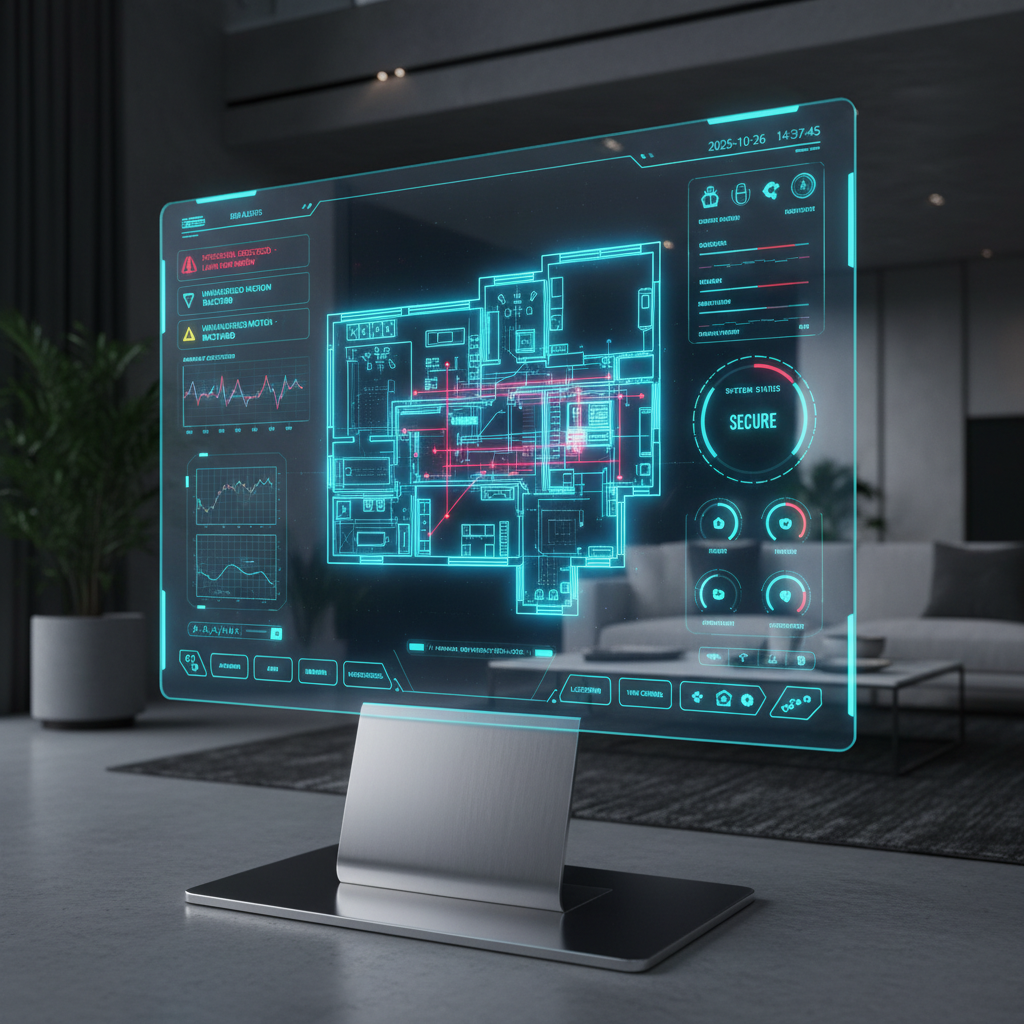
In an increasingly connected world, the concept of home security has evolved dramatically. Gone are the days when a simple alarm system and a locked door were considered sufficient. Today, our homes are not just physical spaces; they are our sanctuaries, repositories of our memories, and hubs of our digital lives. Protecting them requires a sophisticated approach, one that goes beyond traditional reactive measures. This is where Artificial Intelligence (AI) powered remote home monitoring steps in, offering a new paradigm in security that promises not just protection, but genuine peace of mind, accessible from anywhere on the planet.
Imagine a security system that doesn’t just react to threats but anticipates them. A system that can distinguish between a squirrel scampering across your lawn and a potential intruder. One that learns your home’s patterns, adapts to its environment, and communicates with you instantly, intelligently, and contextually. This is the promise of AI in smart home security – transforming your surveillance cameras from mere recording devices into vigilant, intelligent guardians. This comprehensive guide will delve deep into how AI is redefining home protection, ensuring your sanctuary remains secured, no matter where you are.
The Evolution of Home Security: From Alarms to AI
For decades, home security primarily revolved around perimeter defense and basic alarm systems. Think motion sensors triggering a loud siren, magnetic contacts on doors and windows, and maybe a simple keypad for arming and disarming. While these systems offered a fundamental layer of protection, they were often limited in their intelligence and prone to false alarms. The biggest drawback? They were largely reactive, only signaling a problem after it had occurred.
The advent of “smart” technology brought significant improvements. Connectivity allowed homeowners to arm/disarm systems remotely via smartphones, view live camera feeds, and integrate with other smart devices like lights and thermostats. However, these systems, while convenient, still lacked true intelligence. A smart camera might record movement, but it couldn’t tell you who or what was moving, or if that movement was genuinely threatening. This gap between simple detection and intelligent understanding is precisely what AI is designed to bridge.
The leap to AI-powered security is transformative. AI introduces a layer of cognitive processing that allows security systems to interpret, learn, and make decisions based on complex data inputs. It moves us from simple ‘if X, then Y’ rules to sophisticated analysis that understands context, identifies anomalies, and even predicts potential threats. Remote home monitoring AI is not just about having cameras you can check from your phone; it’s about having an intelligent guardian constantly overseeing your property, providing insights and actions far beyond human capability.
Defining Remote Home Monitoring AI
At its core, Remote Home Monitoring AI refers to security systems that leverage artificial intelligence algorithms to process data from various sensors (primarily cameras and microphones) to provide enhanced security, automation, and remote accessibility. Key components include:
- Machine Learning (ML): Algorithms that enable systems to learn from data, identify patterns, and improve their performance over time without explicit programming.
- Computer Vision: AI’s ability to “see” and interpret visual information from cameras, recognizing objects, people, and specific actions.
- Natural Language Processing (NLP): Though less central to direct surveillance, NLP can be used for voice control of systems or interpreting audio cues.
- Edge AI: Processing data directly on the device (e.g., camera) rather than sending all raw data to the cloud, improving speed, privacy, and reducing bandwidth usage.
- Cloud Integration: For remote access, data storage, and more complex analytical tasks that require significant computational power.
These components work in tandem to create a security ecosystem that is not only watchful but also intelligent and highly responsive, accessible and manageable from virtually any internet-connected device, anywhere in the world.
How AI Transforms Your Home’s Eyes and Ears
The most profound impact of AI in home monitoring is how it enhances the capabilities of standard security hardware, particularly cameras and microphones. It imbues them with a level of perception and comprehension that was once confined to science fiction.
1. Advanced Video Analytics: Seeing with Intelligence
Traditional cameras record video; AI-powered cameras analyze it. This analysis is where the real magic happens:
- Object Recognition and Classification:
AI can accurately differentiate between a human, a pet, a vehicle, or even a package left at your doorstep. This crucial distinction dramatically reduces false alarms. Imagine getting an alert only when a person is detected in your yard after hours, not every time a stray cat walks by.
- Activity Detection and Behavioral Analysis:
Beyond simply detecting movement, AI can interpret types of movement. It can identify unusual patterns such as loitering (someone standing around for an extended period), abnormal gait (perhaps indicating distress or intoxication), or sudden running. For instance, if a person remains stationary near your property for an unusual amount of time, the system can flag it as suspicious behavior.
- Facial Recognition (with caveats):
Some advanced systems can identify known faces (family members, trusted visitors) versus unknown individuals. While highly effective, this feature raises significant privacy concerns and is often offered with strong user controls or in specific contexts to ensure ethical use. Users can opt to receive alerts only for unrecognized faces, adding an extra layer of personalized security.
- Zone Monitoring and Intrusion Detection:
Homeowners can define specific “zones” within a camera’s field of view – a swimming pool, a gate, a specific entry point. AI can then trigger alerts only when activity is detected within these designated sensitive areas. This prevents irrelevant notifications from public sidewalks while focusing attention on critical sections of your property.
- Vehicle Detection and License Plate Recognition (LPR):
For properties with driveways or parking areas, AI can distinguish cars from other objects and, in more sophisticated setups, even read license plates. This can be useful for monitoring unauthorized vehicles or keeping a log of vehicles entering and exiting the property.
2. Audio Intelligence: Listening with Purpose
Microphones integrated into AI security systems are no longer just for two-way communication. They can listen for specific auditory cues:
- Glass Break Detection: AI can be trained to recognize the distinct sound frequency of breaking glass, immediately signaling a potential forced entry. This is far more reliable than traditional acoustic sensors that might be triggered by any loud noise.
- Smoke and CO Alarm Sound Recognition: If your dedicated smoke or carbon monoxide detectors go off, the AI security system can “hear” their distinct alarms and send you an alert, even if your smart detectors aren’t directly integrated with the security hub. This provides a critical backup for early warning.
- Unusual Sound Analysis: Beyond specific alarms, AI can detect and flag unusual loud noises – a bang, a crash, or even sounds that indicate a struggle. While these might require human verification, they provide valuable context and early warnings.
3. Contextual Awareness: Learning Your Home’s Rhythms
AI’s true power lies in its ability to learn and understand the unique context of your home:
By analyzing data over time, AI systems learn the typical patterns of activity around your home. When do family members usually arrive and leave? Is there a delivery person who regularly comes at a specific time? What is the normal activity level in your backyard? By establishing these baselines, AI can more accurately identify genuine anomalies that warrant attention. For example, a car driving by at 2 PM is normal; a car idling outside your home at 2 AM for an extended period is an anomaly.
Furthermore, AI-powered systems can integrate seamlessly with other smart home devices. This allows for a holistic security approach where different devices communicate and act in concert. If a security camera detects an unrecognized person at the front door, the system can automatically:
- Turn on exterior lights to deter the individual.
- Lock smart doors more securely.
- Trigger an indoor siren.
- Initiate a recording and send a live feed to your phone.
This integration creates powerful, automated security routines that respond intelligently to evolving situations.
Proactive Protection: Beyond Reacting to Threats
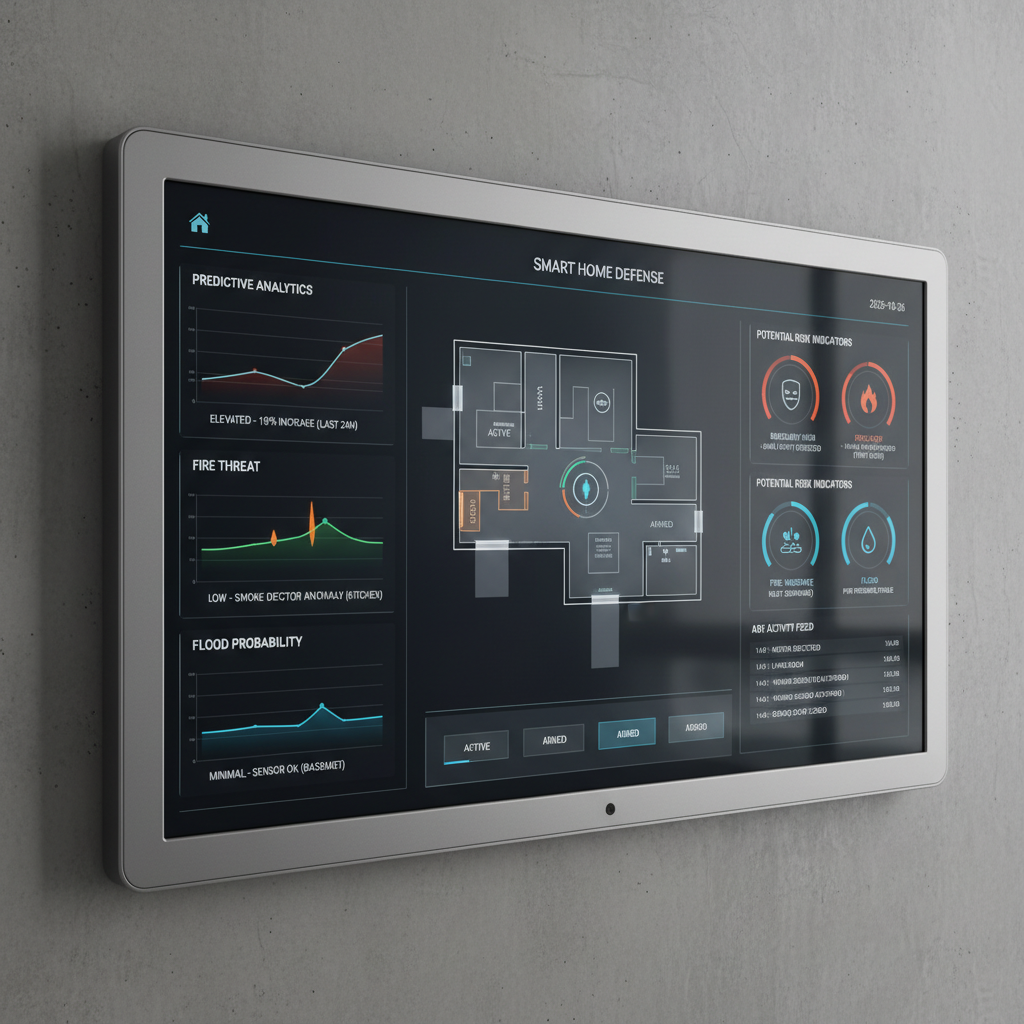
One of the most significant advancements AI brings to home security is the shift from reactive to proactive protection. Traditional systems respond after an event; AI aims to prevent it or mitigate its impact before it escalates.
1. Predictive Security: Anticipating Potential Threats
AI’s ability to analyze patterns extends to predicting potential threats. While not crystal-ball gazing, it involves identifying precursors to incidents:
- Loitering Detection: If the AI repeatedly detects an unknown individual loitering around your property over several days, it can alert you to a potential reconnaissance effort, allowing you to take preventative measures before a break-in attempt occurs.
- Unusual Vehicle Presence: Similarly, a car that frequently drives by slowly or parks near your home without apparent reason can be flagged, suggesting potential casing.
- Anomaly Detection in Routine: If your AI learns that the garage door is always closed at night, but one night it remains open for an unusual duration, it can alert you, preventing an oversight from becoming a vulnerability.
These predictive capabilities give homeowners a crucial head start, transforming passive monitoring into active threat assessment.
2. Automated Response: Intelligent Security Actions
Once a threat or anomaly is identified, AI systems can initiate a series of automated responses tailored to the situation:
- Intelligent Lighting Adjustments: If an intruder is detected, exterior and interior lights can flash, creating the impression that someone is home or disorienting the perpetrator.
- Automated Siren Activation with Context: Instead of a siren blaring for a cat, AI can verify a human presence before activating an alarm, reducing noise pollution and false alarms for neighbors.
- Direct Communication with Authorities: Many AI security systems offer professional monitoring services where, upon verification of a legitimate threat, emergency services can be dispatched automatically and rapidly.
- Smart Lock Engagement: If a breach is detected at one entry point, the system can automatically ensure all other smart locks are securely engaged.
- Two-Way Audio Deterrence: If an unknown person is detected, the system can automatically play a pre-recorded message like “This property is under surveillance, please leave immediately,” or allow you to speak directly through the camera’s speaker to deter the individual.
3. False Alarm Reduction: A Major Advantage
Perhaps one of the most celebrated features of AI in home security is its significant reduction in false alarms. Traditional motion sensors are notorious for being triggered by:
- Pets (dogs, cats, even birds)
- Branches swaying in the wind
- Falling leaves or debris
- Changes in lighting or shadows
- Rain, snow, or insects on camera lenses
These false alarms are not just annoying; they can lead to complacency, cause unnecessary distress, and even result in fines from local authorities for repeated erroneous dispatches. AI tackles this by:
- Precise Object Classification: As mentioned, distinguishing between humans and non-human triggers.
- Environmental Learning: Adapting to common environmental factors and filtering them out.
- Contextual Filtering: Understanding that a car pulling into your driveway at a scheduled time is not an alarm event, but the same car at an unscheduled, late hour might be.
By drastically cutting down false alarms, AI ensures that when an alert comes through, it’s highly likely to be a legitimate event, requiring your immediate attention or professional response, thereby building trust in your security system.
Remote Control and Peace of Mind: Your Sanctuary in Your Pocket
The “remote” aspect of AI home monitoring is crucial. It means your home’s security is no longer confined to its physical perimeter but extends to wherever you are, offering unparalleled control and genuine peace of mind.
1. Real-time Notifications: Instant Awareness
AI-powered systems provide sophisticated real-time alerts:
- Instant Alerts: Notifications are sent directly to your smartphone, smartwatch, or other connected devices the moment an event occurs.
- Rich Notifications: These aren’t just text messages. They often include a short video clip or a series of snapshots of the detected activity, allowing you to instantly assess the situation without even opening the app.
- Configurable Alerts: You can customize what kind of alerts you receive, from which sensors, and at what times, ensuring you’re only notified about what truly matters to you.
2. Live View and Two-Way Audio: Active Engagement
The ability to check in on your home anytime, anywhere, is a cornerstone of remote monitoring:
- Live HD Streaming: Access high-definition live video feeds from all your cameras, allowing you to see what’s happening in and around your home with clarity.
- Event Playback: Review recorded footage of specific events, often categorized and easily searchable based on AI-detected activities (e.g., “person detected,” “package delivered”).
- Two-Way Audio Communication: Speak directly through your camera’s integrated speaker to visitors, delivery personnel, or even potential intruders. This is invaluable for answering the door when you’re not home, instructing a delivery driver, or deterring suspicious individuals by letting them know they are being watched.
3. Remote Arming/Disarming and Customization: Total Flexibility
Managing your security system on the go is effortless with AI-driven platforms:
- Full System Control: Arm or disarm your entire system or specific zones with a tap on your smartphone. Forgot to arm the system before leaving for vacation? No problem.
- Custom Security Schedules: Set up automated schedules for arming/disarming, lighting, or specific camera recordings based on your daily routine.
- Geofencing: Many systems use your smartphone’s location to automatically arm the system when you leave a defined area around your home and disarm it when you return, adding a layer of convenience and ensuring security is always active when needed.
- Multi-User Access: Grant different levels of access and control to family members or trusted individuals, managing permissions easily from your app.
Data Privacy, Security, and Ethical Considerations
While the benefits of AI in home security are vast, it’s crucial to address the accompanying considerations regarding data privacy, cybersecurity, and the ethical deployment of these powerful technologies.
1. Data Encryption and Cloud Security: Protecting Your Information
AI security systems collect and process a significant amount of sensitive data, including video footage of your home and potentially identifiable information. Robust security measures are paramount:
- End-to-End Encryption: Ensures that video streams and stored data are encrypted from the moment they are captured until they are accessed by authorized users, preventing unauthorized interception.
- Secure Cloud Storage: If footage is stored in the cloud, providers must adhere to stringent cybersecurity standards, including robust firewalls, intrusion detection systems, and regular security audits.
- Multi-Factor Authentication (MFA): An essential security feature that requires more than just a password to access your system, significantly reducing the risk of unauthorized access even if your password is compromised.
- Regular Software Updates: Manufacturers must regularly update their software to patch vulnerabilities and improve security features. Users should always keep their systems updated.
2. Ethical AI and Bias Mitigation: Addressing Surveillance Concerns
The use of advanced AI, particularly facial recognition and behavioral analysis, raises legitimate ethical questions:
- Privacy vs. Security: Balancing the desire for enhanced security with individual and community privacy rights. Clear communication and user consent are vital.
- Bias in Algorithms: AI algorithms can sometimes inherit biases from the data they are trained on, potentially leading to misidentification or unfair treatment. Developers must work to train AI models on diverse datasets to minimize bias and ensure fairness across all demographics.
- Responsible Facial Recognition: If facial recognition is used, it should be implemented with strict safeguards, ensuring it’s primarily used for defined purposes (e.g., identifying known residents) and not for indiscriminate public surveillance. Users should have clear control over opting into and out of such features.
3. User Control and Transparency: Empowering the Homeowner
Transparency and user control are critical for building trust in AI security systems:
- Clear Data Policies: Companies must provide clear, easy-to-understand policies on how data is collected, stored, used, and shared.
- Granular Privacy Settings: Users should have the ability to fine-tune privacy settings, such as opting out of certain AI features, controlling data retention periods, or selecting areas for privacy masking in camera feeds.
- Data Access and Deletion: Users should have the right to access their data and request its deletion, adhering to regulations like GDPR or CCPA.
Ultimately, a responsible AI security system puts the homeowner in control, offering powerful protection without compromising fundamental privacy rights.
Integrating AI Security with the Smart Home Ecosystem
The true power of AI home monitoring is unleashed when it seamlessly integrates with the broader smart home ecosystem, creating a cohesive, intelligent, and responsive living environment.
1. Seamless Interoperability: A Unified Home
Modern AI security systems are designed to be part of a larger smart home network:
- Smart Assistant Integration: Compatibility with popular voice assistants like Amazon Alexa, Google Assistant, and Apple HomeKit allows for voice control of your security system (e.g., “Alexa, arm the security system,” or “Hey Google, show me the front door camera”).
- Cross-Device Communication: AI security hubs often act as central controllers, allowing cameras, door/window sensors, smart locks, smart lighting, thermostats, and even smart smoke detectors to communicate and share data. This creates a more intelligent and responsive environment. For instance, if a fire alarm sounds, the system could automatically unlock doors, turn on emergency lighting, and send alerts to occupants’ phones.
- Open Standards: Support for open smart home standards like Zigbee, Z-Wave, and Matter facilitates broader compatibility and future-proofs your system, allowing you to choose devices from various manufacturers that work together.
2. Creating Smart Security Routines: Automation for Peace of Mind
Leveraging AI and smart home integration, you can create powerful, automated routines:
- “Leaving Home” Routine:
When you leave the geofenced area, your smart home could automatically:
- Arm the security system to “away” mode.
- Lock all smart doors and garage doors.
- Adjust the thermostat to an energy-saving setting.
- Turn off all lights.
- Activate motion-sensitive outdoor lighting.
- “Arriving Home” Routine:
Upon your return, the system could:
- Disarm the security system.
- Unlock the front door (optional, or specific doors).
- Turn on entry lights.
- Adjust the thermostat to a comfortable setting.
- Pause outdoor camera recording in designated “privacy zones.”
- “Night Mode” Routine:
At a set time or when everyone goes to bed:
- Arm perimeter sensors.
- Ensure all doors and windows are closed and locked.
- Dim or turn off non-essential lights.
- Activate “sleep” mode for specific internal cameras (to enhance privacy).
These routines not only enhance security but also add convenience and contribute to energy efficiency, demonstrating the multifaceted benefits of AI integration.
3. Future Trends: The Horizon of AI Security
The field of AI home security is constantly evolving. Future developments promise even more advanced protection:
- Advanced Edge AI: More processing power on devices, leading to faster responses, greater privacy (less data sent to the cloud), and more robust offline capabilities.
- Autonomous Security Drones: For larger properties, small, autonomous drones could conduct perimeter patrols, leveraging AI for navigation and threat detection.
- Advanced Biometrics: Beyond facial recognition, voice recognition, gait analysis, and even thermal imaging for non-invasive presence detection could become standard.
- Hyper-Personalized Security: Systems that adapt even more intimately to individual habits and preferences, offering a truly bespoke security experience.
- Predictive Maintenance: AI not only monitors for security threats but also for potential system failures, alerting you to a camera malfunction or battery issue before it compromises your safety.
These developments underscore a future where AI will continue to make our homes smarter, safer, and more responsive to our needs, truly becoming an invisible guardian.
Comparison Tables
Table 1: Traditional vs. AI-Powered Home Security Features
| Feature Category | Traditional Security Systems | AI-Powered Smart Security Systems |
|---|---|---|
| Motion Detection | Basic PIR (Passive Infrared) sensors; often triggers on pets, shadows, or wind. | Advanced video analytics: object classification (human, pet, vehicle), activity recognition, zone monitoring, significantly reduced false alarms. |
| Alarm Activation | Siren triggered immediately upon sensor breach; requires manual disarm or professional monitoring center call. | Intelligent siren activation (after AI verification), automated lighting, two-way audio deterrence, professional monitoring with AI-verified alerts for faster response. |
| Video Surveillance | Basic recording to DVR or limited cloud storage; often just captures motion. | High-definition live streaming, AI-powered event tagging (e.g., “person detected,” “package delivered”), cloud storage with smart search, facial recognition (optional). |
| Remote Access | Limited, often via phone call to monitoring center or basic app control for arm/disarm. | Full app control for arm/disarm, live view, two-way audio, remote unlock/lock, customization of settings, geofencing. |
| False Alarms | High frequency due to inability to differentiate between legitimate threats and environmental factors. | Significantly reduced by intelligent object recognition and contextual analysis, saving time and potential fines. |
| Proactive Measures | Minimal; primarily reactive to breaches. | Predictive analysis (loitering detection), automated deterrence (lights, audio), learning home routines to identify anomalies. |
| Integration | Standalone systems, limited interaction with other devices. | Seamless integration with smart home ecosystems (smart assistants, lighting, thermostats, smart locks), creating automated routines. |
| Data Analysis | None beyond simple recording logs. | Deep learning for continuous improvement, pattern recognition, behavioral analysis, providing actionable insights. |
Table 2: AI Video Analytics Capabilities: Basic vs. Advanced Systems
| Capability | Basic AI System (e.g., Entry-level Smart Camera) | Advanced AI System (e.g., Professional Grade Security System) |
|---|---|---|
| Object Detection | Human/animal differentiation, vehicle detection (often simple motion zones). | Precise human, vehicle, animal, package detection; identification of specific objects (e.g., bag, ladder). |
| Behavioral Analysis | Basic motion detection within a defined area. | Loitering detection, abnormal movement patterns (running, crouching), crowd detection, slip/fall detection for elder care. |
| Facial Recognition | Often not present, or basic “person detected.” | Recognition of known faces (family/friends) vs. unknown; customizable alerts based on identity. |
| Zone Monitoring | Simple rectangular or polygonal motion zones. | Multi-zone setup with different rules per zone, line crossing detection, sterile zone monitoring (alerts if anyone enters/exits a specific area). |
| Audio Analytics | Basic loud noise detection. | Glass break detection, smoke/CO alarm sound recognition, abnormal sound (e.g., shouting, car alarm). |
| Contextual Learning | Limited; may learn basic schedules. | Learns daily routines, identifies unusual timing or frequency of events, adapts to environmental changes (e.g., shadows). |
| Data Retention & Search | Basic timestamped video clips. | Intelligent indexing of events (e.g., “all clips with a person between 3-5 PM”), fast search capabilities, long-term cloud storage options. |
| System Integration | May integrate with a few popular smart home platforms. | Deep integration with major smart home ecosystems, IFTTT support, API access for advanced custom routines. |
Practical Examples: Real-world Use Cases and Scenarios
To truly understand the impact of AI in remote home monitoring, let’s explore some real-life scenarios:
Case Study 1: Preventing a Package Theft with AI
Scenario: Sarah is at work and a package is delivered to her doorstep. Later, an unknown individual approaches her porch, seemingly casing the area.
AI Solution:
- Package Detection: Sarah’s AI-powered doorbell camera immediately detects the package delivery and sends her an alert with a video clip of the delivery person placing it.
- Loitering Detection: A few hours later, the camera detects an unknown person loitering suspiciously near the porch for an extended period, an anomaly based on its learned patterns.
- Real-time Alert and Deterrence: Sarah receives an instant notification with a live feed of the individual. From her office, she activates the camera’s two-way audio and says, “Can I help you? You’re being recorded.”
- Outcome: Startled, the individual quickly leaves Sarah’s property without attempting to take the package. Sarah reviews the recorded footage, shares it with neighbors, and reinforces her porch security settings.
This demonstrates AI’s ability to not only monitor but also empower the homeowner to take proactive deterrent action from anywhere.
Case Study 2: Detecting an Elderly Parent’s Fall
Scenario: Mark’s elderly mother lives alone. He worries about her safety, especially the risk of falls, but doesn’t want to be intrusive with constant check-ins.
AI Solution:
- Activity Monitoring: AI-powered indoor cameras (strategically placed in common areas, respecting privacy in private rooms) learn his mother’s usual movement patterns and routines.
- Fall Detection: One afternoon, the AI detects a sudden, rapid descent and lack of movement, indicating a potential fall.
- Emergency Alert: The system immediately sends an alert to Mark’s phone with a short video clip. Concurrently, a pre-programmed emergency contact (a neighbor or an alarm monitoring service) is also notified.
- Rapid Response: Mark can quickly call his mother or, if no response, contact the alerted neighbor or emergency services, potentially saving critical time in a medical emergency.
This highlights how AI can offer non-invasive elder care support, providing peace of mind to families without compromising privacy or independence.
Case Study 3: Vacation Monitoring and Anomaly Detection
Scenario: The Johnson family is on a two-week vacation. They want to ensure their home is secure without constantly checking feeds.
AI Solution:
- Geofencing and Automated Arming: As they leave for the airport, their system automatically arms to “away” mode.
- Predictive Security: On day three, AI identifies an unfamiliar car slowly driving by their house multiple times, an unusual pattern. An alert is sent to Mr. Johnson.
- Contextual Verification: Mr. Johnson checks the live feed, verifies the car’s suspicious activity, and activates exterior lights on a schedule to give the impression of occupancy.
- False Alarm Prevention: When a strong storm rolls through, the AI accurately distinguishes swaying branches from human intruders, preventing unnecessary alerts to the family during their vacation.
- Post-Vacation Review: Upon return, the Johnsons can easily review a summary of AI-detected “person” or “vehicle” events during their trip, rather than sifting through hours of irrelevant footage.
This showcases AI’s ability to provide intelligent, low-maintenance monitoring during extended absences, focusing only on genuinely concerning events.
Case Study 4: Small Business Security Beyond Office Hours
Scenario: A small retail store owner, David, wants to secure his shop after closing, especially against after-hours break-ins or unauthorized entry.
AI Solution:
- Scheduled Arming: The AI system automatically arms at closing time and disarms before opening, linked to smart locks.
- Intelligent Intrusion Detection: If a person is detected inside the store after hours, the AI differentiates them from a stray animal or a moving shadow.
- Automated Response and Verification: The system immediately triggers a silent alarm to David’s phone with a live video feed. It also activates an audible warning through the camera’s speaker, informing the intruder they are being recorded and police have been notified.
- Remote Communication: David can remotely speak to the intruder through the camera, if he chooses, or immediately contact authorities with verified evidence.
- Preventing False Alarms: The system ignores the cleaning crew during their scheduled hours, recognizing them as authorized personnel (if facial recognition or access codes are integrated), preventing unnecessary alerts.
This demonstrates AI’s versatility in commercial settings, providing smart, automated security that’s effective and reduces operational overhead.
Frequently Asked Questions
Q: What is AI remote home monitoring?
A: AI remote home monitoring refers to security systems that use artificial intelligence to analyze data from cameras, microphones, and other sensors in and around your home. This allows the system to intelligently detect, classify, and understand events (e.g., distinguishing a person from a pet, identifying suspicious behavior like loitering) and alert you in real-time. You can then monitor and manage your home’s security from anywhere using a smartphone or other internet-connected device.
Q: How does AI reduce false alarms in home security?
A: AI significantly reduces false alarms by employing advanced video analytics and object recognition. Unlike traditional motion sensors that might trigger on anything from a swaying tree branch to a passing animal or changing shadows, AI can differentiate between these benign events and actual human or vehicle presence. It learns the normal patterns of your environment, so when an alert is sent, it’s highly likely to be a legitimate event requiring attention, saving you from unnecessary stress and potential fines.
Q: Is AI home security expensive compared to traditional systems?
A: Initially, AI-powered systems might have a higher upfront cost due to the advanced technology involved. However, the long-term value often outweighs this. They offer superior protection, greater peace of mind, and can save money by reducing false alarm fines. Many systems also offer flexible pricing models, including subscription services for cloud storage and advanced AI features, making them more accessible. The investment often translates into enhanced safety, convenience, and potentially lower insurance premiums.
Q: What about privacy concerns with AI cameras and monitoring?
A: Privacy is a critical concern with any surveillance technology. Reputable AI security providers implement robust data encryption, secure cloud storage, and multi-factor authentication to protect your data. Users often have granular control over privacy settings, such as defining privacy zones where cameras won’t record, choosing when and what AI features are active, and managing data retention. It’s essential to choose a system with transparent privacy policies and to be mindful of where cameras are placed to avoid intruding on neighbors’ privacy.
Q: Can AI systems identify specific people using facial recognition?
A: Yes, some advanced AI security systems offer facial recognition capabilities. This feature can be trained to recognize authorized individuals like family members or trusted visitors, sending alerts only when an unrecognized face is detected. While powerful, this feature comes with significant privacy implications and ethical considerations. Users typically have full control over whether to enable or disable facial recognition and manage their database of known faces.
Q: What happens if my internet goes down? Will my AI security system still work?
A: This depends on the system. Many AI security cameras and hubs have local storage (e.g., an SD card) for basic recording during internet outages. Edge AI processing (where AI analysis happens directly on the device) means some intelligent functions might still operate locally, triggering local alarms. However, remote monitoring, cloud storage, real-time app notifications, and professional monitoring services will typically require an active internet connection. Some high-end systems offer cellular backup to maintain connectivity during internet disruptions.
Q: How easy is it to install and set up an AI security system?
A: Modern AI home security systems are designed for user-friendly installation. Many DIY systems involve simple plug-and-play setup with intuitive app-guided instructions. Wireless components minimize complex wiring. For larger or more complex installations, or for those who prefer professional setup, many companies offer expert installation services. Overall, the process is significantly easier than traditional wired alarm systems.
Q: Are AI home security systems vulnerable to hacking?
A: Like any internet-connected device, AI security systems can be targets for cyber threats. However, reputable manufacturers implement strong security measures, including end-to-end encryption, secure servers, regular firmware updates, and multi-factor authentication, to protect against hacking. Users also play a crucial role by using strong, unique passwords, enabling MFA, and keeping their system’s software updated. Choosing a reputable brand with a strong security track record is vital.
Q: Can AI systems differentiate between pets and humans?
A: Absolutely, this is one of AI’s key advantages. Using advanced computer vision and machine learning, AI-powered cameras are specifically trained to distinguish between humans, animals (like cats, dogs, or squirrels), and even vehicles. This capability dramatically reduces false alarms that are common with traditional motion detectors, ensuring you only receive alerts for what truly matters.
Q: What are the main advantages of AI home security over traditional security systems?
A: The main advantages include: 1) Reduced False Alarms: AI intelligently differentiates real threats from benign events. 2) Proactive Security: It can anticipate threats through behavioral analysis (e.g., loitering). 3) Smarter Monitoring: Provides rich, contextual alerts (e.g., “person detected at front door” with a video clip). 4) Enhanced Remote Control: Full control and monitoring from anywhere. 5) Seamless Integration: Works with your smart home for automated security routines. 6) Continuous Learning: Systems improve over time by learning your home’s patterns.
Key Takeaways
- AI transforms home security from a reactive system to a proactive, intelligent guardian.
- Advanced video and audio analytics enable precise object classification, activity detection, and sound recognition, dramatically enhancing threat identification.
- AI significantly reduces false alarms by distinguishing between legitimate threats and environmental factors or harmless occurrences like pets.
- Remote home monitoring AI offers unparalleled peace of mind through real-time, contextual alerts, live viewing, two-way audio, and complete remote control.
- Data privacy, cybersecurity, and ethical considerations are paramount, with reputable systems offering robust encryption, user controls, and transparent policies.
- Seamless integration with your existing smart home ecosystem allows for powerful automation and personalized security routines.
- The future of AI home security promises even more sophisticated capabilities, from advanced edge AI to hyper-personalized protection.
Conclusion
The journey from basic alarms to sophisticated AI-powered remote home monitoring represents a profound evolution in how we protect our personal sanctuaries. We’ve moved beyond mere detection to a realm of intelligent understanding, predictive insights, and proactive defense. AI empowers homeowners with unprecedented control, transforming cameras and sensors into vigilant, cognitive sentinels that learn, adapt, and respond with remarkable precision.
In an unpredictable world, the ability to secure your home from anywhere, to receive intelligent alerts, and to act decisively – whether deterring an intruder with your voice or dispatching emergency services based on verified threats – is invaluable. AI-driven security systems don’t just protect your property; they safeguard your peace of mind, allowing you to live your life with greater freedom and less worry. As this technology continues to advance, our homes will become even smarter, safer, and truly secured, ensuring that your sanctuary remains just that – a haven, protected by the invisible, vigilant power of artificial intelligence.



































































Leave a Reply